How Do I Dry My Hair Without a Blow Dryer?
To dry your hair without a blow dryer, you can follow some simple and effective steps. First, start by gently squeezing out excess water with your hands. Remember, avoid twisting your hair to prevent damage.
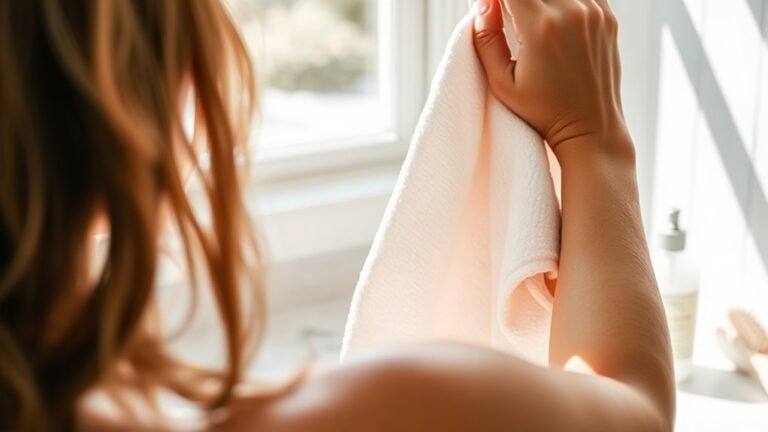
Next, grab a microfiber towel or a soft cotton T-shirt and blot your hair to press out moisture. Rubbing can lead to frizz, so stick to blotting!
Once you’ve removed most of the water, apply a leave-in conditioner. This helps keep your hair hydrated and manageable.
Use a wide-tooth comb to detangle your hair gently. After that, let your hair air-dry without touching it. This will minimize frizz and help maintain your hair’s natural texture.
If you want, you can sit near a sunny window for some natural warmth while you wait.
Keep reading to discover more tips for quick, healthy drying!
Key Takeaways
- Gently squeeze excess water from hair using hands without twisting or wringing to prevent damage and frizz.
- Use a microfiber towel or soft cotton T-shirt to blot and press hair dry, avoiding rubbing or tight twisting.
- Apply leave-in conditioner and detangle hair gently with a wide-tooth comb to protect strands and reduce frizz.
- Let hair air-dry naturally without touching it to maintain smoothness and preserve your hairstyle.
- Speed up drying by sitting near gentle warmth like a sunny window or using a warm, well-wrung towel on hair.
How to Quickly Remove Excess Water After Washing

To quickly remove excess water after washing, start by gently squeezing your hair with your hands to push out as much moisture as possible. Avoid wringing or twisting, as this can cause breakage and frizz. Instead, use your fingers to lightly run through sections, guiding water downwards. Next, lean forward and let gravity help drain the water away from your scalp. You can also gently shake your head to loosen water trapped in curls or waves. After that, separate your hair into manageable sections and continue squeezing each part. This method reduces dripping and shortens drying time without causing damage. Remember, the goal is to remove water efficiently while maintaining your hair’s health and natural texture.
Towel-Drying Techniques to Cut Drying Time

After you’ve squeezed out excess water using your hands, the next step is to use a towel to speed up drying without damaging your hair. Choose a microfiber towel or a soft cotton T-shirt instead of a rough bath towel, as these materials reduce friction and prevent breakage. Gently blot and squeeze your hair rather than rubbing it, which can cause frizz and split ends. Focus on absorbing moisture by wrapping the towel around your hair and pressing lightly. Avoid twisting your hair tightly in the towel, as this can stress the strands and scalp. By using these careful towel-drying techniques, you’ll cut down drying time noticeably while keeping your hair healthy and smooth, setting a great foundation for the next steps in your drying routine.
Air-Drying Tips for Smooth, Frizz-Free Hair

To keep your hair smooth and frizz-free while air-drying, start by using a microfiber towel to gently remove excess water.
This helps minimize frizz and damage.
Apply a leave-in conditioner to lock in moisture and protect your strands.
It’s a game-changer for keeping your hair hydrated!
Then, comb your hair gently to prevent breakage and distribute the product evenly.
Taking your time with this step really makes a difference!
Use Microfiber Towels
Microfiber towels revolutionize the way you dry your hair by gently absorbing moisture without rough friction. Unlike regular towels, they minimize frizz and breakage, helping your hair stay smooth and healthy. Wrap your hair in a microfiber towel after washing, then gently scrunch or squeeze out excess water. Avoid rubbing, which can cause damage and frizz.
Here’s a quick comparison:
| Feature | Microfiber Towel |
|---|---|
| Absorption Speed | Fast, lifts water quickly |
| Hair Damage Risk | Low, gentle on strands |
| Frizz Control | High, reduces friction |
| Drying Time | Efficient, shortens air-dry time |
Using microfiber towels is a simple upgrade that improves your hair’s texture and drying experience without heat.
Apply Leave-In Conditioner
Apply leave-in conditioner right after towel-drying your hair to lock in moisture and tame frizz. This product helps seal your hair’s cuticles, keeping strands smooth and hydrated as they dry naturally. Choose a formula suited for your hair type—lightweight sprays work well for fine hair, while creams or lotions provide extra nourishment for thicker or curly hair. Dispense a small amount into your palms, rub them together, then evenly distribute the conditioner from mid-lengths to ends. Avoid the roots to prevent greasiness. Applying leave-in conditioner consistently makes your hair easier to manage, reduces flyaways, and enhances shine. It also protects your strands from environmental damage during the air-drying process, leaving you with soft, polished locks without needing heat styling tools.
Comb Hair Gently
Reach for a wide-tooth comb as soon as you’ve applied your leave-in conditioner to gently detangle your hair without causing breakage. Start combing from the ends, working your way up to the roots to ease out knots smoothly. Avoid using a brush on wet hair, as it can lead to damage and frizz. Instead, let the comb glide through your strands, distributing the conditioner evenly. Be patient and gentle—rushing can cause unnecessary pulling and split ends. Once detangled, leave your hair alone to air dry naturally, refraining from touching it too much, which can stir up frizz. This careful combing technique helps your hair dry smoother, shinier, and frizz-free, making your blow-dryer-free routine much easier and more effective.
Styling Hair While It Dries Without a Blow Dryer
Styling your hair while it air-dries lets you create natural, lasting looks without heat damage. You can enhance texture, control frizz, and shape your style by using gentle techniques and the right products. Start by applying a lightweight leave-in conditioner or styling cream to damp hair. Then, try scrunching curls or twisting sections for waves. Avoid touching your hair too much as it dries to keep the style intact.
| Technique | Best For | Tip |
|---|---|---|
| Scrunching | Curly/wavy hair | Use a curl-enhancing cream |
| Twisting | Wavy/straight | Twist small sections tightly |
| Finger-combing | All hair types | Use a wide-tooth comb gently |
| Braiding | Wavy/curly hair | Braid damp hair for waves |
| Pinning | Straight hair | Pin sections for volume |
Natural Heat Methods to Speed Hair Drying Without a Blow Dryer
While you can’t rely on a blow dryer, you can still speed up drying by harnessing natural heat sources. Start by sitting near a sunny window or stepping outside on a warm day. The sun’s gentle warmth helps evaporate moisture faster without causing damage. You can also use a warm towel—wring it out well and gently press it against your hair to soak up excess water before air drying. Another method is to sit near a radiator or heating vent, but keep a safe distance to avoid overheating or dryness. Just remember to protect your hair from excessive heat. These natural methods help you dry your hair more quickly while preserving its health and shine, all without the need for a blow dryer.
When to Skip Heat and Let Hair Dry Naturally
Although using natural heat can speed up drying, there are times when you should skip it altogether and let your hair dry on its own. For instance, if your hair is fragile or recently treated with color or keratin, heat—even natural—can cause damage. Also, if you have scalp sensitivity or irritation, allowing your hair to air dry reduces risk. Sometimes, your schedule allows for a slow dry, which is gentler and helps maintain your hair’s natural texture and moisture balance.
| When to Skip Heat | Why It’s Beneficial |
|---|---|
| Fragile or damaged hair | Prevents further damage |
| Recently colored or treated | Maintains treatment longevity |
| Sensitive scalp | Avoids irritation |
| Time allows slow drying | Preserves natural moisture levels |
| Want natural texture | Enhances hair’s natural look |
Frequently Asked Questions
Can I Use a Fan to Help Dry My Hair Faster?
Yes, you can use a fan to help dry your hair faster.
Just towel-dry first, then sit in front of the fan.
It speeds up evaporation without heat damage, keeping your hair healthier than a blow dryer.
Does Hair Type Affect Drying Time Without a Blow Dryer?
Your hair’s texture is like a garden—thicker, curly strands hold water like dense leaves, drying slower.
In contrast, fine, straight hair dries quickly, like sunlit petals.
Are Microfiber Towels Better for Drying Hair Than Regular Towels?
Yes, microfiber towels are better because they absorb water faster and reduce frizz.
You’ll find your hair dries quicker and feels softer compared to regular towels.
Regular towels can be rough and cause breakage or damage.
How Often Should I Wash My Hair to Avoid Damage From Drying?
Your scalp’s rhythm guides you—wash your hair every two to three days to avoid stripping natural oils.
Over-washing can turn your strands brittle.
Can Air-Drying Hair Reduce Heat Damage Compared to Blow Drying?
Yes, air-drying your hair can reduce heat damage since you’re not exposing it to high temperatures.
You’ll keep your hair healthier and less dry.
But remember to gently towel-dry and avoid rubbing vigorously.
Conclusion
So, you want to ditch the blow dryer but still have fabulous hair? Easy—just let your locks air-dry while you wait patiently for hours.
Or towel-dry like you’re auditioning for a wet t-shirt contest. You can even try natural heat methods, because who doesn’t love a little extra effort?
In the end, skipping the heat might actually save your hair—and your sanity.
Ironically, drying without a dryer takes both patience and creativity!
But don’t worry, it’s totally worth it. You’ll be giving your hair a break from all that heat damage while saving time and energy.
So, embrace those air-drying techniques. With a little practice, you can achieve beautiful, healthy hair without the hassle of a blow dryer.
Remember, your hair will thank you for it!