Does Hair Dryer Heat Kill Lice?
You can’t rely on a hair dryer alone to kill lice because its heat isn’t consistent or strong enough.
It doesn’t reach the 130°F needed for several minutes to effectively eliminate lice and nits. Hair dryers mostly dry your hair and scalp, leaving many lice unharmed since they cling tightly and survive brief heat exposure.
Using just a hair dryer gives a false sense of security.
But combining it with other methods works much better. There’s more to explore about effective lice removal options.
Consider using specialized lice treatments or combing techniques for better results. Every part of the lice life cycle needs attention, so a multi-faceted approach is key!
Key Takeaways
- Hair dryer heat is generally too inconsistent and mild to effectively kill lice and their eggs.
- Lice cling tightly to hair and survive brief exposure to the moderate warmth from a hair dryer.
- Effective lice killing requires sustained heat of about 130°F (54°C) for 5 to 10 minutes, which hair dryers do not provide.
- Hair dryers primarily dry hair and scalp but do not generate uniform lethal heat to penetrate lice habitats.
- Relying on a hair dryer alone can give a false sense of security and is not a reliable lice treatment.
Does a Hair Dryer Kill Lice?

While a hair dryer produces heat, it doesn’t effectively kill lice. You might think blasting your hair with hot air will eliminate these pests, but lice are surprisingly resilient to the temperatures a hair dryer can reach. They cling tightly to hair shafts and can survive brief exposure to heat without dying. Plus, the heat from a dryer isn’t consistent or intense enough to penetrate deeply where lice and their eggs, called nits, reside. Relying on a hair dryer alone won’t solve the problem and might give you a false sense of security. Instead, you need treatments specifically designed to target lice and their eggs. So, while your hair dryer can dry wet hair quickly, it won’t rid you of lice effectively.
How Does Heat From a Hair Dryer Affect Lice?

Using a hair dryer exposes lice to warm air, but the heat typically isn’t strong or consistent enough to harm them. Lice are resilient insects that can survive brief exposure to moderate warmth. The airflow from a hair dryer mostly dries hair and scalp but doesn’t generate enough sustained heat to kill lice or their eggs effectively.
Here’s a quick look at how hair dryer heat interacts with lice:
| Factor | Hair Dryer Heat | Lice Impact |
|---|---|---|
| Temperature | Mild to moderately warm | Survive short bursts |
| Exposure Duration | Usually seconds per area | Insufficient to kill |
| Heat Distribution | Uneven airflow | Allows lice to escape |
What Temperature and Duration Kill Lice Safely?
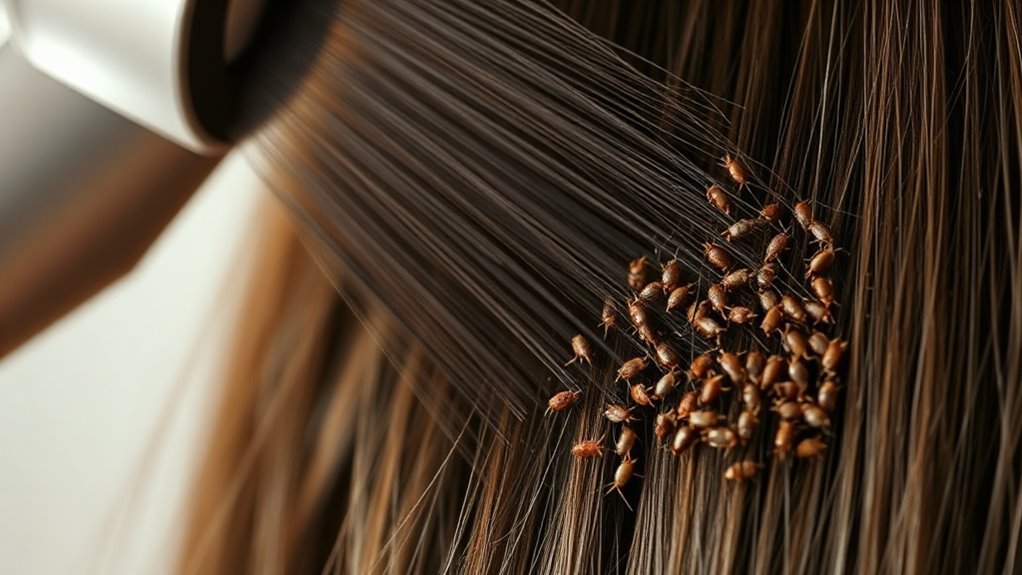
To kill lice safely, you need to apply heat at a specific temperature for a sufficient duration. Research shows that exposing lice and their eggs to temperatures around 130°F (54°C) for at least 5 to 10 minutes effectively kills them. This heat disrupts their biological functions and prevents eggs from hatching. However, you must make certain the temperature is consistent and evenly distributed to reach all lice on the scalp and hair. Applying heat for less time or at lower temperatures may allow lice to survive. Always avoid overheating, which can damage your scalp or hair. Using controlled heat methods guarantees you eliminate lice without causing harm, balancing safety with effectiveness.
Why Hair Dryers Alone Don’t Kill Lice
Even if you blast your hair dryer on the hottest setting, it usually won’t reach the consistent high temperatures needed to kill lice and their eggs. Hair dryers heat air unevenly, and the heat dissipates quickly before penetrating the scalp or hair shafts where lice and nits reside. Additionally, lice hide close to the scalp, and your hair can block direct heat exposure. The airflow from a dryer isn’t strong enough or sustained long enough to guarantee thorough lice eradication. Relying solely on a hair dryer can give you a false sense of security, making it harder to fully eliminate an infestation. To effectively tackle lice, you need methods that deliver controlled, consistent heat or treatments designed specifically for lice removal—hair dryers just don’t cut it on their own.
Best Heat-Based Alternatives to Hair Dryers for Lice Removal
If you’re looking for better heat-based options than a hair dryer, steam treatments can be highly effective at killing lice.
You might also consider heated air combs, which combine heat with combing to remove lice and eggs.
Additionally, infrared heat devices offer a targeted approach that’s gentle yet powerful for lice removal.
Steam Treatment Effectiveness
Exploring steam treatment reveals a promising heat-based alternative to hair dryers for tackling lice. When you use steam, it penetrates hair shafts and can effectively kill lice and their eggs by disrupting their moisture balance. Here’s why steam treatment might work well for you:
- Temperature Control: Steam maintains a consistent heat level around 120°C, enough to kill lice without burning the scalp.
- Moisture Penetration: Unlike dry heat, steam reaches lice hidden deep in hair strands and eggs stuck to follicles.
- Safety: Steam minimizes scalp irritation and the risk of overheating compared to direct hot air from hair dryers.
Heated Air Comb Options
Steam treatments show how targeted heat can effectively combat lice, but they require specific equipment and careful handling. Heated air combs offer a practical alternative by combining heat and combing to remove lice and eggs. These devices are designed to deliver controlled warm air directly to the scalp while you comb through hair, increasing effectiveness compared to a hair dryer.
Here’s a quick comparison of popular heated air combs:
| Comb Model | Features |
|---|---|
| LouseBuster | FDA-cleared, adjustable heat |
| AirAllé | Portable, rechargeable |
| RobiComb | Battery-powered, gentle heat |
| NitFreee Comb | Lightweight, airflow control |
| Licetec Heated Comb | Easy to use, safe temperature |
Choosing the right comb depends on your needs, but all provide a safer, targeted heat treatment alternative to traditional hair dryers.
Infrared Heat Devices
Harnessing infrared heat offers an effective way to target lice without the risks associated with conventional hair dryers. Infrared heat devices use longer wavelengths that penetrate the hair and scalp gently but thoroughly, killing lice and nits by dehydrating them. If you’re considering this approach, here are the top advantages:
- Safety – Infrared heat is less likely to cause burns or scalp irritation compared to traditional hair dryers.
- Effectiveness – It reaches lice hidden close to the scalp, ensuring thorough treatment.
- Ease of Use – Many devices are handheld and designed specifically for lice removal, making them convenient for home use.
Combining Hair Dryers With Other Lice Removal Methods
You can boost lice removal by combining hair dryer heat with other treatments.
Try using a fine-tooth comb to physically remove lice while applying heat to target any survivors.
Pairing this with chemical shampoos can increase your chances of fully eliminating the infestation.
Heat and Lice Treatment
Combining the heat from a hair dryer with other lice removal methods can boost your chances of effectively eliminating these pests. While heat alone might not kill every louse or nit, it enhances overall treatment effectiveness when paired with other strategies. Here’s how you can use heat alongside standard methods:
- Apply a lice treatment shampoo or lotion first, targeting live lice chemically.
- Use the hair dryer on a high but safe heat setting to dry the hair thoroughly; this can help weaken lice and disrupt their environment.
- Follow up with regular nit combing to physically remove dead lice and nits, ensuring fewer survivors.
This combined approach maximizes your chances of success, minimizing the risk of reinfestation.
Combining Combing Techniques
Bringing together hair dryers and combing techniques can markedly improve your lice removal efforts. After using a hair dryer on low heat to help dry your hair thoroughly, you can make combing easier and more effective. The warmth can loosen lice and nits, making them less clingy. Use a fine-toothed lice comb on damp hair, section by section, to physically remove lice and eggs. The combination works well because heat alone won’t guarantee complete eradication, but it can enhance combing efficiency. Be patient and thorough, repeating the process every few days to catch any newly hatched lice. This combined approach gives you a better chance of completely clearing an infestation without relying solely on heat or combing alone.
Using Chemical Shampoos
Enhance your lice treatment by integrating chemical shampoos with the use of hair dryers. Chemical shampoos can effectively kill lice and nits, while hair dryers help dry hair thoroughly, making combing easier and possibly deterring live lice from surviving. To combine these methods efficiently, follow these steps:
- Apply the chemical shampoo as directed, ensuring full scalp coverage, and rinse thoroughly.
- Use a fine-toothed lice comb on damp hair to remove lice and nits systematically.
- After combing, dry the hair completely with a hair dryer set on a moderate heat to prevent any moisture that lice thrive on.
Frequently Asked Questions
Can Lice Develop Resistance to Heat Treatments Over Time?
Yes, lice can develop resistance to heat treatments over time.
You’ll want to combine methods and avoid relying solely on heat.
This approach will help you effectively control and prevent lice infestations from becoming harder to treat.
Are Certain Hair Types More Susceptible to Heat Damage From Dryers?
Yes, certain hair types like fine or damaged hair are more susceptible to heat damage from dryers.
You should use lower heat settings and protect your hair to avoid breakage and dryness when drying or styling.
How Often Should Hair Be Checked for Lice During an Infestation?
“An ounce of prevention is worth a pound of cure.”
You should check hair every two to three days during an infestation to catch lice early.
This way, you can act quickly and prevent them from spreading further.
Can Heat From a Hair Dryer Harm Hair Follicles or Scalp Skin?
Yes, heat from a hair dryer can harm hair follicles or scalp skin if you use it too hot or too close.
You should keep it on a moderate setting and avoid prolonged exposure to protect your scalp and hair.
Taking care of your hair and scalp is essential, so always be mindful of the heat level.
A little caution goes a long way!
Are There Natural Remedies That Complement Heat-Based Lice Treatments?
Think of tea tree oil as a warrior’s shield—you can use it alongside heat treatments to fight lice naturally.
You’ll also find neem oil and vinegar help weaken lice, giving you a stronger, holistic defense.
Conclusion
You might think blasting lice with your hair dryer is like using a magnifying glass to burn ants—tempting but not quite effective.
Studies show lice can survive typical hair dryer heat, so relying on it alone won’t do the trick.
Instead, combine heat with proven treatments like lice combing or specialized shampoos.
That way, you’re not just chasing shadows but actually beating the pests at their own game.
In conclusion, while a hair dryer might seem like a quick fix for lice, it’s not effective on its own.
To truly eliminate lice, it’s essential to use it in conjunction with other methods.
Combining heat with lice combing and specialized shampoos ensures you tackle the problem head-on.
So, don’t just rely on heat; arm yourself with a complete lice treatment strategy to win the battle against these pesky invaders!