How Hot Is a Hair Dryer?
How Hot Is a Hair Dryer?
A hair dryer typically blows air between 140°F and 200°F.
This range is hot enough to style effectively, but careful control is essential to protect your hair.
You’ll want to keep the temperature around 120°F to 140°F to avoid damage, especially if your hair is fine or treated.
Higher heat or prolonged exposure can dry out and weaken your strands.
Adjusting heat and airflow settings helps balance styling and safety.
If you want to keep your hair healthy while styling, there’s more to learn about smart drying techniques.
By mastering these techniques, you can achieve your desired look without compromising hair health.
Key Takeaways
- Hair dryers typically operate between 140°F and 200°F (60°C to 93°C), with some professional models exceeding 200°F (93°C).
- Airflow from the dryer cools the emitted air, making it feel cooler than the heating element’s actual temperature.
- Low heat settings start near 80°F (27°C), while high settings often reach 140°F–160°F (60°C–71°C).
- Temperatures above 140°F (60°C) increase the risk of hair damage, so staying below 180°F (82°C) is safer for hair health.
- Balancing medium heat with sufficient airflow provides effective drying while minimizing excessive heat exposure.
How Hot Does a Hair Dryer Actually Get?
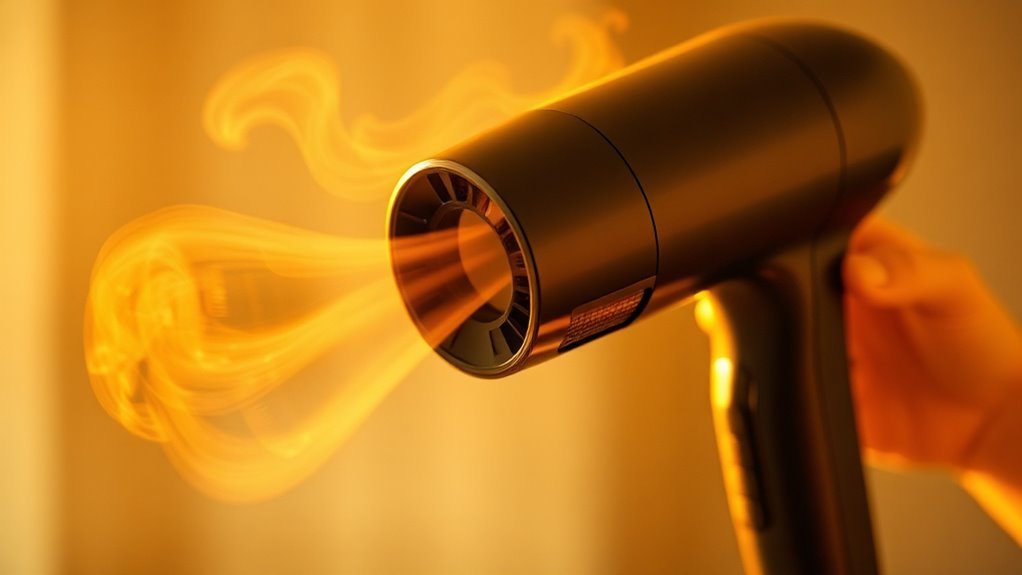
When you turn on a hair dryer, it quickly heats up to temperatures that can range from 140°F to 200°F (60°C to 93°C), depending on the model and heat setting. The heating element inside converts electrical energy into heat, which is then blown out by the fan. Some dryers have multiple heat levels, so you can adjust the temperature to suit your needs. Lower settings produce less heat, while higher settings push the temperature closer to the upper range. Keep in mind that the air coming out might feel cooler than the actual heating element because of the airflow. Understanding this helps you realize how much heat your hair dryer really generates during use.
What Hair Dryer Temperature Is Safe for Your Hair?

You’ll want to use a hair dryer temperature that keeps your hair healthy without causing damage.
Finding the ideal range depends on your hair type and how much heat it can handle safely.
Let’s explore the best settings to prevent heat damage and protect your strands.
Ideal Temperature Range
Although higher heat settings can dry your hair faster, using temperatures above 140°F (60°C) risks damaging the hair shaft and scalp. To protect your hair, aim for an ideal temperature range between 120°F and 140°F (49°C to 60°C). This range effectively dries your hair without stripping moisture or causing excessive heat stress. If your hair is fine, thin, or chemically treated, stay closer to the lower end of this range to prevent fragility and breakage. For thicker or coarser hair, you can safely use the higher end for efficient drying. Many modern hair dryers offer adjustable heat settings, so you can tailor the temperature to your hair type. Sticking to this ideal range helps maintain your hair’s strength, shine, and overall health.
Heat Damage Prevention
To prevent heat damage, you need to keep your hair dryer’s temperature within safe limits that protect your hair’s natural moisture and structure. Generally, staying below 180°F (82°C) minimizes the risk of drying out or weakening your strands. Using the lowest effective heat setting speeds up drying without overexposing your hair to intense heat. Also, avoid holding the dryer too close—keeping it at least six inches away helps disperse heat evenly. Incorporate cool air bursts to set your style and reduce heat exposure. Finally, don’t forget to limit drying time; prolonged heat application increases damage risk. By controlling temperature, distance, and duration, you can enjoy smooth, healthy hair without sacrificing style or shine.
Hair Type Considerations
Different hair types respond uniquely to heat, so choosing the right hair dryer temperature is essential for maintaining your hair’s health. If you have fine or thin hair, stick to lower heat settings—around 140°F (60°C)—to prevent breakage and dryness. For medium or normal hair, moderate heat, about 160°F to 180°F (70°C to 80°C), works well without causing damage. Coarse, thick, or curly hair can usually handle higher temperatures up to 200°F (90°C), but don’t go any higher to avoid excessive dryness and frizz. Always use the lowest effective heat and combine it with heat protectant sprays. Listening to how your hair reacts will help you find the best balance between styling and health, keeping your locks strong and shiny.
How Heat and Speed Settings Change Hair Dryer Temperature

You’ll notice that adjusting the heat setting changes the temperature range coming from your hair dryer.
At the same time, the speed of the airflow affects how hot it actually feels on your hair.
Understanding how to balance heat and speed helps you dry efficiently without causing damage.
Heat Setting Temperature Range
When adjusting your hair dryer, the heat and speed settings directly influence the temperature it emits. Most hair dryers offer low, medium, and high heat settings, typically ranging from about 80°F (27°C) on low to around 140°F–160°F (60°C–71°C) on high. Some professional models can reach even higher temperatures, sometimes exceeding 200°F (93°C). The low setting is great for gentle drying and minimizing heat damage, while the high setting speeds up drying but risks overheating your hair if used improperly. Medium heat strikes a balance between drying time and safety. By understanding these temperature ranges, you can select the best heat level to protect your hair while achieving your desired style efficiently. Always start low and increase only if needed.
Impact Of Airflow Speed
Adjusting the airflow speed on your hair dryer can markedly change the temperature you feel on your hair. When you increase the speed, the air moves faster, which often reduces the heat intensity because the hot air disperses more quickly. Conversely, a lower speed concentrates the heat, making your hair feel hotter even if the temperature setting remains the same. This means that even on a medium heat setting, high airflow can feel cooler than on a low airflow. Understanding this interplay helps you control drying efficiency and comfort. So, when you select a speed, you’re not just picking how fast your hair dries—you’re also influencing how hot it actually feels, impacting your styling and hair health.
Balancing Heat And Speed
Although heat and speed settings might seem separate, they work together to determine the actual temperature your hair experiences. When you increase the heat, the air gets hotter, but if the airflow is low, the hot air lingers longer on your hair, raising the risk of damage. On the other hand, turning up the speed pushes more air out quickly, which can cool the overall temperature despite high heat settings. To balance these factors, you’ll want to find a combination where the airflow is strong enough to prevent overheating but still warm enough to dry efficiently. Experiment with medium heat and speed first—this combo often provides effective drying without excessive heat exposure, helping you protect your hair while saving time.
Why Can Hair Dryer Heat Damage Your Hair?
Excessive heat from a hair dryer can weaken your hair’s structure, making it more vulnerable to damage. When you expose your hair to high temperatures, the protective outer layer, called the cuticle, can lift or crack. This causes moisture to escape, leaving your hair dry and brittle. Over time, repeated heat exposure breaks down the protein bonds in your hair, resulting in split ends and breakage. You might notice your hair becoming dull, frizzy, or losing elasticity. If you frequently use a hot setting, you’re effectively stripping your hair of its natural oils and moisture balance. This damage can be hard to reverse, so understanding why heat causes this harm helps you appreciate the importance of careful drying practices.
How to Protect Your Hair When Using a Hair Dryer
To keep your hair healthy while drying, you need to take specific steps that minimize heat damage. First, always use a heat protectant spray before turning on your hair dryer; it forms a barrier that reduces moisture loss. Next, avoid using the highest heat setting—opt for medium or low heat instead. Keep the dryer moving constantly rather than focusing on one spot, and maintain a distance of at least six inches from your hair. Also, try to air-dry your hair partially before using the dryer to cut down exposure time. Finally, use a nozzle attachment to direct airflow and reduce frizz. By following these steps, you’ll protect your hair’s natural moisture and prevent unnecessary damage while still drying efficiently.
Tips to Style Hair Safely Without Overheating
Protecting your hair from heat damage is just one part of using a hair dryer wisely. To style your hair safely without overheating, you need to control the temperature and technique. Here are some tips to keep your hair healthy while achieving your desired look:
- Use the lowest heat setting that still dries your hair effectively.
- Keep the dryer moving constantly to avoid concentrating heat on one spot.
- Maintain a safe distance—about 6 inches—from your hair to prevent burning.
- Apply a heat protectant spray before drying to shield your strands from damage.
Frequently Asked Questions
Can Hair Dryers Be Used to Dry Pets Safely?
You can use hair dryers to dry pets, but you shouldn’t use high heat.
Keep the dryer on a low or cool setting.
Hold it at a safe distance, and watch your pet’s comfort closely.
How Long Does It Take for a Hair Dryer to Cool Down?
It usually takes your hair dryer about 10 to 20 minutes to cool down completely after you turn it off.
To speed this up, unplug it and place it in a well-ventilated area.
Just make sure to avoid flammable surfaces!
Do Hair Dryers Consume a Lot of Electricity?
You won’t notice a huge spike in your electricity bill, but hair dryers do consume a decent amount of power compared to other gadgets.
So, using them sparingly or on lower settings can save energy and money.
It’s a simple way to keep those costs down while still looking good!
Are There Eco-Friendly Hair Dryers Available?
Yes, you can find eco-friendly hair dryers designed to use less energy and reduce heat damage.
They often have energy-efficient motors and adjustable settings.
This helps you save electricity while protecting your hair and the environment.
Can Hair Dryers Cause Fires if Left Unattended?
Don’t play with fire—yes, hair dryers can cause fires if left unattended.
You should always turn them off and unplug them after use to avoid accidents.
Staying vigilant keeps your home safe and sound.
Conclusion
Now that you know how hot a hair dryer can really get, you can protect your hair like a true Renaissance noble guarding their crown jewels.
Remember, using the lowest effective heat and speed settings keeps your hair safe from damage.
Always shield your strands with a heat protectant, and don’t rush the drying process.
With these simple steps, you’ll keep your hair healthy and stylish—no time machine needed!
By being mindful of the heat settings and incorporating a protectant, you’re ensuring your hair stays vibrant and strong.
It’s all about taking those extra precautions to prevent damage.
So, embrace the art of hair drying like a pro, and enjoy fabulous locks every day!