How Do I Dry My Hair Without a Blow Dryer in 7 Steps?
To dry your hair without a blow dryer, follow these simple steps to achieve beautifully dried locks while minimizing damage.
Whether you’re in a rush or just prefer a more natural approach, drying your hair without heat can keep it healthy and frizz-free.
First, start by gently detangling your wet hair with a wide-tooth comb.
Using a leave-in conditioner can help prevent breakage during this process.
Next, instead of rubbing your hair with a towel, try patting it dry with a microfiber towel or a cotton T-shirt.
This technique reduces frizz and damage.
Once your hair is less wet, apply a leave-in conditioner or hair oil to help control flyaways.
If you have curls, consider trying the plopping method to enhance your natural texture.
To speed up the drying process, air-dry your hair in sections.
Lastly, a cool fan can help circulate air and naturally dry your hair faster.
For more tips, keep exploring these techniques!
Key Takeaways
- Gently pat hair dry with a microfiber towel or cotton T-shirt to remove excess water without causing frizz or damage.
- Apply leave-in conditioner or hair oil to damp hair, focusing on mid-lengths and ends, to lock in moisture and reduce flyaways.
- Detangle hair carefully with a wide-tooth comb or fingers, starting at the ends to prevent breakage and minimize tension.
- Use the plopping method by wrapping hair in a soft cotton T-shirt or microfiber towel for 20–40 minutes to enhance drying and curls.
- Divide hair into sections and let each dry naturally with gentle airflow from a cool fan to speed evaporation without heat damage.
Detangle Hair Carefully While Wet to Prevent Breakage

When your hair is wet, it’s more fragile and prone to breakage, so you’ll want to work through tangles gently. Start by applying a leave-in conditioner or detangling spray to add slip and reduce friction. Use a wide-tooth comb or your fingers to slowly and carefully separate knots, beginning at the ends and working your way up. Avoid rushing or pulling harshly, as this can cause strands to snap. If you encounter a stubborn tangle, hold the hair above it to minimize tension and patiently loosen it bit by bit. Taking your time during this step helps maintain your hair’s strength and prevents unnecessary damage, setting you up for healthier, smoother strands as your hair dries naturally.
Towel-Dry Your Hair Gently to Avoid Frizz and Damage
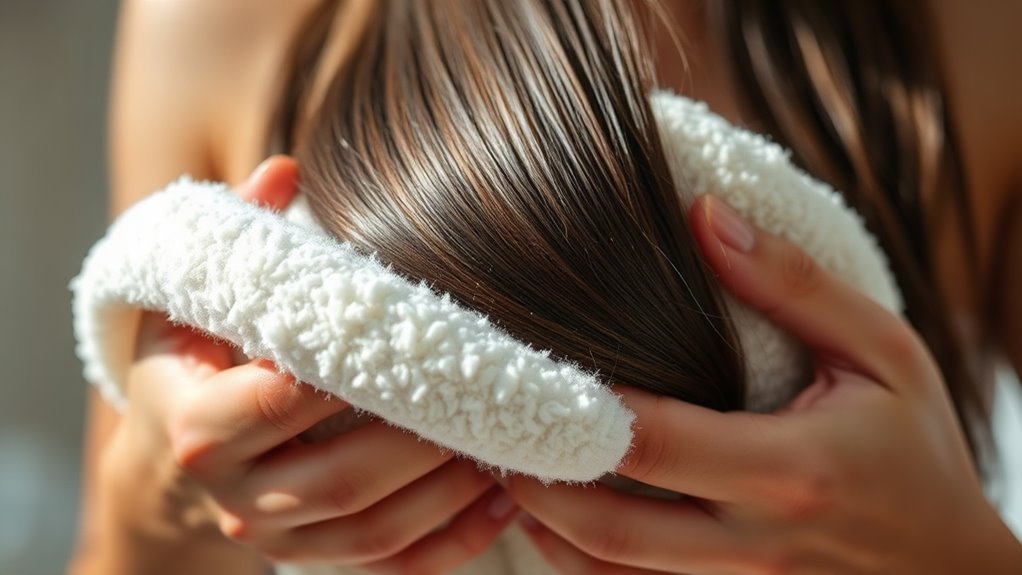
Patting your hair gently with a soft towel helps remove excess water without roughing up the cuticle. Instead of rubbing, press the towel lightly against your strands to absorb moisture. This technique reduces frizz and prevents damage caused by harsh friction. Here’s how you can towel-dry your hair effectively:
Gently pat your hair with a soft towel to remove water and reduce frizz without damaging the cuticle.
- Choose a soft, absorbent towel to minimize roughness.
- Avoid vigorous rubbing or twisting motions.
- Gently squeeze sections of hair to lift moisture.
- Use a patting motion starting from roots to tips.
- Replace the towel if it becomes too wet to make sure efficient drying.
Speed Up Drying With Microfiber Towels or Cotton T-Shirts

To speed up drying, grab a microfiber towel or a cotton T-shirt instead of a regular bath towel. These materials absorb water more efficiently without roughing up your hair cuticles, reducing frizz and breakage. Gently scrunch or pat your hair rather than rubbing it, which can cause damage. Using these alternatives helps your hair dry faster and stay smoother.
| Material | Feel on Hair |
|---|---|
| Microfiber Towel | Soft, gentle |
| Cotton T-Shirt | Smooth, absorbent |
| Regular Towel | Rough, harsh |
Choosing the right fabric makes a big difference. You’ll notice your hair dries quicker and feels healthier, saving time while keeping your strands intact.
Apply Leave-In Conditioner or Hair Oil to Control Frizz
Tame frizz and add moisture by applying a leave-in conditioner or hair oil right after towel-drying your hair. This step helps seal in hydration and smooth your hair cuticles, preventing flyaways and dryness as your hair air-dries. Choose a product suited to your hair type for the best results. Here’s how to do it effectively:
Apply leave-in conditioner or hair oil after towel-drying to lock in moisture and smooth frizz for air-dried hair.
- Dispense a small amount of product into your palms
- Rub your hands together to warm it up
- Run your fingers through damp hair, focusing on mid-lengths and ends
- Avoid the scalp to prevent greasiness
- Use a wide-tooth comb to distribute the product evenly
This simple routine keeps your hair soft, manageable, and frizz-free without heat styling.
Try the Plopping Method to Dry Curly or Wavy Hair
Using the plopping method can transform how your curls or waves dry, enhancing their natural shape while reducing frizz. After applying your favorite styling product or leave-in conditioner, lay a soft cotton t-shirt or microfiber towel flat on a surface. Flip your hair forward and gently lower your curls onto the center of the fabric. Then, wrap the sides of the shirt or towel around your head, securing it at the nape of your neck or on top with a loose knot. This technique helps absorb excess water without roughing up your hair cuticles like regular towels do. Leave your hair plopped for 20 to 40 minutes, depending on your hair’s thickness. When you unwrap, your curls will be defined, less frizzy, and partially dry, giving you a great head start without heat.
Air-Dry Your Hair in Sections for Faster, Even Drying
Break your hair into manageable sections to speed up the air-drying process and guarantee even moisture evaporation. When you separate your hair, you allow air to reach every strand more efficiently, reducing overall drying time and preventing uneven damp spots.
Dividing hair into sections speeds up air drying and ensures even moisture evaporation for better results.
To do this effectively, you can:
- Use clips or hair ties to divide your hair into 4 to 6 sections
- Start drying from the bottom sections, working your way up
- Gently separate each section with your fingers to allow airflow
- Avoid rubbing your hair to prevent frizz and breakage
- Let each section dry completely before removing clips
Use a Cool Fan to Naturally Speed Up Air-Drying
By placing a cool fan nearby, you can speed up your hair’s air-drying without heat damage. Position the fan so it gently blows air over your hair, helping moisture evaporate faster. This method is especially useful if you’re short on time but want to avoid the risks of heat styling. You can sit in front of the fan while detangling or applying your favorite leave-in conditioner. Just make sure the fan’s airflow is not too strong to prevent tangling. Using a cool fan also keeps your scalp comfortable and reduces frizz caused by heat. It’s an easy, energy-efficient way to dry your hair naturally, maintaining its health and shine without relying on a blow dryer.
Frequently Asked Questions
Can I Dry My Hair Without Heat on a Humid Day?
Yes, you can dry your hair without heat on a humid day.
Just gently squeeze out excess water with a towel. Avoid rubbing, as that can cause damage.
Let your hair air-dry naturally. It might take longer, but it’s healthier for your strands.
How Long Does Air-Drying Typically Take for Thick Hair?
Like waiting for a telegram, air-drying thick hair usually takes about 3 to 6 hours.
You’ll want to be patient, gently towel-dry first, and avoid touching your hair too much to speed things up.
Just let it do its thing!
Is It Better to Dry Hair Upside Down for Volume?
Yes, drying your hair upside down boosts volume by lifting roots away from your scalp.
You’ll get natural lift and body, especially if you scrunch your hair gently while drying.
Air-drying without a blow dryer can also enhance this effect!
Can I Sleep With Wet Hair Safely?
You can sleep with wet hair safely, but it might cause breakage or scalp issues if done often.
To protect your hair, use a silk pillowcase.
Also, consider loosely tying your hair to reduce friction and tangling overnight.
What Are Natural Alternatives to Chemical Hair Dryers?
You might find it’s no coincidence that air-drying, microfiber towels, and natural sunlight work wonders.
These gentle methods let you dry your hair naturally, avoiding heat damage while embracing a healthier, more eco-friendly routine you’ll love.
Conclusion
Drying your hair without a blow dryer not only protects it from heat damage but also boosts its natural shine and health.
Did you know that 70% of people who switch to air-drying notice less frizz and breakage?
By gently detangling, using microfiber towels, and trying methods like plopping, you can speed up drying while keeping your hair strong and smooth.
Give these steps a try, and enjoy healthier, happier hair every day!
—
In conclusion, air-drying is a fantastic way to maintain your hair’s health while avoiding heat damage.
With just a few simple techniques, you can significantly reduce frizz and breakage.
So, whether you’re using a microfiber towel or trying out plopping, you’ll be on your way to smoother, shinier locks.
Embrace the air-drying method for healthier hair and enjoy a more natural look!