10 Steps to Dry Your Hair Without a Hair Dryer
10 Steps to Dry Your Hair Without a Hair Dryer
Drying your hair without a hair dryer is not only gentle on your strands but can also help reduce frizz. If you’re looking for a more natural approach to drying your hair, follow these simple steps.
Start by gently squeezing out excess water without twisting.
Then, pat your hair dry with a soft towel or cotton T-shirt to avoid friction.
Section your hair for faster drying, and apply leave-in conditioner to smooth strands.
Carefully detangle with a wide-tooth comb to prevent breakage.
Wrap your hair in a microfiber towel or T-shirt and air-dry in a well-ventilated space.
To speed up the drying process, use cool air or a fan.
Lightly style your hair once it’s mostly dry to keep frizz at bay.
Keep exploring these tips to perfect your routine and embrace healthier hair!
Key Takeaways
- Gently squeeze out excess water from roots to ends using hands or a soft fabric to prevent damage and reduce drying time.
- Pat hair dry with a microfiber towel or soft cotton T-shirt to absorb moisture without friction or frizz.
- Section hair into manageable parts and loosely wrap with a microfiber towel or T-shirt, securing gently to speed drying and reduce breakage.
- Air-dry hair in a well-ventilated area with good airflow, avoiding humid or stuffy environments to prevent prolonged dampness.
- Use fingers or a wide-tooth comb to detangle damp hair, and apply leave-in conditioner or anti-frizz serum for smoothness and volume.
Gently Squeeze Out Excess Water From Your Hair
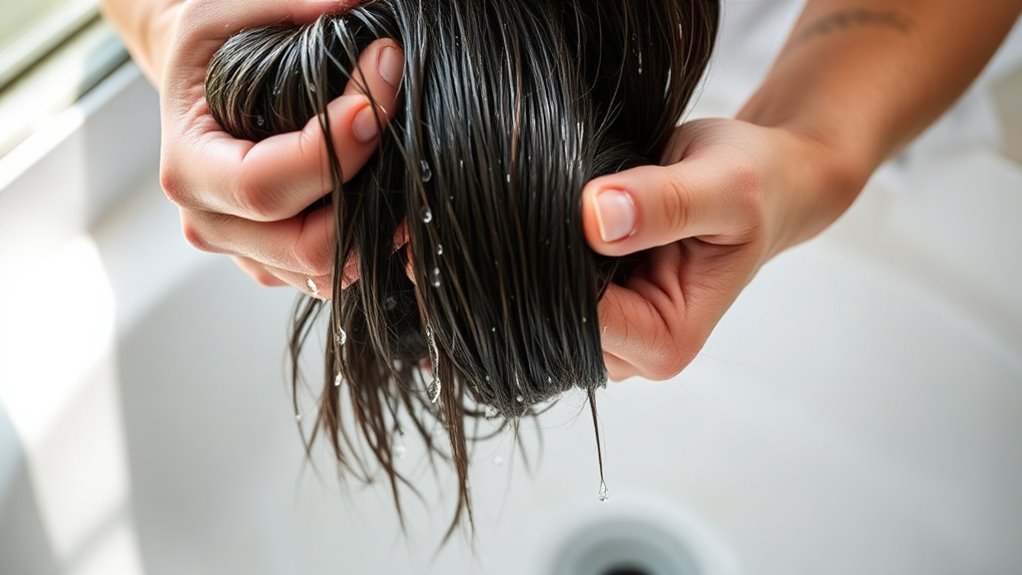
Start by gently squeezing out excess water from your hair to speed up the drying process. Use your hands to press and lift sections of your hair, letting the water drip away naturally. Avoid twisting or wringing, as this can cause breakage and frizz. Focus on the roots first, then move towards the tips, ensuring you remove as much moisture as possible without damaging your strands. This simple step reduces drying time markedly and lessens the need for heat or harsh drying methods. Be patient and thorough—getting rid of excess water at this stage sets the foundation for healthier, smoother hair as it air dries. Taking care now means your hair will look better and feel softer once fully dry.
Pat Your Hair Dry With a Soft Towel: Don’t Rub
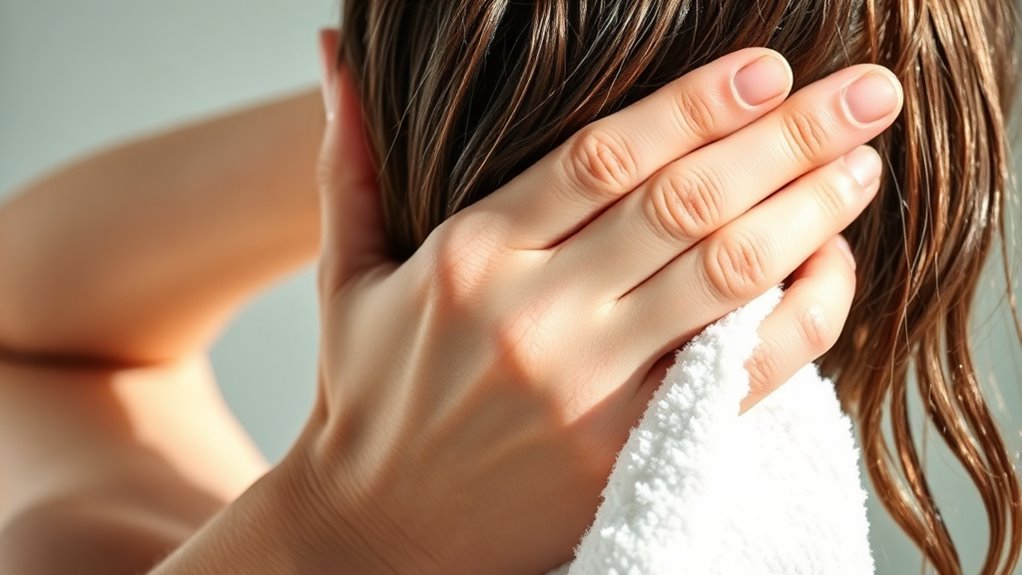
Choose a soft towel to gently pat your hair dry, avoiding any rubbing that can cause damage.
Focus on pressing the towel against your strands to soak up moisture without creating friction.
Choose The Right Towel
Reach for a soft, absorbent towel to gently pat your hair dry instead of rubbing it vigorously. Choosing the right towel matters because rough fabrics can cause breakage and frizz. Look for materials that minimize friction and soak up moisture efficiently. Cotton towels are common but can be harsh on delicate strands, while microfiber towels offer a gentler option. Avoid old, scratchy towels that may damage your hair cuticles.
| Towel Type | Benefits |
|---|---|
| Microfiber | Soft, highly absorbent, reduces frizz |
| Cotton | Readily available, affordable |
| Bamboo Fiber | Eco-friendly, gentle on hair |
Selecting a towel designed for hair care helps maintain your hair’s health and shine as you dry it naturally.
Gentle Patting Technique
Although it might be tempting to rub your hair with a towel to speed up drying, patting it gently prevents damage and frizz. When you get out of the shower, wrap your hair in a soft towel and lightly press sections of your hair to absorb the excess water. Avoid twisting or aggressively rubbing, as this rough motion can weaken strands and cause split ends. Instead, use a gentle patting motion, moving from roots to ends to soak up moisture efficiently. This technique not only protects your hair’s cuticle but also helps maintain your hairstyle’s natural texture. By treating your hair with care at this stage, you’ll reduce breakage and keep it looking smooth and healthy throughout the day.
Avoid Hair Friction
You should always pat your hair dry with a soft towel instead of rubbing it. Rubbing creates friction that can damage your hair cuticles, leading to frizz, breakage, and split ends. By gently patting, you minimize stress on your strands and help maintain moisture. Use a microfiber towel or a soft cotton T-shirt for even better results, as these materials absorb water without roughness.
Here’s how to avoid hair friction effectively:
- Press the towel gently against your hair to soak up water
- Avoid twisting or wringing your hair in the towel
- Use a soft, absorbent fabric like microfiber or cotton
- Let your hair air dry as much as possible after patting
This approach keeps your hair healthier and prevents unnecessary damage.
Section Your Hair to Help It Dry Faster
Sectioning your hair helps it dry faster by allowing air to reach all areas more easily.
You can divide your hair into manageable parts using clips or hair ties.
This simple step speeds up drying and prevents damp spots.
Benefits of Hair Sectioning
When you divide your hair into smaller sections, it dries more evenly and quickly because air can reach each strand more effectively. This simple step prevents moisture from getting trapped in thick clumps, speeding up the drying process without heat. You’ll also find it easier to manage your hair and avoid tangles while it dries. Plus, sectioning helps you focus on each part, ensuring thorough drying and reducing the risk of damp spots that can cause scalp irritation or odor.
Here are the key benefits of hair sectioning:
- Speeds up drying time by exposing more surface area
- Prevents uneven drying and damp patches
- Reduces tangling and breakage during drying
- Helps you manage and style your hair more easily afterward
How to Section Hair
Dividing your hair into manageable sections makes the drying process much more efficient. Start by parting your hair down the middle, then create two more horizontal parts: one from ear to ear and another near the nape. Use clips or hair ties to secure each section. This method guarantees air circulates well, speeding up drying without heat damage.
Here’s a quick guide to sectioning based on hair length and thickness:
| Hair Type | Number of Sections | Suggested Clip Type |
|---|---|---|
| Short & Thin | 2 | Small claw clips |
| Short & Thick | 3 | Medium claw clips |
| Long & Thin | 4 | Medium claw clips |
| Long & Thick | 5 | Large claw clips |
| Curly | 4 | Sectioning clips |
Sectioning lets you dry each part quickly and evenly.
Apply Leave-In Conditioner or Detangler for Smoothness
Although it might seem like an extra step, applying a leave-in conditioner or detangler can make a huge difference in how smooth and manageable your hair feels as it dries naturally. This simple addition helps prevent frizz, reduces tangles, and keeps your strands hydrated throughout the drying process. When your hair stays moisturized, it looks healthier and feels softer, making styling easier later on.
To get the best results, consider these tips:
- Apply a small amount evenly to damp hair, focusing on mid-lengths to ends.
- Choose a product suited for your hair type to avoid buildup.
- Avoid the roots to prevent greasiness.
- Gently scrunch your hair to help distribute the product and enhance natural texture.
This step sets a strong foundation for smooth, dry hair without heat damage.
Comb Your Hair Carefully to Prevent Breakage
Applying leave-in conditioner helps keep your hair hydrated and less prone to tangles, but how you comb it afterward plays a big role in preventing damage. Start by using a wide-tooth comb or your fingers to gently detangle your hair. Always begin at the ends and slowly work your way up to the roots, which reduces pulling and breakage. Avoid combing when your hair is soaking wet, as it’s more fragile then. Instead, wait until it’s damp but not dripping. Be patient and avoid rushing through tangles; quick, harsh combing can cause split ends and breakage. By combing carefully, you maintain your hair’s strength and smoothness, making your drying process gentler and healthier overall.
Use the Plopping Method for Curly or Wavy Hair
Using the plopping method can help you enhance your natural curls or waves while drying your hair without heat. After washing and applying your favorite styling products, grab a soft cotton T-shirt or microfiber cloth. Here’s how to do it effectively:
- Lay the fabric flat on a surface and flip your head forward, placing your curls in the center.
- Gently lower your head, wrapping the fabric around your hair to secure it at the nape of your neck.
- Leave your hair wrapped for 20-30 minutes to absorb excess water without disrupting curl pattern.
- Unwrap carefully and let your hair air dry, avoiding touching it to prevent frizz.
This method reduces drying time and keeps curls defined without heat damage.
Dry Your Hair Without a Hair Dryer Using a Microfiber Towel or T-Shirt
You can dry your hair gently using a microfiber towel or a soft cotton T-shirt to reduce frizz and breakage.
Choosing the right fabric makes a big difference, so pick one that’s absorbent and smooth.
Wrap your hair properly to soak up moisture without causing damage.
Benefits of Microfiber Towels
Microfiber towels often outperform regular towels when it comes to drying hair gently and efficiently. You’ll notice they absorb water faster, reducing your hair’s drying time without rough rubbing. This helps prevent frizz and breakage, keeping your strands smooth and healthy. Plus, microfiber towels are lightweight and compact, making them easy to handle and perfect for travel. They also dry quickly after use, so they’re ready when you need them next.
Here are some benefits you’ll appreciate:
- Absorbs moisture quickly, cutting drying time
- Minimizes friction, reducing hair damage
- Lightweight and easy to maneuver
- Dries fast, preventing mildew buildup
Using a microfiber towel helps you maintain healthier hair without the heat damage from a dryer.
Choosing the Right T-Shirt
When you grab a soft cotton T-shirt to dry your hair, you cut down on frizz and damage compared to rough towels. Choose a shirt made from 100% cotton or a cotton blend with a tight weave to absorb moisture gently without roughing up your strands. Avoid old or worn-out T-shirts since their fibers can become coarse and snag your hair. Pick a T-shirt that’s large enough to wrap around your head comfortably, allowing you to blot or squeeze excess water without rubbing harshly. Using a T-shirt is an affordable, eco-friendly alternative to microfiber towels, and it’s widely available in your closet. Just make sure it’s clean and soft for the best results in preserving your hair’s health and shine.
Proper Hair Wrapping Techniques
Mastering proper hair wrapping techniques can markedly reduce drying time and minimize frizz. Start by placing a microfiber towel or soft cotton T-shirt over your head, ensuring the fabric covers your hair fully. Gather your hair at the nape of your neck, then twist the towel or T-shirt gently upward, securing the ends at the crown. This method keeps your hair contained without rough rubbing, which can cause breakage and frizz.
Here’s how to do it right:
- Use a microfiber towel or a smooth cotton T-shirt for gentle absorption
- Avoid rubbing; instead, gently squeeze excess water from strands
- Twist hair and fabric together without pulling too tight
- Secure the wrap by tucking the ends or using a loose hair tie
These steps help your hair dry faster and maintain its smoothness.
Air-Dry Your Hair in a Well-Ventilated Area
Choosing a well-ventilated area to air-dry your hair markedly speeds up the drying process and reduces the risk of frizz. Find a spot with good airflow, like near an open window or in a room with a ceiling fan. This helps moisture evaporate faster without relying on heat that can damage your strands. Avoid humid or stuffy spaces, as trapped moisture prolongs drying and can make your hair feel heavy or sticky. Make sure your hair is evenly spread out and not bunched up, so air circulates freely around each section. Staying in a well-ventilated area also prevents your scalp from feeling damp and uncomfortable. By choosing the right spot, you’ll enjoy healthier, smoother hair as it dries naturally.
Use Cool Air or a Fan to Speed Up Drying
To speed up drying without heat, try using cool air or a fan. This method helps evaporate moisture faster without exposing your hair to damaging heat. Position yourself near an open window or use a standing fan to circulate air around your hair. The gentle breeze encourages quicker drying while keeping your strands healthy.
Here are some tips to maximize this approach:
- Choose a fan with adjustable speeds for better control
- Avoid direct, strong airflow on your scalp to prevent dryness
- Rotate your head occasionally to expose all sections evenly
- Combine this with blotting your hair gently with a towel first
Using cool air or a fan is an easy, safe way to reduce drying time while protecting your hair’s natural texture.
Style Your Hair Lightly Once Mostly Dry to Avoid Frizz
Start styling your hair gently once it’s mostly dry to guarantee frizz and maintain smoothness. Avoid aggressively brushing or combing wet hair, as this can cause breakage and increase frizz. Instead, use your fingers or a wide-tooth comb to lightly detangle and shape your hair. Applying a small amount of leave-in conditioner or anti-frizz serum can help control flyaways and add shine. Focus on smoothing the hair’s surface rather than pulling or tugging. If you want to add volume or curls, use gentle scrunching or twisting motions without forcing the hair. Styling while your hair is damp but not soaking wet guarantees the style holds better and reduces the risk of frizz caused by excess moisture. Keep your touch light and patient for the best results.
Frequently Asked Questions
Can Drying Hair Without Heat Prevent Split Ends?
Yes, drying your hair without heat can help prevent split ends by reducing damage and dryness.
You’ll keep your hair healthier and stronger since heat can weaken strands.
This weakening can lead to more breakage and split ends over time.
How Long Does It Usually Take to Air-Dry Hair Completely?
It usually takes you anywhere from 30 minutes to a few hours to air-dry your hair completely, depending on its thickness, length, and humidity.
Thicker or longer hair naturally takes longer to dry without heat.
Is It Better to Wash Hair Daily or Less Often When Air-Drying?
It’s better to wash your hair less often when air-drying.
Frequent washing can strip natural oils, which makes hair dry and brittle.
You’ll keep your hair healthier and more manageable by spacing out washes.
Can Drying Hair Naturally Reduce Scalp Dandruff?
Yes, drying your hair naturally can help reduce scalp dandruff.
It prevents excess dryness and irritation caused by heat.
You’ll keep your scalp healthier, which decreases flakiness.
This promotes better moisture balance over time.
What Are the Best Products to Use for Air-Dried Hair Maintenance?
You’ll love lightweight leave-in lotions, soothing serums, and gentle gels for air-dried hair maintenance.
These products prevent frizz, preserve your natural texture, and provide shine.
Conclusion
By gently squeezing and patting your hair with a soft towel, you’ll feel the weight of damp strands lighten like morning mist.
Sectioning and using a leave-in conditioner smooths each lock, while air and a gentle fan whisper away the moisture.
As your hair dries naturally, imagine soft breezes teasing your tresses, leaving them silky and frizz-free.
With these simple steps, you’ll embrace a healthier, dryer hair routine—no dryer needed.
—
Incorporating these techniques not only promotes healthier hair but also saves you time and energy.
Embrace the natural drying process and enjoy the benefits of frizz-free, silky locks.
You’ll be amazed at how easy it is to achieve beautiful hair without the heat.
So, say goodbye to your hair dryer and hello to your new go-to routine for drying your hair naturally!