Will a Hair Dryer Kill Bed Bugs?
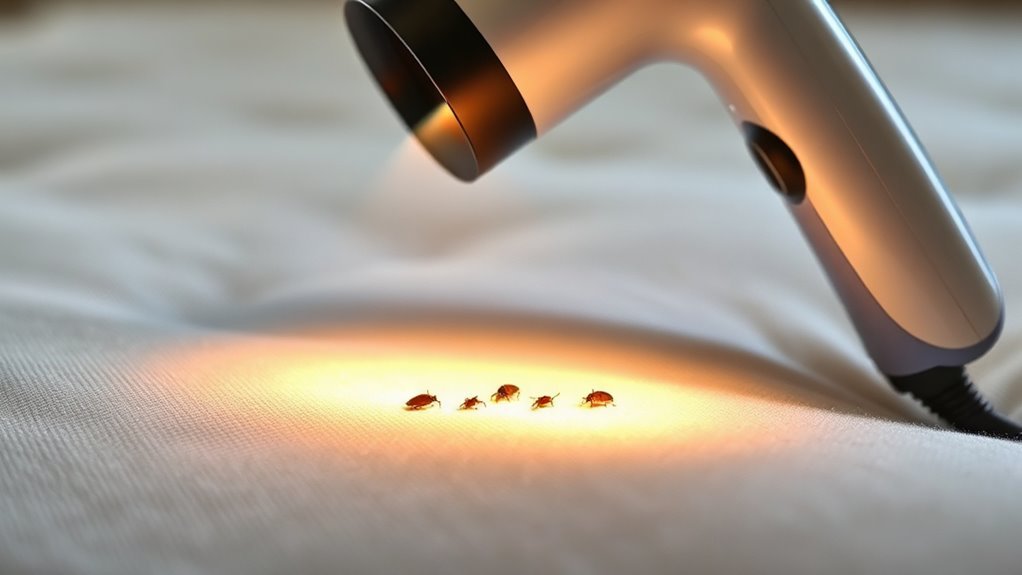
You can kill some bed bugs with a hair dryer, but it won’t eliminate an entire infestation or reach hidden eggs effectively.
Hair dryers don’t produce consistent heat above 120°F, which is necessary to kill all bugs and eggs.
Plus, their airflow might spread bugs further, making the problem worse.
So, while they can be useful for spot treatments, they aren’t a solution for full control.
To truly get rid of bed bugs, you’ll want to explore more reliable heat options.
There are complementary methods that work deeper and safer, providing a more comprehensive approach to pest control.
Don’t rely solely on a hair dryer; consider a combination of strategies for the best results.
Key Takeaways
- A hair dryer’s heat is usually not hot enough to kill all bed bugs and eggs effectively.
- Direct, prolonged contact with hot air may kill some bed bugs but is inconsistent and limited.
- Hair dryer airflow can scatter bed bugs, potentially worsening the infestation spread.
- It is difficult for a hair dryer to reach all bed bug hiding spots, such as mattress seams.
- Hair dryers offer only temporary control and cannot replace professional heat treatments or comprehensive methods.
Can a Hair Dryer Kill Bed Bugs?
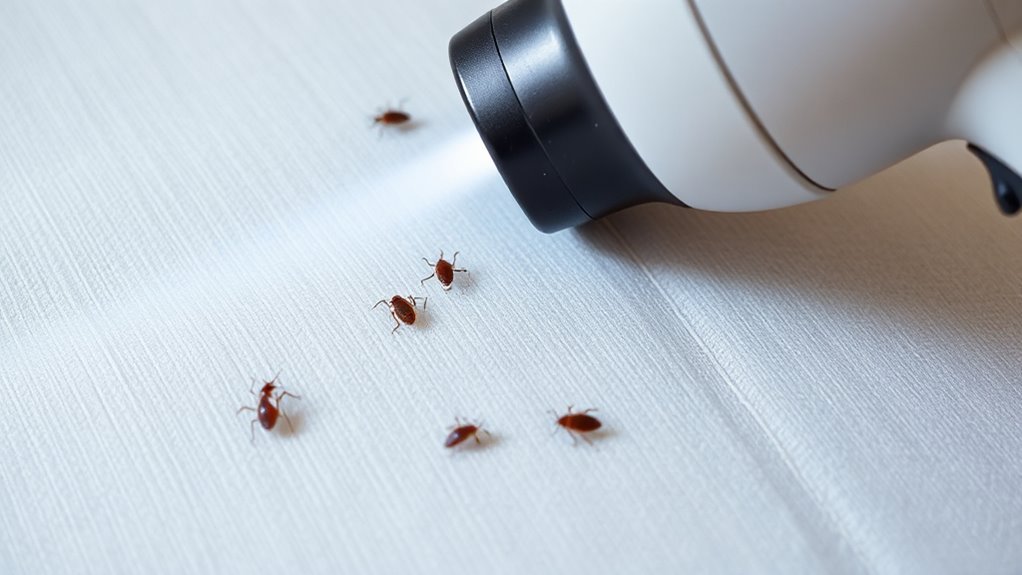
You might wonder if a hair dryer can kill bed bugs effectively. While a hair dryer produces heat, it usually doesn’t get hot enough or maintain the necessary temperature long enough to kill all bed bugs and their eggs. You’d have to hold the dryer very close and focus on infested areas for a prolonged time, which isn’t practical or safe. The airflow from a hair dryer might even cause bugs to scatter, making the problem worse. Plus, it’s tough to reach all hiding spots with a dryer alone. So, although it may kill some bed bugs on direct contact, relying solely on a hair dryer won’t guarantee a full eradication of the infestation. You’ll need more reliable methods for effective control.
How Heat Kills Bed Bugs and Their Eggs
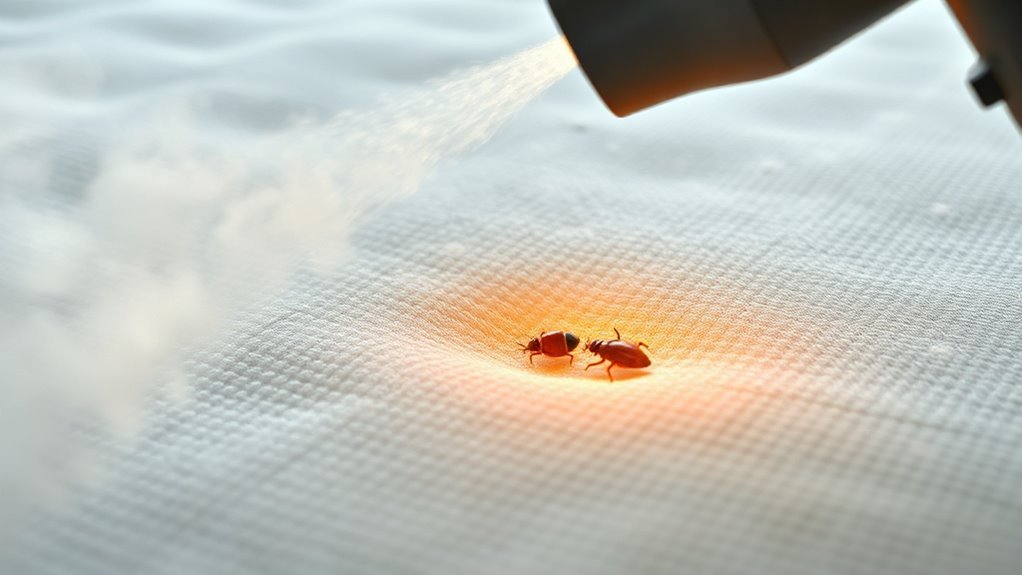
Applying heat effectively kills bed bugs and their eggs by disrupting their biological functions. When you expose them to temperatures above 120°F (49°C) for a sustained period, their proteins denature, and vital cellular processes shut down, causing death. This heat penetrates their tough exoskeletons and reaches hidden eggs, which are usually resistant to many chemical treatments.
You need to raise the temperature long enough to guarantee all life stages, including nymphs and eggs, are eradicated. Heat causes dehydration and damages their nervous system, making it impossible for them to survive. By understanding how heat works at a biological level, you can appreciate why it’s a powerful method for bed bug control, targeting even the most resilient life stages within your infested spaces.
Why Hair Dryers Only Provide Temporary Bed Bug Control
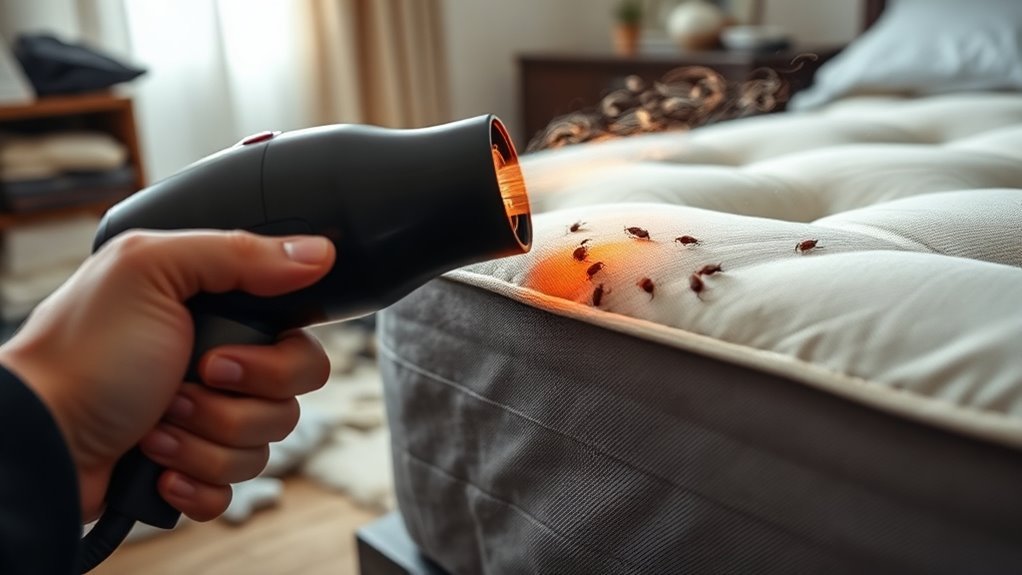
Although hair dryers can kill bed bugs on contact by generating heat, they only offer a temporary solution because their heat output and coverage are limited. You can’t rely on a hair dryer to reach the deep hiding spots where bed bugs and their eggs often reside, like inside mattress seams or behind baseboards. The heat from a hair dryer cools quickly once you stop using it, so any bugs not directly exposed will survive and repopulate. Plus, it’s impractical to treat an entire room or infested furniture with a hair dryer without missing spots. Using one might reduce the immediate number of visible bugs, but it won’t eliminate the infestation. To truly control bed bugs, you’ll need more thorough, consistent methods beyond what a hair dryer can provide.
Better Heat Treatments That Actually Work
While hair dryers offer only brief relief, professional heat treatments provide a more effective way to eliminate bed bugs by delivering high temperatures evenly throughout an infested area. These treatments penetrate cracks and crevices where bed bugs hide, ensuring a thorough kill. You can rely on:
- Whole-room heat treatments that raise the temperature to lethal levels for several hours.
- Portable heat chambers for infested items like furniture and clothing.
- Steam treatments targeting bed bug hiding spots with precise, intense heat.
- Infrared heat systems that evenly distribute warmth without damaging belongings.
How to Use Heat Safely to Kill Bed Bugs
Because heat can damage your belongings or cause injury if used improperly, you need to follow safety guidelines when treating bed bugs. Always monitor the temperature closely and avoid directing heat at one spot for too long. Use a reliable thermometer to make certain the area reaches at least 120°F (49°C), the temperature lethal to bed bugs. Keep flammable items away and never leave the heat source unattended.
| Safety Tip | Why It Matters |
|---|---|
| Use a thermometer | Makes certain effective heat level |
| Keep heat moving | Prevents damage or burns |
| Avoid flammable materials | Reduces fire risk |
Non-Heat Methods to Get Rid of Bed Bugs
Heat treatments can be effective, but they’re not the only way to tackle bed bugs. If you want alternatives, here are some non-heat methods you can try to get rid of these pests:
- Vacuuming: Regularly vacuum your mattress, bed frame, and surrounding areas to physically remove bed bugs and eggs.
- Encasements: Use mattress and box spring encasements to trap bugs inside and prevent new infestations.
- Diatomaceous Earth: Sprinkle food-grade diatomaceous earth around infested areas; it dehydrates and kills bed bugs on contact.
- Chemical Treatments: Apply EPA-approved insecticides carefully, following label instructions for safety and effectiveness.
These options can complement heat treatments or serve as standalone solutions to keep your space bed bug-free.
Frequently Asked Questions
Are Bed Bugs Resistant to Any Other Common Household Heat Sources?
Yes, bed bugs can resist some common household heat sources like warm water or low-temperature dryers.
You’ll need temperatures above 120°F (49°C) sustained for several minutes to effectively kill them.
Can Hair Dryers Damage Furniture or Bedding When Used for Bed Bugs?
Using a hair dryer on furniture or bedding can be like playing with fire.
It might cause damage if it overheats or stays too close.
You shouldn’t use it too long or on delicate fabrics to avoid burns or warping.
How Quickly Do Bed Bugs Reproduce After Heat Treatment?
Bed bugs can start reproducing within a week after heat treatment if any survive.
You’ll want to monitor closely and maybe repeat treatments.
Surviving bugs can lay hundreds of eggs quickly, restarting the infestation cycle.
What Signs Indicate a Severe Bed Bug Infestation?
You’ll spot severe bed bug infestations by noticing numerous bites, dark spots on bedding, a sweet, musty odor, and shed skins.
These signs prove they’re multiplying fast and need urgent action from you.
Don’t wait—take action as soon as you notice anything unusual!
Are There Natural Predators of Bed Bugs in the Home Environment?
You won’t find many natural predators of bed bugs inside your home.
Some spiders and cockroaches might eat them, but relying on these isn’t effective.
You’ll need other methods to control infestations properly.
Conclusion
Using a hair dryer to kill bed bugs might seem like a quick fix, but it’s just a drop in the ocean.
While the heat can zap a few bugs, it won’t reach the hidden eggs or deep cracks where they hide.
For a real knockout punch, you’ll need professional heat treatments or other proven methods.
Remember, beating bed bugs takes more than just blowing hot air—it takes a strategic, thorough approach.
—
In conclusion, while a hair dryer can help eliminate some bed bugs, it’s not a comprehensive solution.
To effectively combat these pests, consider professional treatments that target all life stages, including those pesky eggs.
A well-rounded strategy is essential for complete eradication.
Don’t underestimate the importance of thoroughness in your approach to bed bug control!