Can a Hair Dryer Kill Lice and Nits?
You can use a hair dryer to hurt lice and nits by applying warm air close to the scalp, which may dry out eggs and overheat lice.
However, most hair dryers don’t get hot enough or stay heated long enough to kill them completely.
Plus, using high heat risks burning your scalp or damaging hair.
If you want more effective methods and safety tips, there are better options and ways to combine treatments for full lice removal.
Consider using specialized lice treatments or combing techniques alongside your hair dryer for a more thorough approach.
While a hair dryer might seem like a quick fix, it’s important to prioritize safety and effectiveness in tackling lice infestations.
So, explore various methods to ensure you eliminate lice and nits effectively without harming your hair or scalp.
Key Takeaways
- Typical hair dryers do not reach or maintain temperatures high enough to reliably kill lice and nits.
- Lice can survive brief heat exposure up to about 130°F (54°C), which hair dryers often fail to exceed near the scalp.
- Heat from hair dryers dries nits but usually cannot deliver sustained heat needed to prevent hatching effectively.
- Using a hair dryer at safe distance and moderate heat may assist lice removal but won’t eliminate infestations alone.
- Specialized heated air devices and combined treatments are more effective and safer than regular hair dryers for lice control.
How Heat From Hair Dryers Kills Lice and Nits

Although lice and nits are resilient pests, applying heat from a hair dryer can effectively kill them by disrupting their delicate bodily functions. When you use hot air, it raises the temperature on the scalp and hair strands, causing the lice and nits to overheat. This heat damages their nervous system and essential proteins, making it impossible for them to survive. The eggs, or nits, are also vulnerable since the heat can dry them out and prevent them from hatching. By focusing the warm air close to the scalp and moving the dryer methodically, you create an environment that’s inhospitable for these pests. Just be careful to avoid burns or scalp irritation by keeping the dryer at a safe distance and not using excessive heat.
Can Hair Dryers Produce Enough Heat to Kill Lice?

You might wonder if a hair dryer can reach temperatures high enough to kill lice.
While hair dryers generate heat, their maximum temperature often falls below what lice can tolerate.
Let’s look at how this temperature gap affects their effectiveness.
Hair Dryer Temperature Limits
Hair dryers typically reach temperatures between 140°F and 180°F, but these heat levels often fall short of what’s needed to kill lice and nits effectively. While you might think blasting your hair with hot air would do the trick, the reality is more complicated. Hair dryers are designed for comfort and safety, not extermination. Here’s why:
- The heat dissipates quickly, reducing its impact on lice hidden close to the scalp.
- Most hair dryers don’t maintain a consistent temperature high enough to kill these pests.
- Prolonged exposure to high heat can damage your hair and scalp before affecting lice markedly.
Lice Heat Tolerance
Because lice can withstand surprisingly high temperatures, a typical hair dryer doesn’t generate enough consistent heat to kill them or their nits. Lice can survive brief exposure to temperatures up to around 130°F (54°C), but most hair dryers don’t maintain that heat evenly or long enough. Even if your hair feels hot, the airflow cools quickly, making it hard to reach lethal temperatures for lice embedded close to the scalp. Nits, the eggs, are even tougher—they require sustained heat exposure to be destroyed. So, while a hair dryer might dry your hair effectively, it won’t deliver the steady, penetrating heat needed to eliminate lice or nits. You’ll need more specialized treatments or methods designed specifically to overcome lice’s heat tolerance.
Hair Dryer Safety Tips for Killing Lice
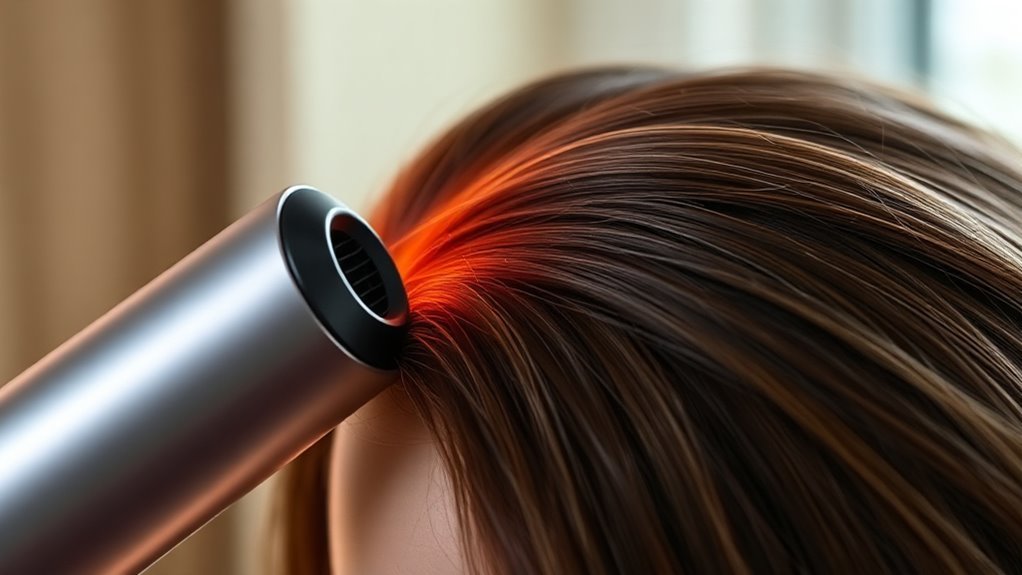
Although a hair dryer can help eliminate lice and nits, you’ll need to use it carefully to avoid burns or scalp irritation. Here are some safety tips to keep in mind:
Using a hair dryer can help remove lice, but careful use is essential to prevent burns and irritation.
- Keep a safe distance: Hold the dryer at least 6 inches from your scalp to prevent overheating or discomfort.
- Use a moderate heat setting: High heat might kill lice but can also damage your skin and hair; opt for medium or low heat.
- Move constantly: Don’t focus heat on one spot for too long. Keep the dryer moving to distribute heat evenly and reduce the risk of burns.
Alternative Heat Methods Besides Hair Dryers to Kill Lice
If you’re looking for other ways to use heat to kill lice without a hair dryer, several effective options exist. You can try using heated air devices designed specifically for lice, or even steam treatments. Some people opt for warm combing, which involves combing hair with a fine-toothed comb after warming it slightly. These methods can be gentler yet effective. Below is a quick comparison to help you choose:
| Method | Comfort Level | Effectiveness |
|---|---|---|
| Heated Air Device | Moderate | High |
| Steam Treatment | Low | Moderate |
| Warm Combing | High | Moderate |
| Sunlight Exposure | Variable | Low |
Choose what fits your comfort and needs best.
Why Hair Dryers Fall Short Compared to Professional Lice Treatments
While alternative heat methods can offer some relief, relying on a hair dryer to kill lice often leaves you with incomplete results. Hair dryers don’t maintain the high, consistent temperatures needed to effectively eliminate lice and nits. In contrast, professional lice treatments use specialized chemicals or heat devices designed specifically for this purpose. Here’s why hair dryers fall short:
- They can’t reach lice hiding close to the scalp or under hair strands.
- The heat is uneven and often insufficient to kill all eggs or lice.
- Hair dryers lack the proven efficacy and safety standards of professional treatments.
If you want thorough lice removal, professional products or methods remain your best bet, as hair dryers simply don’t deliver the reliable results needed to fully eradicate these pests.
Combining Hair Dryers With Other Lice Treatments: Practical Tips
You can boost your lice treatment by using a hair dryer alongside chemical solutions to target both live lice and nits.
Applying heat helps weaken their grip, making it easier to remove them with combs or treatments.
Just be sure to follow safety guidelines to avoid damaging your scalp or hair.
Enhancing Effectiveness With Heat
Because heat alone may not eliminate all lice and nits, combining hair dryers with other treatments boosts your chances of success. Using heat strategically can weaken lice, making other methods more effective. Here’s how you can enhance your approach:
- Use a fine-toothed lice comb after applying heat: The warmth loosens nits, making them easier to remove.
- Apply natural oils or repellents: Heat helps these substances penetrate hair shafts, improving their impact.
- Wash bedding and clothes in hot water: This complements the heat treatment by targeting lice in the environment.
Combining Chemical And Thermal Treatments
Although hair dryers can weaken lice and nits through heat, combining them with chemical treatments markedly improves your chances of complete removal. You should first apply an approved lice treatment shampoo or lotion as directed. After rinsing, use a hair dryer on a moderate heat setting to help loosen nits from the scalp and hair shafts. This thermal step makes combing out lice and nits easier. Be careful not to overheat or burn the scalp. Follow up with a fine-toothed lice comb, sectioning hair for thorough coverage. Repeat this combined approach as recommended, typically after 7-10 days, to catch any newly hatched lice. By integrating chemical and thermal methods, you increase the likelihood of eradicating lice effectively and minimizing re-infestation.
Frequently Asked Questions
How Long Does It Take to Kill Lice With a Hair Dryer?
You’d need to apply the hair dryer’s heat for at least 30 minutes, focusing close to the scalp.
However, it’s not a reliable method alone, so don’t count on it to fully kill lice or nits.
Can Hair Dryers Damage Hair When Used to Kill Lice?
You might worry, but yes, hair dryers can damage your hair when used excessively to kill lice.
The intense heat can dry out strands and cause breakage.
Over time, this can weaken your hair’s natural shine and strength.
Are Certain Hair Dryer Brands More Effective Against Lice?
You won’t find specific hair dryer brands proven more effective against lice.
Effectiveness really depends on heat settings and airflow.
Stick to models with adjustable temperature controls to avoid damaging hair while aiming to remove lice and nits.
Can Hair Dryers Be Used on Children to Kill Lice?
You shouldn’t use hair dryers on children to kill lice; studies show over 90% of lice survive heat treatments.
Instead, opt for safer, pediatric-approved lice removal methods designed specifically for kids’ sensitive scalps.
These methods are more effective and gentle on their skin.
Plus, they can help ensure a thorough removal without the risks associated with heat.
Do Lice Develop Resistance to Heat Treatments Over Time?
No, lice don’t develop resistance to heat treatments over time like they do with chemicals.
You can rely on heat methods repeatedly, but make sure to use them properly to avoid harming your scalp or hair.
It’s important to follow the instructions carefully for the best results.
This way, you can effectively manage lice without worrying about resistance!
Conclusion
You might think a hair dryer is your secret weapon against lice, but it’s more of a flicker than a flame.
While the heat can stun some lice and nits, it rarely reaches the levels needed to kill them all.
So, don’t rely on it alone—combine it with proven treatments to truly send those pests packing.
Remember, a hair dryer’s heat is just one piece of the puzzle to winning the lice battle.
In the end, while a hair dryer can help, it’s not a standalone solution.
For effective lice removal, consider using specialized treatments that target lice and nits directly.
Combining these methods will give you the best chance of saying goodbye to those unwanted guests for good.
So, gear up with the right tools and strategies for a successful lice-free outcome!