
How to Dry Your Hair Without a Blow Dryer Fast: 7 Steps
To dry your hair fast without a blow dryer, you can follow these simple steps.
First, gently squeeze out excess water with your hands.
Next, wrap your hair in a microfiber towel or a soft cotton T-shirt. This helps absorb moisture without causing frizz.
After that, apply a lightweight leave-in conditioner or drying spray to speed up evaporation.
Sectioning your hair allows for better airflow, which is super important.
Position yourself near a fan or an open window to help with drying.
While the air circulates, use gentle combing to keep your hair tangle-free.
To finish off, rinse your hair with cool air to close the cuticles and boost smoothness.
Keep going to explore more detailed tips!
Key Takeaways
- Gently squeeze excess water from hair using hands and wrap in a microfiber towel or soft cotton T-shirt to absorb moisture quickly.
- Section hair into manageable parts and flip upside down to expose more surface area for faster air drying.
- Use a wide-tooth comb to detangle and separate strands, preventing clumps that trap moisture and slow drying.
- Position near open windows or use a fan on low setting to increase airflow while avoiding frizz by maintaining distance.
- Finish with a cool air rinse from the fan to close cuticles, reduce frizz, and leave hair smooth and shiny.
Prep Hair to Dry Faster Without a Blow Dryer

To speed up drying without a blow dryer, you need to prep your hair properly right after washing it. First, gently squeeze out excess water using your hands to reduce dripping. Avoid rubbing, as it can cause breakage and frizz. Next, detangle your hair with a wide-tooth comb while it’s still wet to prevent knots and make certain an even dry. Apply a lightweight leave-in conditioner or an anti-frizz serum to help your hair dry smoother and protect it from damage. If your hair is very thick or long, section it into smaller parts to expose more surface area to air, which speeds up drying. These simple steps will set you up for faster, healthier drying without relying on heat.
Use a Microfiber Towel or Soft T-Shirt to Remove Excess Water
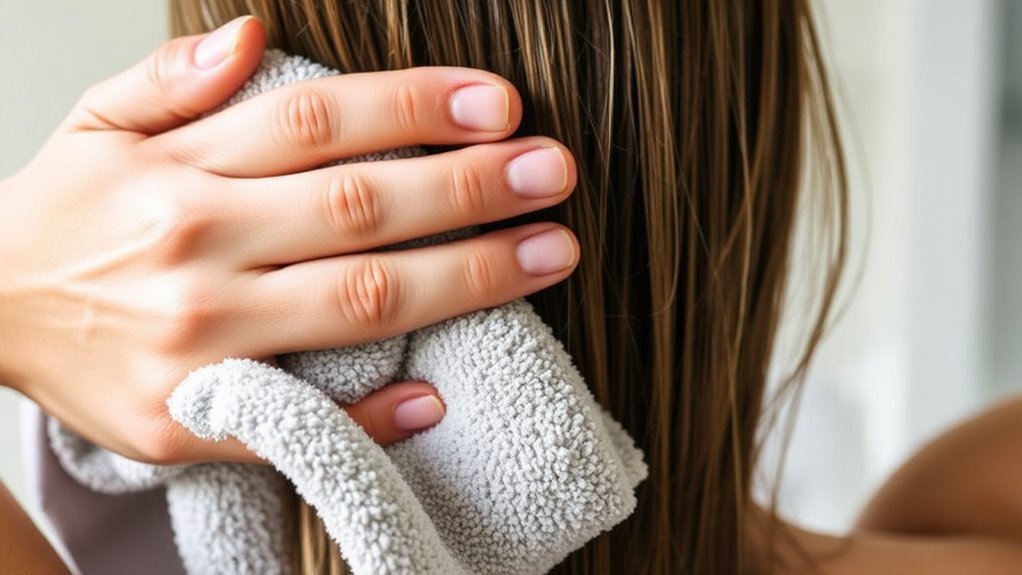
Often, using a microfiber towel or a soft cotton T-shirt is the best way to gently remove excess water from your hair. These materials absorb moisture efficiently without roughing up your strands or causing frizz. Unlike regular bath towels, microfiber towels and T-shirts reduce friction, helping to protect your hair cuticles. After washing, wrap your hair in one of these fabrics and lightly press to soak up water. Avoid rubbing or vigorous towel-drying, which can lead to breakage. The softness also helps maintain your hair’s natural texture and shine. Keeping your hair wrapped for a few minutes speeds up drying time, making the next steps easier. Choosing the right fabric here sets a solid foundation for drying your hair fast without heat.
Squeeze Out Water Gently With Your Hands
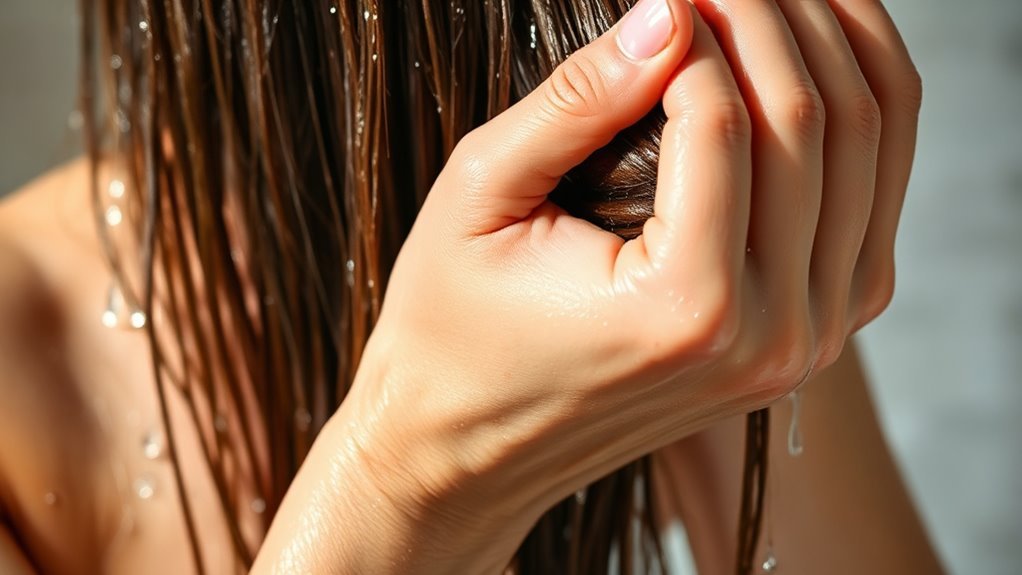
After removing excess water with a towel, gently squeeze your hair with your hands to get rid of remaining moisture.
Use light pressure and avoid tugging, especially on the fragile wet ends.
This helps prevent breakage while speeding up the drying process.
Use Gentle Pressure
You’ll want to gently squeeze the excess water from your hair using your hands instead of rubbing or wringing it. Applying gentle pressure helps remove moisture without causing damage or breakage. Start at the roots and work your way down to the ends, pressing lightly to absorb water. Avoid using too much force, as this can stress your hair strands. Using gentle pressure also reduces frizz and keeps your hair cuticles smooth, promoting a healthier appearance as it dries. Be patient and thorough, ensuring you don’t leave your hair dripping wet. This simple step fast-tracks drying while protecting your hair’s natural texture and shine, making it an essential part of drying your hair without a blow dryer.
Avoid Rough Tugging
Anyone drying their hair without a blow dryer should avoid rough tugging, as it can cause breakage and damage. Instead, gently squeeze out excess water using your hands. Start at the roots and work your way down to the tips, applying light pressure to remove moisture without pulling on strands. This method helps maintain your hair’s natural texture and prevents split ends. Avoid twisting or rubbing your hair vigorously, which can lead to frizz and weaken the strands. By handling your hair with care when wet, you minimize damage and promote healthier growth. Remember, wet hair is fragile, so treat it like delicate fabric—soft and gentle. This simple step sets a strong foundation for drying your hair effectively without heat.
Focus On Wet Ends
Often overlooked, the ends of your hair hold the most water after washing, so it’s important to squeeze them gently with your hands. Press softly to remove excess moisture without causing breakage or frizz. Avoid rubbing or twisting, which can damage delicate strands. Focus on small sections, working from the tips upward to encourage faster drying.
| Step | Action | Reason |
|---|---|---|
| 1 | Section hair | Manageable areas for drying |
| 2 | Hold ends gently | Prevents breakage |
| 3 | Squeeze water out | Removes excess moisture |
| 4 | Avoid rubbing | Reduces frizz and damage |
| 5 | Repeat as needed | makes certain thorough moisture removal |
Apply Lightweight Products to Speed Drying
Apply lightweight products like leave-in conditioners or drying sprays to help your hair shed moisture faster without weighing it down. These products provide a protective layer that reduces frizz and speeds evaporation, making your drying process more efficient. Choose formulas designed to boost drying time rather than heavy creams or oils, which can trap moisture. Spray or apply evenly, focusing on mid-lengths and ends where dampness lingers longest. Avoid applying too much product near the roots to prevent greasiness. Lightweight leave-ins with ingredients like aloe vera or witch hazel work well because they nourish while promoting quick drying. Incorporating these products into your routine will cut down drying time markedly, leaving your hair feeling soft and healthy without the need for heat.
Section Hair to Boost Airflow and Dry Evenly
To speed up drying, section your hair to improve airflow and make sure each part dries evenly.
Start by dividing your hair into manageable, even sections using clips or ties.
This technique helps air reach all strands, cutting down drying time without heat.
Benefits of Hair Sectioning
Sectioning your hair creates clear pathways for air to circulate, helping your strands dry faster and more evenly. When you divide your hair into smaller parts, you give each section better exposure to air, reducing damp spots and speeding up drying time. This method also prevents your hair from clumping together, which can trap moisture and prolong drying. Plus, sectioning makes it easier to manage thick or long hair, so you won’t miss any areas. It helps distribute natural oils more evenly, leaving your hair looking healthier. By working on one section at a time, you reduce frizz and encourage a smoother finish. Overall, sectioning is a simple step that improves airflow, boosts drying efficiency, and enhances your hair’s appearance without using heat.
Techniques for Even Sections
Start by dividing your hair into evenly sized sections to maximize airflow and guarantee consistent drying. Use a comb to create straight partings, starting from the middle of your scalp to the nape of your neck. Clip each section securely to avoid mixing strands. Aim for four to six sections depending on your hair’s thickness and length. Smaller sections help air reach every strand, speeding up drying time. Avoid overly large sections, as they trap moisture and slow drying. Once divided, work through each section gently with your fingers or a wide-tooth comb to loosen tangles. This method guarantees every part of your hair dries evenly, preventing damp spots and reducing frizz for a smoother finish.
Tips to Boost Airflow
By arranging your hair strategically, you can markedly boost airflow and speed up drying without a blow dryer. Start by flipping your head upside down while parting your hair into loose sections. This exposes more surface area to the air, letting moisture evaporate faster. Use your fingers to gently lift and separate strands instead of clumping them together. Avoid tight styles that trap dampness. If possible, stand near a fan or open window to increase air circulation. You can also use a clean, breathable mesh cap to keep hair lifted and allow air to flow freely. Finally, periodically switch your hair’s position to make sure every section gets exposed to moving air, helping it dry evenly and preventing damp spots.
Use Ventilation or a Fan to Dry Hair Fast
Although air-drying can take time, using ventilation or a fan speeds up the process markedly. You don’t need a blow dryer to get faster results—just some good airflow. Here’s how to make the most of it:
- Position yourself near an open window or door to catch natural breezes.
- Use a fan on a low or medium setting, aiming it toward your hair but not too close to avoid frizz.
- Comb your hair gently while the fan runs to separate strands and speed evaporation.
- Change your hair’s position occasionally—flip it upside down or side to side—to expose more surface area to the air.
Finish With a Cool Air Rinse to Speed Drying
Once you’ve boosted airflow around your hair, finishing with a cool air rinse can help speed up drying even more. Switch your fan or ventilation to a cooler setting and direct the airflow over your hair. The cool air helps close your hair cuticles, locking in moisture and reducing frizz, while also lowering your scalp’s temperature to prevent sweat that slows drying. This step not only speeds drying but leaves your hair smoother and shinier. Keep the cool air moving over your hair for several minutes until it feels mostly dry. Avoid rubbing your hair afterward, as it can cause breakage. By incorporating this simple cool air rinse, you’ll dry your hair faster and maintain healthier, more manageable locks without a blow dryer.
Frequently Asked Questions
Can Drying Hair Without Heat Reduce Hair Damage?
Yes, drying your hair without heat can reduce damage by preventing moisture loss and breakage.
You’ll keep your hair healthier, shinier, and less prone to split ends when you skip the blow dryer’s heat.
It’s a simple change that can make a big difference!
What Hair Types Benefit Most From Air Drying?
You’ll benefit most if you have curly, wavy, or fine hair since air drying reduces heat damage and frizz.
It helps maintain your natural texture and keeps your strands healthier compared to frequent blow drying.
How Long Does Air Drying Typically Take?
Wondering how long it takes to air dry your hair?
It usually takes 1 to 3 hours, depending on your hair’s thickness and length.
You can speed it up by gently squeezing out excess water and using a microfiber towel.
Can Air Drying Cause Frizz or Static?
Yes, air drying can cause frizz or static, especially if your hair is prone to dryness or if humidity affects you.
You’ll want to use a leave-in conditioner or anti-frizz serum to keep your strands smooth and manageable.
These products can help tame the flyaways and give your hair a more polished look.
Are There Specific Products to Avoid When Air Drying?
Think of your hair as a delicate flower—avoid heavy oils and alcohol-based sprays when air drying.
They can weigh it down or dry it out, leaving your strands limp or frizzy instead of light and vibrant.
Conclusion
Drying your hair without a blow dryer doesn’t have to be a slow process.
By prepping your hair right, using a microfiber towel, and applying lightweight products, you’ll cut down drying time markedly.
Sectioning your hair and adding some airflow with a fan will speed things up even more.
Remember, slow and steady wins the race—taking these simple steps means you’ll have dry, healthy hair without the heat damage in no time!
—
In conclusion, drying your hair efficiently without a blow dryer is totally achievable.
With the right prep, a microfiber towel, and some airflow, you can enjoy quick drying while keeping your hair healthy.
So, give these steps a try, and you’ll see just how fast and effective air drying can be!