Is Cat Food Bad for Dogs?
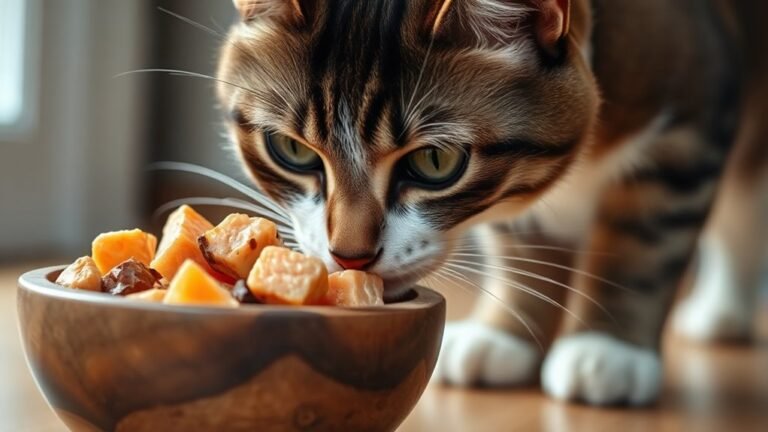
Cat food is not the best choice for dogs. This is primarily because it contains higher levels of protein, fat, and calories that are specifically designed for feline diets.
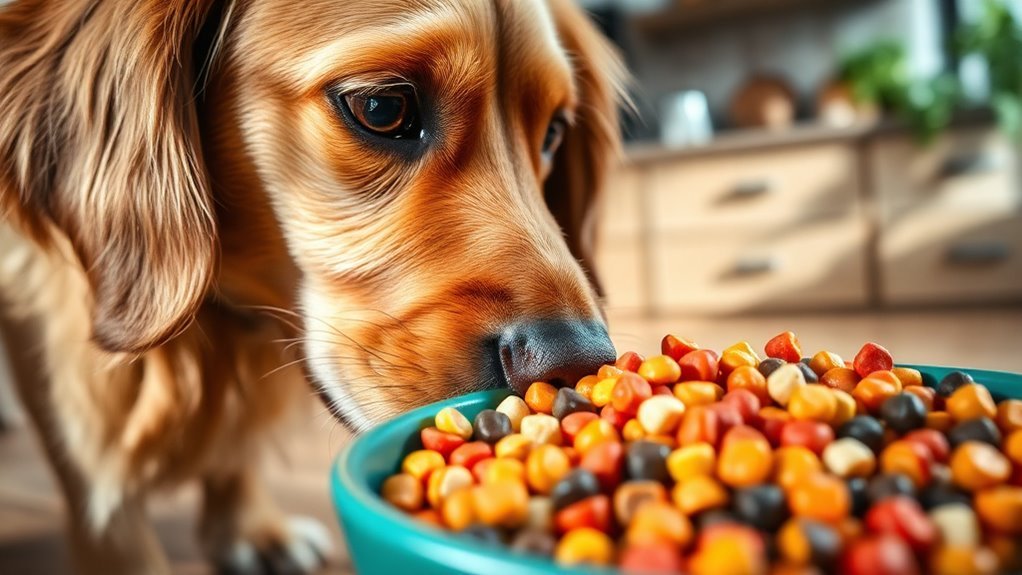
Occasionally giving your dog a small amount of cat food might not cause immediate harm.
However, if it becomes a regular part of their diet, it can lead to digestive problems, unwanted weight gain, and nutrient imbalances.
Dogs require a balanced diet that meets their unique nutritional needs.
Feeding your dog too much cat food can put a strain on their health over time.
It’s essential to explore the effects of cat food on dogs and learn how to select the best food for your furry friend.
Key Takeaways
- Cat food is not suitable as a regular diet for dogs due to higher protein, fat, and calorie levels.
- Occasional small amounts of cat food usually do not harm dogs but should be limited.
- Frequent feeding of cat food can cause digestive upset, obesity, and nutritional imbalances in dogs.
- Cat food lacks essential nutrients tailored for dogs, risking health issues with long-term feeding.
- Dogs with kidney problems or allergies should avoid cat food and consult a veterinarian before changes.
What’s in Cat Food That Makes It Different From Dog Food?
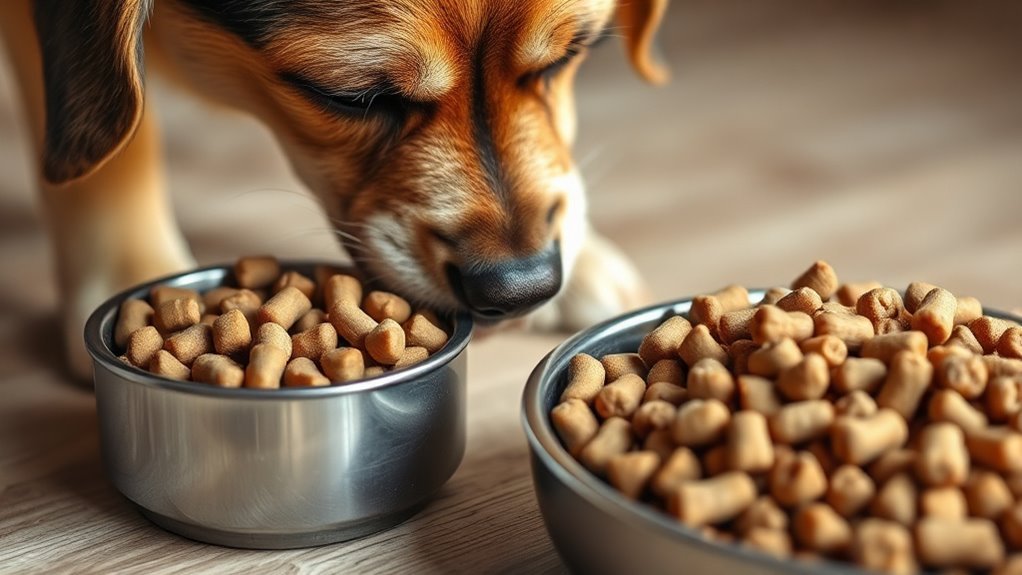
Understanding the differences between cat food and dog food is essential if you’re considering feeding your dog cat food. Cat food contains higher protein and fat levels because cats are obligate carnivores—they need more meat-based nutrients. You’ll also find taurine, an amino acid crucial for cats but not required in dog diets. Cat food often includes more vitamins A and D, tailored to feline needs. In contrast, dog food has balanced nutrients suitable for omnivores, with more carbohydrates and fiber. The calorie density in cat food is also higher, designed to meet cats’ energy demands. So, when you look at cat food, remember it’s formulated to support a cat’s metabolism and health, which differs markedly from what dogs require.
Is It Safe for Dogs to Eat Cat Food Occasionally?
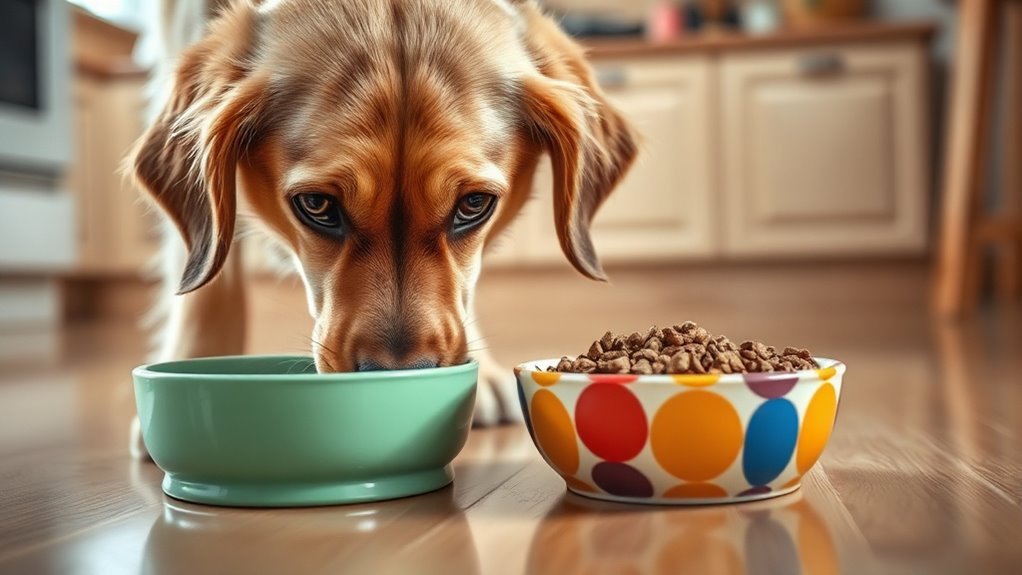
Occasionally feeding your dog cat food isn’t usually harmful, but it shouldn’t become a regular habit. Cat food is richer and more calorie-dense, which can upset your dog’s digestion if given too often. Here’s what you should keep in mind:
- Small Amounts Only: Limit cat food to an occasional treat, not a meal replacement, to avoid nutritional imbalances.
- Watch for Reactions: Monitor your dog for any stomach upset or changes in behavior after eating cat food.
- Avoid Dependency: Don’t let your dog prefer cat food over their own, as it lacks the right nutrients for dogs.
In short, a little cat food now and then is fine, but sticking to dog food is best for your pet’s long-term health.
How Cat Food’s Nutrients Affect Your Dog’s Health
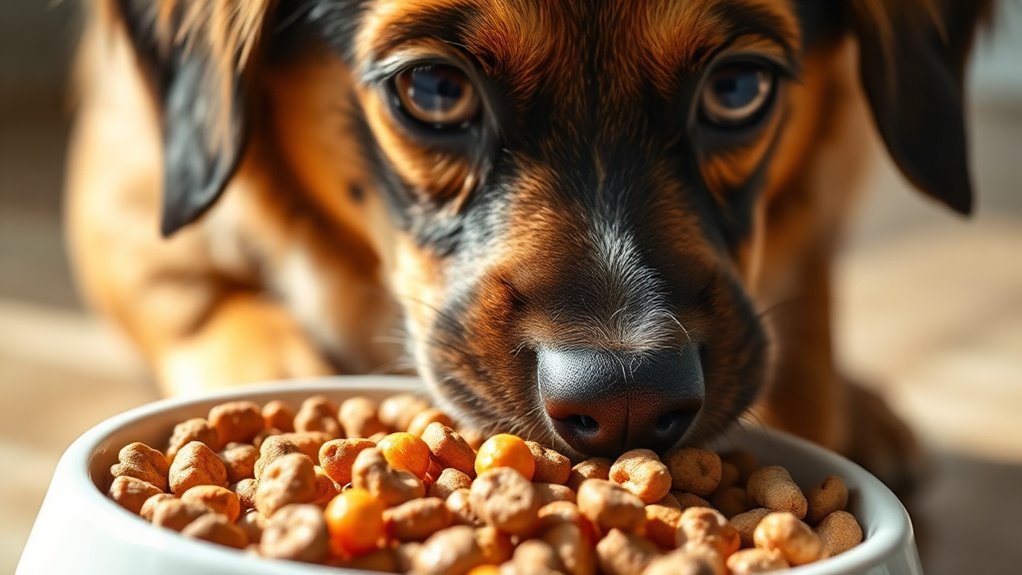
Because cat food is formulated to meet the nutritional needs of cats, its nutrient profile differs markedly from dog food. Cat food contains higher protein and fat levels to support cats’ carnivorous diet, which can be too rich for your dog. While dogs need protein, excessive amounts can strain their kidneys and cause digestive upset. Cat food also has more taurine and vitamin A, essential for cats but unnecessary in high doses for dogs. Feeding your dog cat food occasionally won’t cause immediate harm, but the imbalance in nutrients means it doesn’t provide a complete, balanced diet for dogs. You should stick to dog food tailored to your pet’s specific dietary requirements to make certain they stay healthy and avoid potential nutrient-related issues.
What Happens If Dogs Eat Cat Food Too Often?
Feeding your dog cat food regularly can lead to several health issues over time. Since cat food is richer in fats and protein, your dog’s system can struggle with this imbalance. Here’s what you might notice if your dog eats cat food too often:
- Digestive Upset – Diarrhea, vomiting, or stomach pain can result from the richer, unfamiliar nutrients.
- Weight Gain – Excess calories and fats can cause your dog to gain unhealthy weight.
- Nutritional Deficiencies – Cat food lacks nutrients dogs need, which may lead to long-term health problems like vitamin imbalances.
To keep your dog healthy, avoid frequent feeding of cat food and stick to a diet formulated specifically for dogs.
When Is Cat Food Bad for Dogs?
You might think cat food is fine for your dog, but its higher protein and fat levels can cause problems over time.
When dogs eat cat food regularly, it can lead to digestive issues and other health risks.
It’s important to understand when cat food becomes harmful to keep your dog safe.
Nutritional Differences Impact
Understanding the nutritional differences between cat and dog food is essential to knowing when cat food can harm your dog. Cat food is formulated to meet a cat’s higher protein and fat needs, which can overwhelm your dog’s digestive system. Here are key differences to keep in mind:
- Protein Levels: Cat food contains markedly more protein, which can strain your dog’s kidneys over time.
- Fat Content: Higher fat in cat food might cause digestive upset or pancreatitis in dogs.
- Taurine and Vitamins: Cat food includes taurine and extra vitamins dogs don’t require, possibly leading to imbalances.
Feeding cat food occasionally might not cause immediate harm, but regular feeding can disrupt your dog’s balanced diet and overall health due to these nutritional differences.
Potential Health Risks
Although cat food might seem like a convenient treat, it can pose serious health risks to your dog when given frequently or in large amounts. Cat food contains higher protein and fat levels that your dog’s digestive system isn’t designed to handle regularly. Feeding it often can lead to obesity, pancreatitis, or digestive upset like vomiting and diarrhea. Additionally, cat food lacks essential nutrients tailored for dogs, which can cause nutritional imbalances over time. If your dog has specific health conditions, such as kidney disease or allergies, cat food may worsen these issues. To keep your dog healthy, stick to food formulated specifically for dogs and use cat food only as an occasional treat, if at all. Always consult your vet before making any diet changes.
How to Choose the Right Food for Your Dog
When selecting food for your dog, consider their specific nutritional needs, age, size, and health conditions. This guarantees you provide balanced nutrition tailored to them. To choose the right food, follow these steps:
- Check the Ingredients: Look for high-quality protein sources like chicken or beef and avoid fillers such as corn or soy that offer little nutrition.
- Consider Life Stage: Puppies, adults, and senior dogs have different dietary requirements. Pick food formulated specifically for your dog’s age group.
- Account for Health Issues: If your dog has allergies, sensitivities, or medical conditions, choose foods designed to manage those concerns.
Frequently Asked Questions
Can Puppies Eat Cat Food Safely?
You shouldn’t feed puppies cat food regularly because it’s too high in protein and fat for their growing bodies.
Occasional small amounts won’t harm, but stick to puppy food for balanced nutrition and healthy development.
Does Cat Food Cause Allergies in Dogs?
Yes, cat food can cause allergies in dogs because it contains higher protein and fat levels that might trigger sensitivities.
If your dog shows itching, redness, or digestive upset, you should stop feeding cat food.
It’s a good idea to consult your vet for further advice.
How to Transition a Dog From Cat Food to Dog Food?
Coincidentally, switching your dog to dog food starts with mixing small amounts into their cat food.
Gradually increase the dog food over a week.
You’ll help them adjust smoothly while avoiding digestive upset or picky eating habits.
Are There Specific Cat Food Brands to Avoid for Dogs?
Yes, you should avoid cat foods with high protein, fat, or taurine levels. These can upset your dog’s digestion.
Also, steer clear of brands with artificial additives or fillers. They might cause allergies or digestive issues in dogs.
Can Cat Food Be Used as a Training Treat for Dogs?
You can use cat food as a training treat occasionally, but don’t rely on it regularly.
It’s richer and higher in protein, which might upset your dog’s stomach if given too often.
Use moderation.
Conclusion
While your dog might sneak a bite of cat food now and then without harm, it’s not a good long-term diet.
Cat food is packed with nutrients meant for feline needs—like extra protein and fat—that can upset your dog’s digestive system and health if eaten too often.
Think of it like feeding a knight’s armor to a modern soldier—it just doesn’t fit their needs.
Stick to dog food to keep your furry friend happy and healthy.
In conclusion, while a nibble of cat food isn’t likely to harm your dog, it’s not suitable for their overall health.
Dog food is specifically formulated to meet their unique dietary requirements, ensuring they get the right balance of nutrients.
To keep your canine companion thriving, it’s best to avoid cat food and focus on a proper dog diet.