
Can Dogs Eat Dried Fruit?
You shouldn’t give your dog dried fruit because many types, like raisins and sultanas, are toxic.
These can cause serious kidney failure even in small amounts.
Dried fruits also have high sugar levels that might upset digestion and lead to obesity.
Instead, choose safe fresh fruits or veggies as treats.
If you want to keep your dog healthy and avoid emergencies, it’s important to know which fruits to avoid.
Additionally, being aware of how to recognize signs of toxicity can help you respond quickly if necessary.
Key Takeaways
- Many dried fruits, especially raisins and sultanas, are highly toxic to dogs and can cause severe kidney failure even in small amounts.
- Dried fruits are high in sugar and calories, which can lead to digestive issues, obesity, and poor digestion in dogs.
- Fresh fruits like apples and blueberries are safer, healthier alternatives to dried fruits for dogs.
- Symptoms of dried fruit toxicity include vomiting, diarrhea, lethargy, and abdominal pain, requiring immediate veterinary care if ingested.
- Store dried fruits securely away from pets and educate household members about the risks to prevent accidental ingestion.
Health Risks Associated With Dried Fruits for Dogs
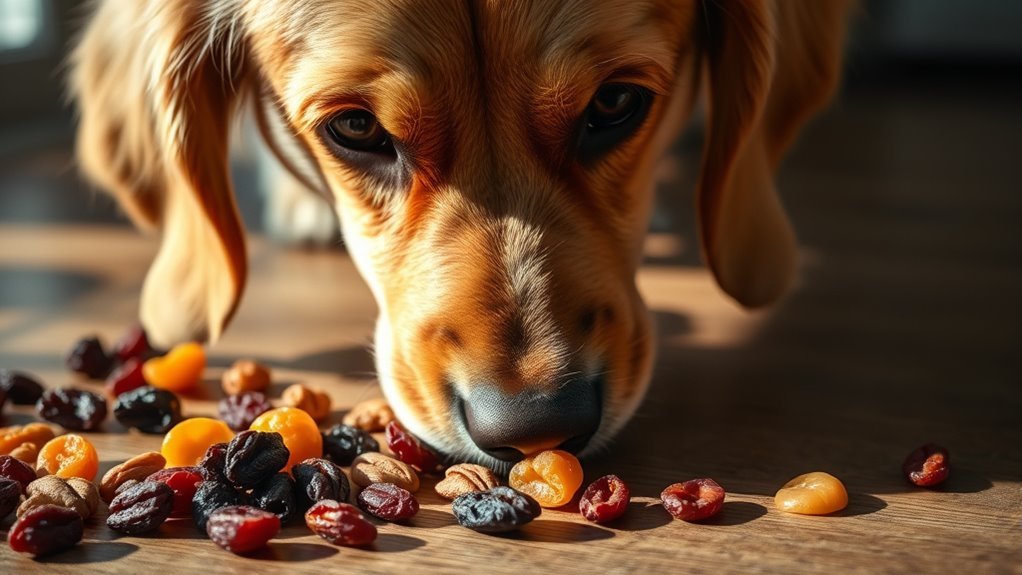
Although dried fruits might seem like a harmless snack, they pose serious health risks to your dog. Even small amounts of dried fruit, like raisins or currants, can cause kidney failure, a life-threatening condition. You might not see symptoms right away, which makes it tough to catch the problem early. Besides the risk of kidney damage, the high sugar content in dried fruit such as apricots and dates can lead to digestive upset and contribute to obesity. Dogs are especially vulnerable, so you need to be extra cautious. Hidden dried fruits in trail mixes or baked goods can also sneak into your dog’s diet, increasing the danger. Keeping dried fruit out of your pet’s reach is essential to protect their health.
Toxic Dried Fruits to Avoid

You should never let your dog eat raisins or sultanas, as they can cause severe kidney failure even in tiny amounts.
These dried fruits often hide in trail mixes and baked goods, so it’s important to check ingredients carefully.
If your dog accidentally eats any of these, seek veterinary help immediately.
Raisins and Sultanas
When dogs eat raisins or sultanas, they risk acute kidney failure, even from small amounts. These dried fruits are highly toxic to dogs, and there’s no safe quantity you can give. If your dog consumes raisins or sultanas, watch for symptoms like vomiting, lethargy, or abdominal pain that may appear hours later. Because of the serious risk of kidney failure, you must seek immediate veterinary attention if ingestion occurs. Early treatment greatly improves your dog’s chances of recovery. Dogs are especially vulnerable to the toxic effects of these fruits compared to other pets, so always keep raisins and sultanas well out of reach. Being aware and cautious can protect your dog from this hidden danger.
Kidney Failure Risk
Since dried fruits like raisins, sultanas, and currants contain toxins that can cause acute kidney failure, you should never let your dog consume them. Even small amounts can be dangerous, as there’s no known safe threshold for these dried fruits. If your dog eats any, watch for signs like vomiting, lethargy, or stomach upset, which may signal kidney failure. Symptoms might not show immediately, so quick veterinary care is essential to prevent serious damage. Remember, all grape varieties—fresh or dried—pose this risk. To keep your dog safe, avoid giving them snacks containing these dried fruits. Being cautious about hidden sources in baked goods or trail mixes can protect your pet from this potentially fatal kidney issue.
Hidden Dried Fruits
Although dried fruits like raisins, sultanas, and currants are clearly dangerous for dogs, they often hide in everyday foods such as trail mixes and baked goods. To protect your pet, you need to carefully check ingredient lists and avoid feeding anything that contains these hidden dried fruits. Even small amounts can cause acute kidney failure, so pet safety means vigilance. Educate everyone in your household to prevent accidental ingestion and watch for symptoms, which may appear late.
| Food Type | Common Hidden Dried Fruits | Risk Level |
|---|---|---|
| Trail Mix | Raisins, sultanas | High (acute failure) |
| Baked Goods | Currants, raisins | High |
| Granola Bars | Sultanas, raisins | Moderate to High |
| Salad Toppings | Cranberries (sometimes) | Moderate |
Nutritional Benefits and Drawbacks of Dried Fruits
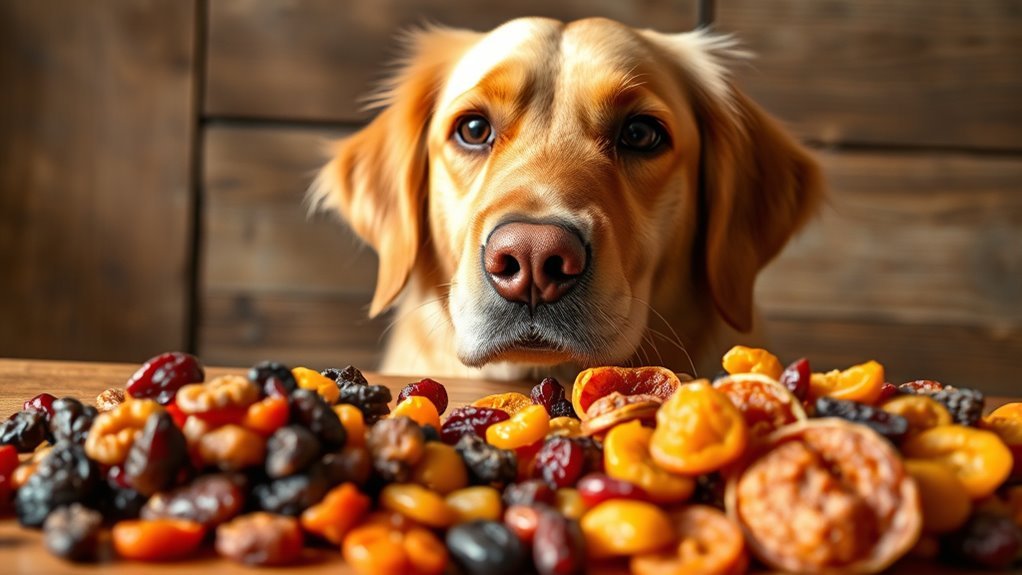
You might think dried fruits are a healthy snack, but their high sugar and calorie content can be risky for your dog.
While some dried fruits offer nutrients, the added sugars and potential additives could harm your pet’s health.
It’s important to weigh these benefits against the possible health issues before sharing dried fruit with your dog.
Nutritional Content Overview
Dried fruits offer a concentrated source of vitamins and minerals that can benefit your dog in small amounts. Their nutritional content includes essential nutrients, but the dehydration process also concentrates sugars and calories. Many dried fruits contain added sugar, which can contribute to obesity and dental problems if your dog eats too much. Because dried fruits are calorie-dense and often lack fiber and moisture found in fresh fruits, they shouldn’t replace a balanced diet. Feeding dried fruit in moderation is key to avoiding negative effects while still providing a tasty treat. Remember, these snacks should never be a staple but rather an occasional indulgence to support your dog’s health without risking weight gain or other issues linked to excessive sugar intake.
Potential Health Risks
While dried fruits offer some nutritional benefits, they also carry significant health risks for dogs that you should never overlook. Certain dried fruits like raisins, sultanas, and currants can cause acute kidney failure even in small amounts, making them extremely dangerous. Additionally, dried apricots, figs, and dates aren’t toxic but contain high sugar levels, which may lead to health issues such as obesity and gastrointestinal upset if fed frequently. Dogs also struggle to digest dried fruits due to their low moisture, increasing the risk of choking or intestinal blockages. Be especially cautious of hidden dried fruits in baked goods or trail mixes, as these can unknowingly harm your dog. Overall, it’s best to avoid giving dried fruits to your pet to protect their health.
Safe Alternatives to Dried Fruits for Dogs
If your dog enjoys fruity flavors but you want to avoid the high sugar content in dried fruits, fresh fruits like apples, blueberries, and bananas make excellent alternatives. These safe alternatives provide essential vitamins and fiber while supporting a healthy dog. You can also offer vegetables like carrots or green beans, which are crunchy and low-calorie. Always serve small bites and monitor for any adverse reactions to keep treats safe and enjoyable.
| Safe Alternatives | Benefits |
|---|---|
| Fresh Apples | Vitamin C, fiber |
| Blueberries | Antioxidants, low sugar |
| Carrots | Dental health, crunch |
| Sweet Potatoes | Fiber, energy, versatile |
How to Introduce New Treats Into Your Dog’s Diet
Whenever you introduce new treats like fruits or vegetables into your dog’s diet, start with a small piece to check how they react. Introduce new treats gradually, keeping portion size limited to no more than 10% of their overall diet to avoid nutritional imbalances. Only add one new food at a time, giving several days to observe for any digestive upset or behavioral changes. Always monitor for any digestive upset, such as vomiting or diarrhea, and discontinue the treat if you notice any adverse reactions. Before making significant dietary changes, especially if your dog has health issues or sensitivities, consult your veterinarian to verify the new treat is safe. This careful approach helps keep your dog healthy while expanding their treat options safely.
Recognizing and Responding to Symptoms of Dried Fruit Toxicity
Introducing new treats like dried fruits to your dog’s diet means you need to stay alert for any signs of toxicity. Symptoms such as vomiting, diarrhea, lethargy, and abdominal pain can indicate dried fruit toxicity, especially after your dog consumes raisins, sultanas, or currants. These symptoms might not appear immediately, so monitor your pet closely for several hours. Even a small amount of these dried fruits can cause acute kidney failure, making early detection critical. If you notice any symptoms, contact a veterinarian right away for prompt treatment. To prevent toxicity, keep dried fruits securely stored and educate everyone in your household about the risks. Being vigilant can protect your dog from serious health complications related to dried fruit ingestion.
Frequently Asked Questions
Can I Eat Dried Fruit Every Day?
You can eat dried fruit every day, but you should watch your portions.
They’re high in sugar and calories, so stick to unsweetened varieties.
Balance them with other healthy foods to avoid weight gain and digestive issues.
Are Cooked Bones Safe for Dogs to Eat?
You shouldn’t give cooked bones to your dog, as they splinter easily, cause blockages, and create tears.
If your dog eats one, don’t ignore any symptoms that arise.
Instead, you should choose safer alternatives like raw bones or chew toys.
What Fruits Can Pugs Eat?
You can safely give your pug apples (without seeds), bananas, blueberries, and watermelon (without rind or seeds).
Avoid grapes and raisins, and always introduce fruits gradually while watching for allergies or digestive issues.
Which Nuts Can’t Dogs Eat?
You shouldn’t give dogs macadamia nuts, walnuts, pecans, or almonds.
They can cause serious health issues like muscle weakness, seizures, digestive upset, or choking.
Avoid all nuts, as their high fat content risks pancreatitis.
Conclusion
So, thinking about tossing your dog some dried fruit?
Sure, why not invite a little chaos to your furry friend’s digestive system?
Grapes, raisins, and their sneaky cousins aren’t exactly dog-approved snacks—they’re more like tiny health landmines.
Instead, stick to safe treats and keep the dried fruit drama for your own movie nights.
After all, your dog’s stomach isn’t a fruit bowl, no matter how much they might beg!
In conclusion, while it might be tempting to share dried fruit with your dog, it’s best to avoid it.
Grapes and raisins can be harmful, leading to serious health issues.
Stick to dog-friendly treats to keep your canine companion happy and healthy.
Remember, your dog’s safety is the priority, so save the dried fruit for yourself!