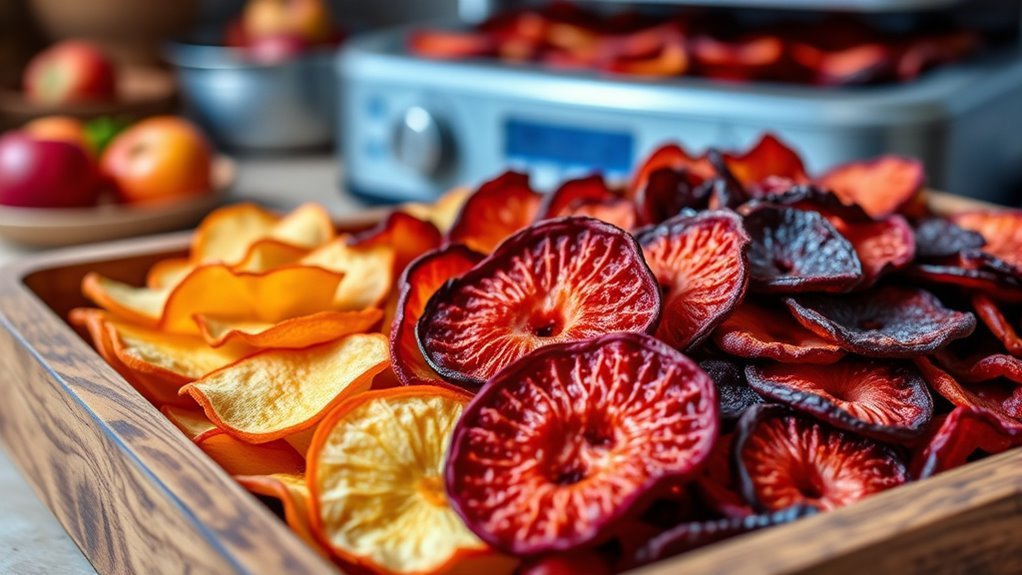
What Are Dried Fruit Chips and How Are They Made?
Dried fruit chips are delightful, crunchy, and sweet snacks that are made by slicing ripe fruits into thin pieces and removing their moisture through various drying methods.
These snacks are not only delicious but also a great way to enjoy the natural sweetness of fruits.
To make dried fruit chips, you typically start by selecting fresh, unbruised fruits. It’s important to slice them evenly for consistent drying.
Common drying methods include sun drying and freeze drying, both of which help preserve the flavor and nutrients of the fruit.
This drying process intensifies the natural sweetness of the fruit while extending its shelf life, resulting in a satisfying crisp texture.
If you’re curious about how different drying techniques can affect flavor or how to store your dried fruit chips for maximum freshness, there’s plenty more to discover!
Key Takeaways
- Dried fruit chips are thinly sliced fruits dehydrated to remove moisture, resulting in a crunchy, shelf-stable snack.
- They are made by selecting ripe, unbruised fruits, slicing them evenly, and treating some with lemon-water to prevent browning.
- Common drying methods include sun drying, tray drying, and freeze drying, with freeze drying best preserving nutrients and color.
- Proper drying requires avoiding overlapping slices to ensure uniform airflow and consistent dehydration.
- Finished chips are stored in airtight, moisture-resistant containers to maintain crispiness and extend shelf life.
Origins and Cultural Significance of Dried Fruit Chips
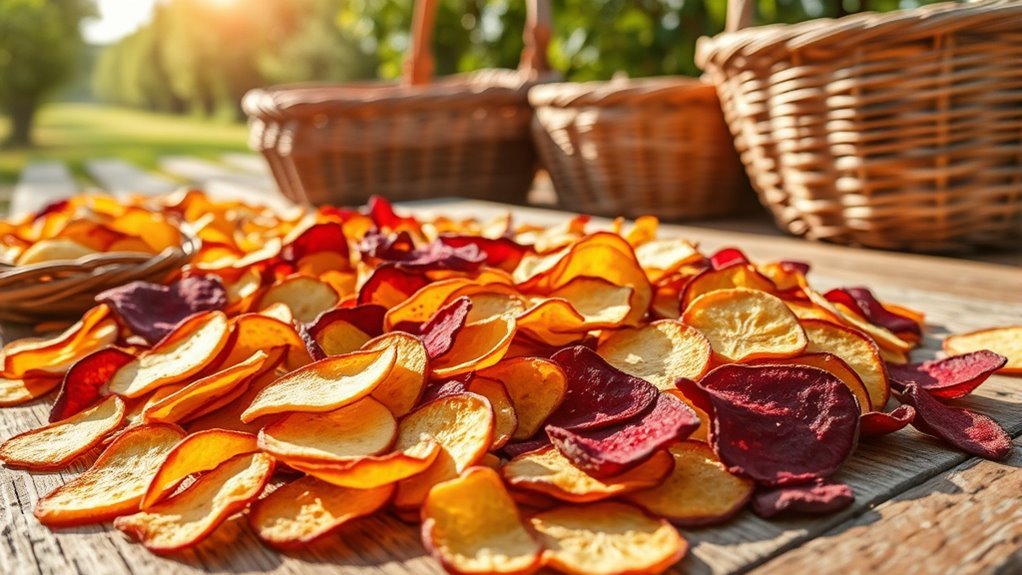
Although dried fruit chips seem like a modern snack, their roots go back to ancient Mediterranean civilizations where drying fruits was a key way to preserve food. You’ll find that dried fruits like raisins, figs, and apricots were traditional dried fruits valued for their long shelf life and flavor. This preservation method wasn’t just practical—it carried deep cultural significance. For example, dried figs held historical significance in Roman culture, while in Jewish traditions, dried fruits symbolize abundance during holidays. When you enjoy dried fruit chips today, you’re tapping into a practice shaped by centuries of agricultural habits and cultural customs. Understanding this rich background helps you appreciate how dried fruit chips connect ancient preservation techniques with modern snacking trends.
Selection and Preparation of Fruits for Dehydration
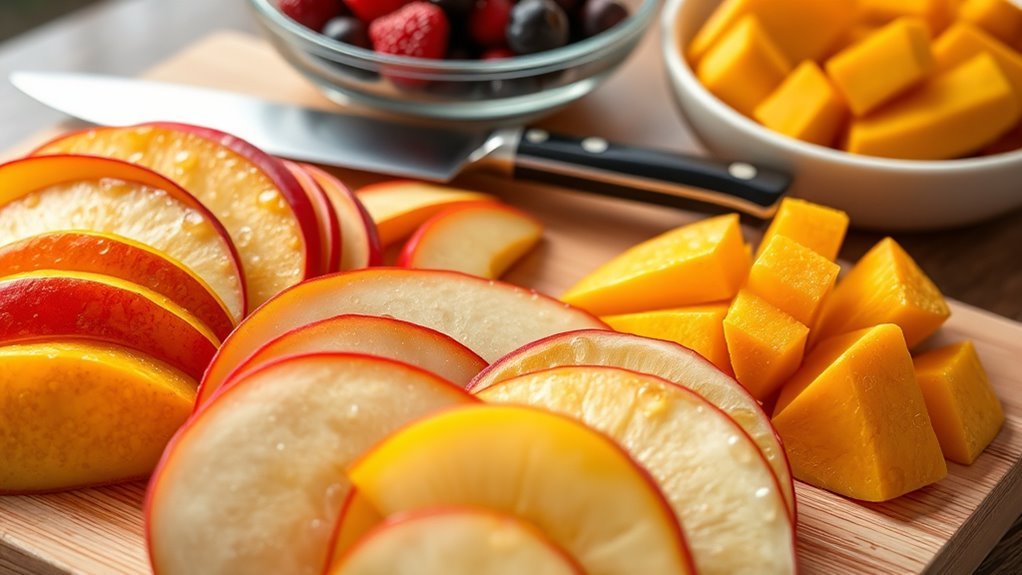
You’ll want to start by picking ripe, unbruised fruits for the best flavor and texture.
Slice them evenly, about 1/8 to 1/4 inch thick, to guarantee they dry uniformly.
Before dehydrating, spray non-citrus fruits with a lemon-water mix to keep their color fresh.
Choosing Fruits Wisely
When choosing fruits for dehydration, pick firm and ripe ones to guarantee better texture and flavor in your dried fruit chips. Choosing fruits wisely means focusing on non-citrus fruits like apples, pears, and bananas, which respond well to the dehydration process. To prevent browning, spray these fruits with a lemon-water solution. This step helps maintain ideal freshness and appearance.
| Fruit Type | Recommended Use |
|---|---|
| Apples | Firm, ripe specimens preferred |
| Pears | Ideal for crisp, sweet chips |
| Bananas | Require longer dehydration |
| Strawberries | Best sprayed to avoid browning |
Selecting the right fruit is your first step toward delicious, crispy chips every time.
Pre-Slicing Techniques
Picking the right fruit sets the stage, but how you slice and prepare those fruits shapes the final quality of your dried chips. When working with fresh fruit, employing proper pre-slicing techniques is essential. Use a sharp knife or food slicer to cut uniform slices, which helps regulate moisture content and guarantees even dehydration. For example, apples work well sliced to thickness No. 5, while bananas do best around 3/4 inch. Uniform slices dry consistently, preventing some pieces from over-drying while others remain moist. Avoid overlapping slices on dehydrator trays to promote airflow and thorough drying. Mastering these steps will help you achieve perfectly textured, flavorful dried fruit chips every time.
Lemon-Water Treatment
Two key steps help keep your fruit slices looking fresh and flavorful during dehydration: treating them with a lemon-water solution and slicing them evenly. Non-citrus fruits like apples, pears, and bananas tend to brown quickly, so dipping or spraying their fruit slices with a lemon-water solution—made from 1 part lemon juice to 3 parts water—prevents discoloration during the dehydration process. Here’s how to apply this treatment effectively:
- Prepare the lemon-water solution and store any extra in the fridge for future use.
- Slice your fruit evenly using a food slicer to avoid bruising and guarantee uniform drying.
- Spray the tops of non-citrus fruit slices with the lemon-water solution before drying.
This method preserves both color and flavor, producing quality dried fruit chips.
Common Drying and Dehydration Techniques
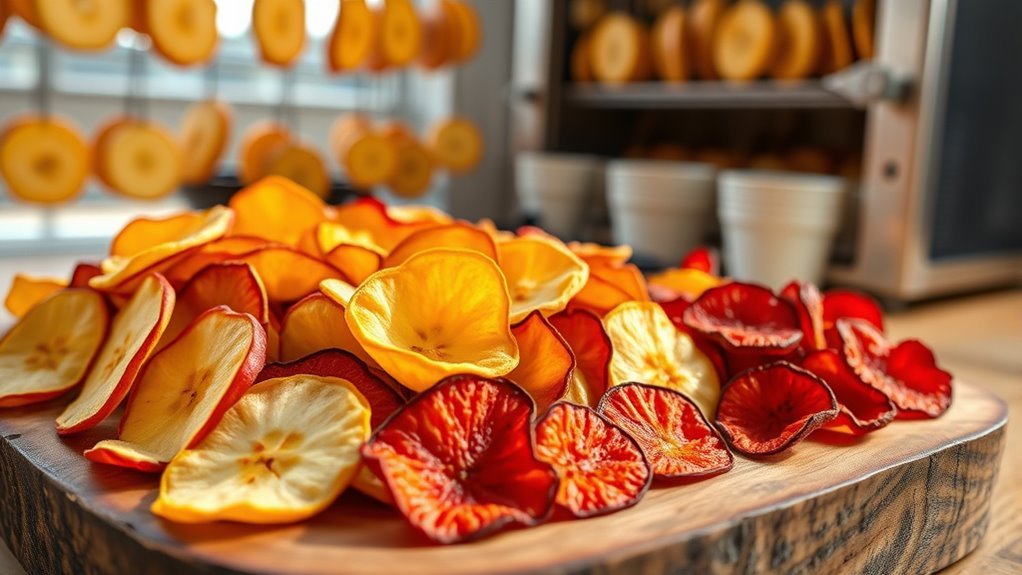
Although drying fruit chips might seem straightforward, choosing the right technique greatly affects their quality and nutritional value. In the production process of dried fruits, methods like sun drying, tray drying, and freeze drying are common. Freeze drying stands out because it freezes the fruit and removes moisture under vacuum pressure, preserving color, taste, and most nutrients without using high temperature. Traditional methods often involve heat, which can degrade nutritional value and cause stickiness due to high sugar content. Additionally, vacuum sugar infusion and sulfur smoking help maintain quality by preventing browning and nutrient loss. To guarantee even drying and superior dried fruit chips, proper pre-treatment like peeling and cutting is essential before applying any dehydration technique.
Chemical and Nutritional Changes During Drying
When you dry fruit chips, their chemical and nutritional makeup changes noticeably. The drying process triggers several chemical changes that affect dried fruits’ quality and health benefits. Here are key points to evaluate:
Drying fruit chips alters their chemistry, impacting nutritional value and antioxidant levels significantly.
- Ascorbic acid levels drop considerably in fruits like kiwi and apple, though some, like pear, keep their vitamin C intact.
- Phenolic compounds, which contribute to antioxidant activity, generally decrease, except in apples that maintain their total phenolic content.
- Dry matter and ash content rise sharply, with apple ash content increasing by over 1,700%, while harmful compounds like hydroxy methyl furfural form, signaling sugar degradation.
These nutritional changes mean dried fruit chips offer concentrated nutrients but reduced antioxidants compared to fresh fruit.
Sensory Qualities and Consumer Preferences
Texture and flavor play essential roles in how you enjoy dried fruit chips. The sensory attributes, including appearance, smell, and taste, greatly influence your preferences. For example, apple-orange chips often score higher than kiwi-pear chips in sensory evaluations because they offer a more appealing crunch and vibrant flavor. Dehydration methods are key to achieving the crispy texture you love, as proper slicing and drying enhance both crispiness and flavor retention. Additionally, antioxidant activity in dried fruit chips, linked to their phenolic content, affects not only their health benefits but also their sensory appeal. Understanding these factors helps you choose fruit chips that satisfy both your taste buds and nutritional expectations, making your snacking experience more enjoyable.
Storage Methods and Maintaining Crispiness
To keep your dried fruit chips crispy, store them in airtight containers to block moisture.
You’ll also want to refrigerate them or use a food sealer to extend their freshness.
These simple steps help you maintain that perfect crunch every time.
Airtight Container Importance
Keeping your dried fruit chips in airtight containers plays an essential role in preserving their crispiness and flavor. When you focus on proper storage, you can enjoy peak freshness and extend the shelf life of your dried fruit consumption. Here’s why airtight containers matter:
- They prevent moisture absorption, which can make chips soggy and spoil their texture.
- Airtight containers block humidity and air exposure, maintaining the original taste and crunch.
- Using vacuum-sealed containers further reduces air contact, preserving nutritional value and preventing chewiness.
To maximize benefits, store your sealed containers in a cool, dark place. This simple step guarantees your dried fruit chips stay fresh and delicious longer, making every bite enjoyable.
Refrigeration Benefits
When you store dried fruit chips in airtight containers inside the refrigerator, you greatly slow down moisture absorption and humidity exposure. This helps maintain their crispiness much longer than room temperature storage. Refrigeration extends the shelf life of dried fruit chips considerably, allowing you to enjoy their texture and flavor for several months without worry. To keep that satisfying crunch, use moisture-resistant containers and keep them in a cool, dry spot inside the fridge. Avoid exposing your dried fruit chips to direct sunlight or heat, as this can degrade their quality and color. Even with refrigeration, try to consume them within a few weeks after opening, since air exposure gradually reduces crispiness. Proper refrigeration is key to preserving both freshness and crunch.
Achieving Crisp Texture
Although achieving a perfectly crisp texture starts with slicing fruits thinly and uniformly, how you store your dried fruit chips plays an equally vital role. Proper storage helps maintain that crunch by controlling water content and preventing moisture absorption. To keep your dried fruits crispy after production of dried fruit, follow these tips:
- Use airtight containers to block humidity and preserve crispiness.
- Seal the containers with a food sealer to extend shelf life and lock in freshness.
- Store away from direct sunlight and damp environments to avoid chewy texture.
Frequently Asked Questions
Are Dried Fruit Chips Healthy?
Yes, dried fruit chips are healthy because they keep most vitamins and fiber without added sugars or oils.
You’ll enjoy a nutrient-rich, low-calorie snack that satisfies sweet cravings and fits well in clean, balanced diets.
Why Is Regularly Eating Dried Fruit Not Recommended?
You shouldn’t eat dried fruit regularly because its concentrated sugars can spike your blood sugar,
cause overeating due to low moisture, and often lose vitamins.
Plus, added sugars or preservatives might harm your health.
What Fruit Can You Not Dehydrate?
You can’t crisply create chips from watermelon or cucumber,
as their watery weight won’t wilt well.
Also, fruits like avocado, banana, and citrus struggle,
leaving you with soggy snacks instead of satisfying, scrumptious crunches.
What Is the Healthiest Dried Fruit Snack?
The healthiest dried fruit snack is freeze-dried options like apples or strawberries.
They keep most vitamins and fiber without added sugars.
You’ll enjoy a nutrient-rich, low-calorie treat that’s perfect for any diet.
Conclusion
Now that you know how dried fruit chips are made, you’ll appreciate their unique crunch and natural sweetness even more.
Did you know the global dried fruit market is expected to grow by over 5% annually?
That means more people like you are enjoying these tasty, nutritious snacks worldwide.
By selecting quality fruits and proper drying methods, you can savor their crispiness and health benefits anytime.
Give them a try—you won’t regret it!
Dried fruit chips are not just delicious; they are also a convenient and healthy snack option that packs in nutrients.
With their rise in popularity, you can easily find a variety of flavors and types to suit your taste.
So, why not stock up on these delightful treats?
Enjoy the crunch and sweetness of these snacks while reaping their health benefits.
Once you start, you’ll see why dried fruit chips are a favorite for many!