5 Key Differences Between Freeze-Dried Fruit and Dried Fruit
You’ll notice five key differences between freeze-dried fruit and dried fruit.
Freeze-dried fruit is made by freezing and then removing moisture without heat, while dried fruit is heated for drying.
Because of this process, freeze-dried fruit has a light, crispy texture with about 2% moisture, whereas dried fruit is chewy and moister.
Another important difference is how they retain nutrients.
Freeze-drying preserves more nutrients and extends shelf life up to years, while dried fruit typically has a shorter shelf life and often contains added sugars.
If you want to understand these contrasts better, keep exploring.
Key Takeaways
- Freeze-dried fruit is frozen and sublimated, while dried fruit is heated at around 130°F to remove moisture.
- Freeze-dried fruit contains about 2% moisture and is crispy; dried fruit has 20-30% moisture and is chewy.
- Freeze-dried fruit retains more nutrients due to low-temperature processing compared to heat-exposed dried fruit.
- Freeze-dried fruit has a longer shelf life of years, whereas dried fruit spoils faster due to higher moisture.
- Freeze-dried fruit usually has no additives and a light flavor; dried fruit often contains sugars or preservatives with a bold taste.
Processing Methods
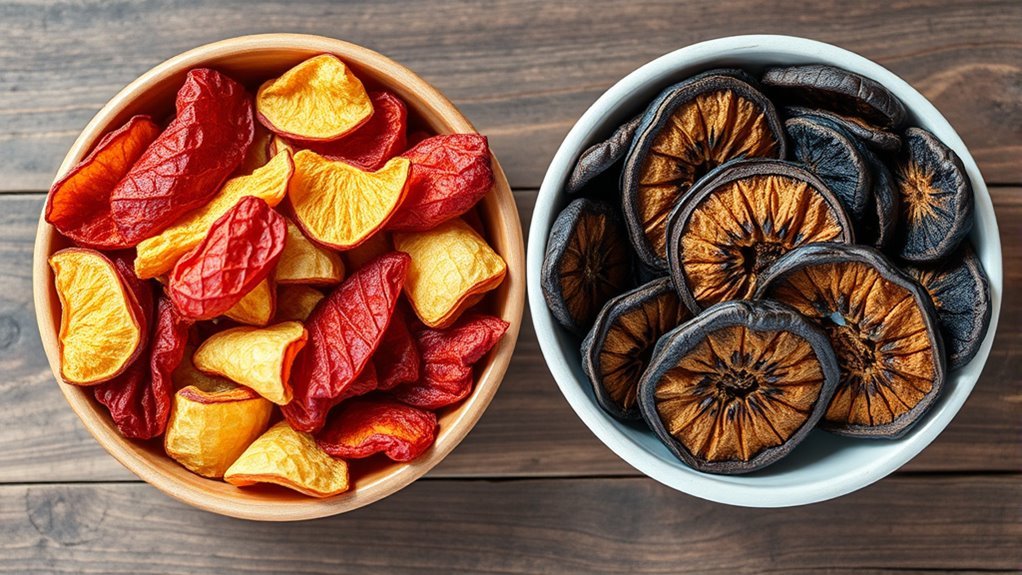
Although both freeze-dried and dried fruits remove moisture to preserve the fruit, they use very different methods. When you choose freeze dried fruit, the process involves freezing the fruit solid and then removing moisture through sublimation under low pressure. This method keeps the fruit’s structure and nutrients intact. On the other hand, dried fruit is made by removing moisture using heat, typically around 130°F, over a longer time. Because of these processing methods, freeze dried fruit ends up with almost no moisture content, giving it a longer shelf life—often lasting years at room temperature. In contrast, dried fruit retains about 20% moisture, which shortens its shelf life. Understanding these differences helps you pick the best option depending on your storage and taste preferences.
Texture and Moisture Content
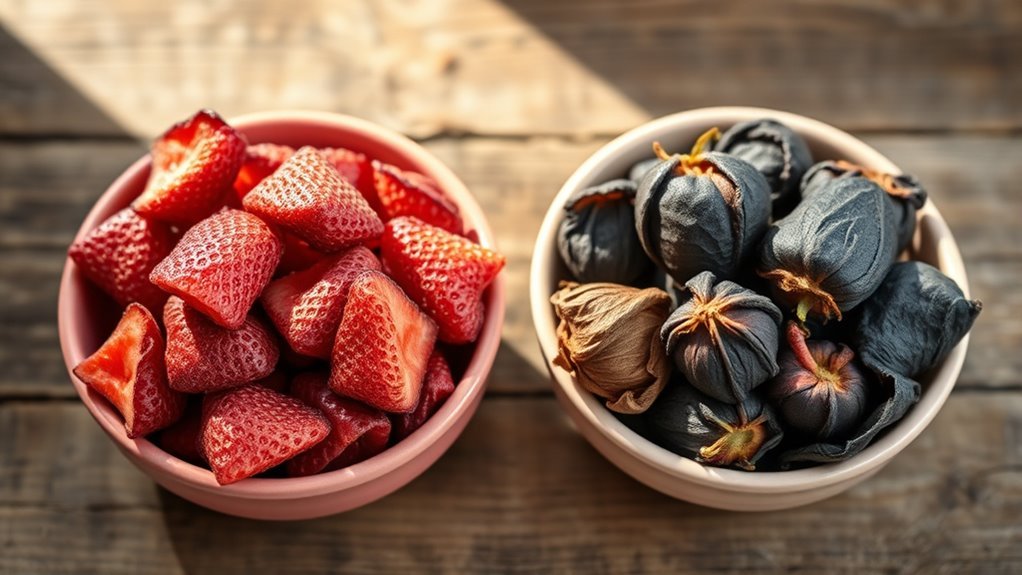
When you compare freeze-dried fruit to dried fruit, you’ll notice a big difference in texture and moisture content. Freeze-dried fruit contains about 2% moisture, giving it a light, crispy texture. On the other hand, dehydrated fruit holds 20-30% moisture, resulting in a denser, chewier feel. This difference also affects rehydration time—freeze-dried fruit rehydrates quickly, while dehydrated can take up to 30 minutes. Here’s a quick comparison:
| Feature | Freeze-Dried Fruit | Dehydrated Fruit |
|---|---|---|
| Moisture Content | ~2% | 20-30% |
| Texture | Light, crispy | Dense, chewy |
| Rehydration Time | A couple of minutes | Up to 30 minutes |
| Shelf Life | Longer (less moisture) | Shorter |
| Cell Structure | Intact | Collapsed |
Nutritional Value Retention

Beyond differences in texture and moisture, how fruit is dried greatly affects its nutritional value. When you choose freeze-dried fruit, you get better nutrient retention because the process uses low temperatures and removes nearly all moisture content—around 2%. This helps preserve key nutrients like antioxidants, riboflavin, and niacin close to their fresh levels. On the other hand, dehydrated fruit retains about 20% moisture content but often loses more vitamins due to the heat involved, which breaks down sensitive nutrients. While freeze-dried fruit generally keeps more nutritional value, some nutrients like fiber and vitamin C may still be lower than in fresh fruit. So, if maintaining nutrients is your goal, freeze-dried fruit usually offers a superior option compared to dehydrated fruit.
Shelf Life and Storage
Since freeze-dried fruits contain very little moisture—about 2%—they can last for years at room temperature without spoiling. In contrast, dehydrated fruits retain around 20% moisture content, which shortens their shelf life and increases spoilage risk. To get the most from your fruit snacks, consider these storage tips:
- Store freeze-dried fruits in airtight packaging to minimize exposure to air and moisture.
- Keep both freeze-dried and dehydrated fruits in cool, dry storage conditions to preserve quality.
- Avoid humidity and heat, as dehydrated fruits are more vulnerable to bacterial growth due to higher moisture content.
Additives and Flavor Profiles
Although both freeze-dried and dehydrated fruits offer convenient snacking options, you’ll notice distinct differences in their additives and flavor profiles. Freeze-dried fruit usually contains no additives, preserving natural flavors with minimal moisture content. Dehydrated fruit, however, often includes added sugars or preservatives to boost taste and shelf life. This difference affects flavor profiles: freeze-dried fruit tastes lighter and closer to fresh fruit, while dehydrated fruit delivers a richer, sweeter flavor due to concentrated sugars from moisture loss.
| Aspect | Freeze-Dried Fruit |
|---|---|
| Additives | None |
| Flavor Profile | Light, natural |
| Moisture Content | Extremely low |
| Taste Intensity | Subtle, fresh-like |
| Aspect | Dehydrated Fruit |
| Additives | Sugars, preservatives |
| Flavor Profile | Rich, concentrated |
| Moisture Content | Higher than freeze-dried |
| Taste Intensity | Bold, sweet |
Frequently Asked Questions
What’s Healthier, Freeze-Dried Fruit or Dried Fruit?
Freeze-dried fruit is healthier because it keeps most nutrients intact and avoids added sugars.
You’ll also enjoy a longer shelf life and fewer preservatives, making it a better, more natural snack choice than dried fruit.
What Is the Disadvantage of Freeze-Dried Fruit?
You’ll find freeze-dried fruit can be pricey, and its light, crispy texture isn’t for everyone.
If not sealed well, it loses flavor quickly.
Plus, its nutritional benefits might fade if exposed to moisture or air.
Which Is Better, Freeze-Dried or Dried?
You’ll find freeze-dried fruit better if you want more nutrients, a crunchy texture, and longer shelf life.
Dried fruit suits you if you prefer a chewy texture and don’t mind added sugars or shorter storage.
Which Freeze-Dried Fruit Is the Healthiest?
You’ll find freeze-dried strawberries healthiest because they pack high fiber, antioxidants, and vitamins without added sugars.
They keep nutrients intact, helping you snack healthily and support digestion while enjoying a crispy, delicious treat anytime.
Conclusion
Now that you know the key differences between freeze-dried and dried fruit, which one fits your lifestyle better?
Freeze-dried fruit offers a light, crunchy texture with more nutrients retained.
On the other hand, dried fruit provides a chewier bite and longer shelf life.
Both options have their perks depending on your needs, whether it’s snacking on-the-go or cooking.
So, next time you reach for fruit, you’ll know exactly what you’re getting—and why it matters.
In conclusion, understanding the differences between freeze-dried fruit and dried fruit can help you make the best choice for your snacking or cooking needs.
Whether you’re looking for a nutrient-dense option with a satisfying crunch or a chewy snack that lasts longer, knowing what each type offers will enhance your experience.
Choose wisely, and enjoy the delicious benefits of both freeze-dried and dried fruit!