Brew Perfect Dried Fruit Tea at Home
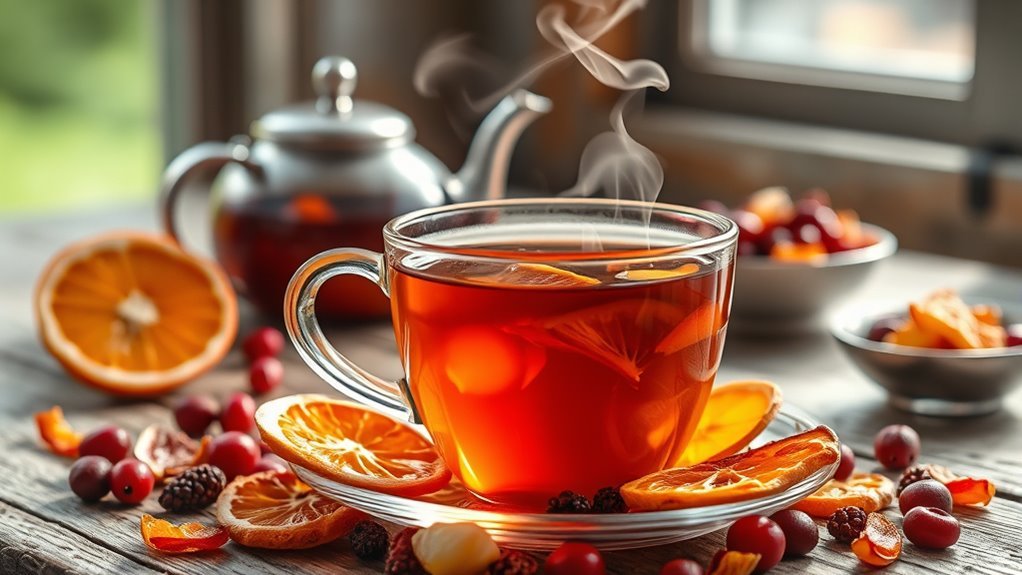
To brew perfect dried fruit tea at home, it’s essential to choose the right ingredients.
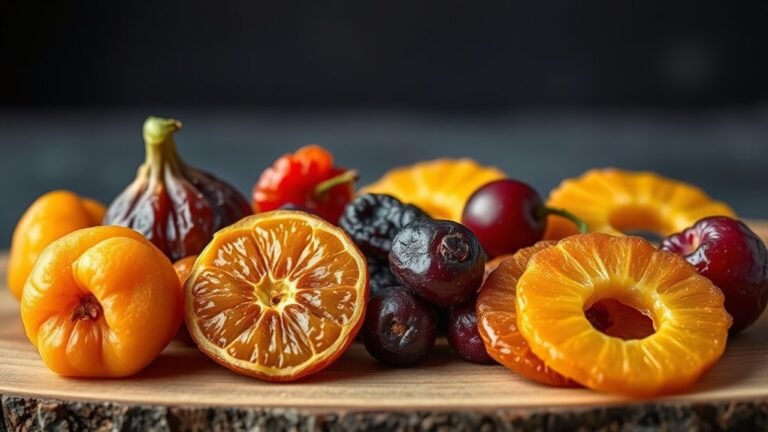
Opt for naturally sweet, preservative-free fruits like apples or apricots. These fruits will provide a delightful flavor that enhances your tea experience.
Combine equal parts of your chosen dried fruit with zesty citrus peel.
Want to add a little extra oomph? Consider mixing in herbs like mint or ginger for a unique twist.
When it comes to brewing, use water that’s just below boiling, around 190°F to 200°F. This temperature helps to extract the flavors without veering into bitterness.
Steep your blend for about 3 to 5 minutes, keeping an eye on the timing.
To maintain freshness, store your dried fruit tea blend in airtight containers.
With a little experimentation, you’ll uncover even more ways to create delicious and healthy teas at home.
Enjoy your brewing journey!
Key Takeaways
- Select naturally sweet, preservative-free dried fruits like apples and apricots for rich flavor and health benefits.
- Steep dried fruit tea in hot water just below boiling (190°F to 200°F) for 3 to 5 minutes to extract optimal flavor.
- Combine dried fruits with citrus zest and complementary herbs like mint or ginger for a revitalizing aroma and taste.
- Store your dried fruit tea blend in an airtight container away from moisture to preserve freshness for up to a year.
- Adjust steeping time and ingredient ratios to customize flavor strength and sweetness to your personal preference.
Selecting the Best Dried Fruits
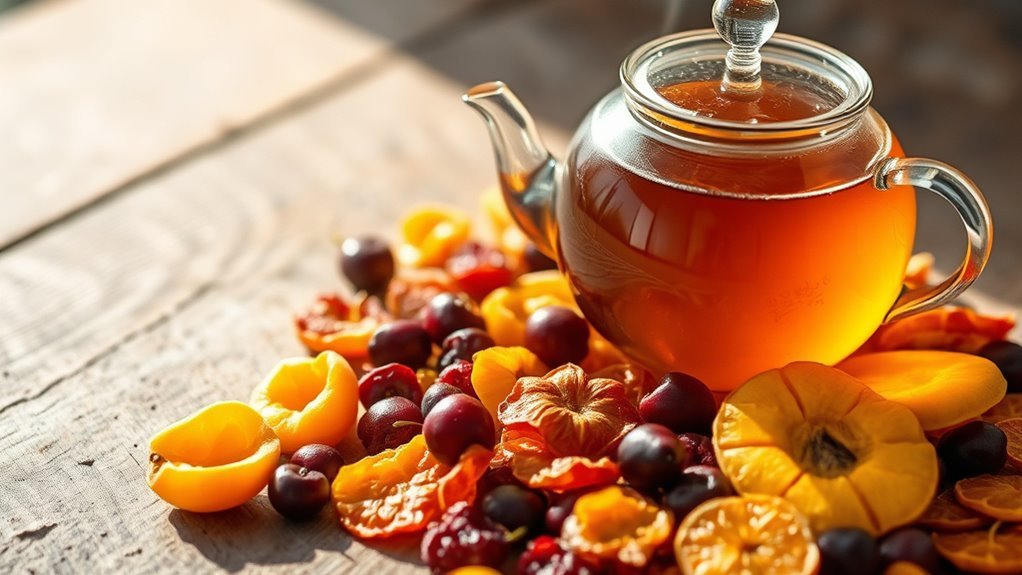
When selecting dried fruits for your tea, choose those naturally sweet and flavorful, like apples, peaches, and apricots, to enhance your brew’s taste. You’ll want to avoid dried fruits with added sugars or preservatives to keep your homemade tea blend pure and healthy. Seasonal choices, such as dried blueberries and cranberries, add vibrant color and a burst of flavor to your fruit tea. Pay attention to how the fruits were dried—those dehydrated at lower temperatures retain more nutrients and taste better. Don’t hesitate to mix and match, pairing citrus zest with tropical dried fruits, to create unique, aromatic blends that suit your palate perfectly. This way, your homemade tea blend will be both delicious and nourishing every time.
Preparing Your Tea Blend
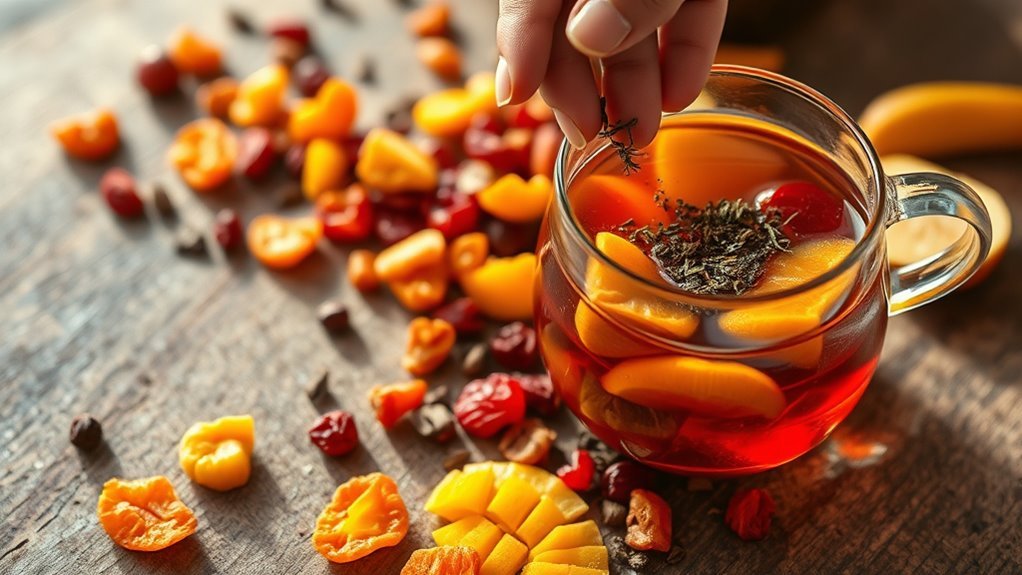
Now that you’ve chosen the best dried fruits for your tea, it’s time to prepare your blend. Start by combining equal parts of dried fruit like apples, oranges, or berries with citrus zests such as lemon or orange peel to add a revitalizing aroma. To elevate your tea blends, consider adding complementary herbs like mint or ginger, which enhance the flavor profile. Make sure your dried fruit is thoroughly dried using a food dehydrator or an oven set at around 250°F to preserve natural flavors. Once mixed, store your blend in an airtight glass container in a cool, dry place to keep it fresh for up to a year. When you’re ready to enjoy, steep your blend in boiling water for a delicious, flavorful cup.
Brewing Techniques for Optimal Flavor
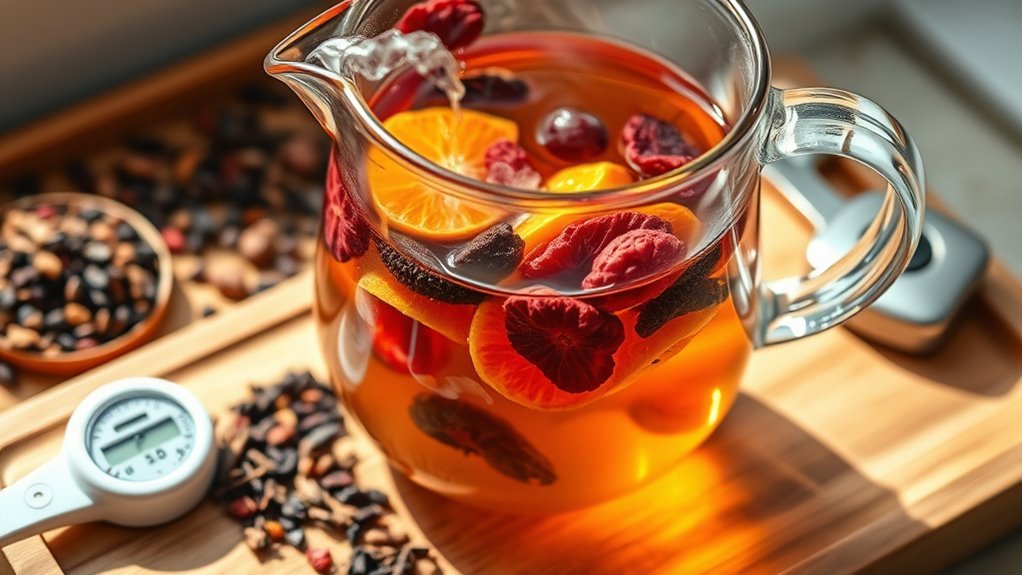
To get the best flavor from your dried fruit tea, use hot water just below boiling and steep for 3 to 5 minutes.
Adjust the steeping time depending on how strong you like your tea—longer steeping means bolder flavors.
Paying attention to water temperature and steeping duration will guarantee a perfect cup every time.
Water Temperature Tips
Although it might be tempting to use boiling water for dried fruit tea, keeping the temperature between 190°F and 200°F (88°C to 93°C) brings out the best flavors without bitterness. When brewing dried fruit tea, this precise water temperature helps prevent harsh tannin extraction that can spoil the delicate fruit notes. Using a thermometer guarantees you hit this ideal range every time. Remember, the water temperature works hand in hand with steeping time; too hot, and you risk bitterness, too cool, and the flavors won’t fully develop. If you’re blending dried fruits with herbs, slightly lower the water temperature to protect the herbs’ subtle qualities. Experimenting with water temperature lets you tailor your brew, revealing the perfect balance of sweetness and depth in your dried fruit tea.
Steeping Time Guidelines
When you steep dried fruit tea for 3 to 5 minutes, you reveal its best flavor, but feel free to adjust the time to match your taste preferences. Use 2 tablespoons of dried fruit per cup of hot water just below boiling to avoid bitterness. Lighter fruits need shorter steeping time, while richer flavors benefit from longer infusion. Keep an eye on the steeping time to balance strength and taste perfectly. After steeping, strain the mixture to remove solids for a smoother experience. Experiment with different steeping times until you find what works best for you. With the right hot water temperature and careful steeping time, your dried fruit tea will deliver a vibrant, flavorful cup every time.
Storing and Preserving Dried Fruit Tea
To keep your dried fruit tea fresh, store it in airtight containers and place them in a cool, dry spot away from sunlight.
Label each container with the date so you can monitor its freshness over time.
Remember, properly stored dried fruit tea can last between six months to a year.
But always check for any signs of spoilage.
Airtight Container Storage
Keeping your dried fruit tea fresh for up to a year starts with storing it in an airtight glass container. This prevents moisture absorption, which is key to preserving flavor and quality. To maximize your tea’s shelf life, follow these storage tips:
- Use an airtight container to block air and humidity from spoiling the tea.
- Label the container with the storage date so you can track freshness.
- Portion bulk dried fruit tea into smaller containers to reduce air exposure each time you open it.
Avoid opening the container frequently, as exposure to air will degrade the tea’s potency. Proper airtight container storage guarantees your dried fruit tea stays enjoyable and flavorful for months to come.
Cool, Dry Environment
A cool, dry environment plays an essential role in preserving your dried fruit tea’s flavor and quality. Store your tea in an airtight glass container to keep moisture out and maintain freshness. Keep the container below 70°F (21°C), away from direct sunlight, to prevent spoilage and nutrient loss. Regularly inspect for moisture or mold, and discard any affected tea immediately to avoid contamination. Label your container with the drying date to track freshness.
| Storage Tip | Why It Matters | Action Needed |
|---|---|---|
| Cool, dry environment | Prevents spoilage and flavor loss | Store below 70°F, avoid sun |
| Airtight glass container | Blocks moisture and air | Use sealed glass jars |
| Regular checks | Detects moisture or mold early | Inspect and discard if needed |
Shelf Life Guidelines
Although dried fruit tea can stay fresh for months, you should store it properly to enjoy its full flavor and aroma. To maximize shelf life, keep your tea blends stored in airtight glass containers away from heat, moisture, and light. Here’s how to maintain freshness:
- Use airtight glass containers and store them in a cool, dry place to preserve flavor for 6 months to a year.
- Label each container with the preparation date to track shelf life and guarantee you use the tea while it’s at its best.
- Regularly inspect your tea for signs of spoilage like off-odors or discoloration, and discard any compromised batches.
For longer storage, vacuum sealing can help extend shelf life while retaining flavor and nutrients.
Health Benefits of Homemade Fruit Tea
When you brew your own fruit tea, you tap into a wealth of antioxidants from dried fruits that help fight oxidative stress and lower the risk of chronic diseases. Homemade fruit tea offers natural sweetness without added sugars, making it a healthier choice. Ingredients like citrus boost vitamin C intake, supporting your immune system and skin health. Plus, fruits like ginger and mint aid digestion, while the hydration from tea keeps your body functioning efficiently. Here’s a quick look at the health benefits you get from dried fruit in homemade fruit tea:
| Benefit | Source in Fruit Tea |
|---|---|
| Antioxidants | Dried berries, apples |
| Immune support | Citrus fruits |
| Digestive aid | Ginger, mint |
| Natural sweetness | Dried fruit sugars |
| Hydration | Water base of the tea |
Tips for Customizing Your Tea Experience
Enjoying the health benefits of homemade fruit tea becomes even more rewarding when you tailor the flavors to your liking. To customize your tea experience, start by experimenting with different combinations of dried fruit and herbal teas. This lets you create unique blends that suit your palate. Next, adjust the steeping time between 3 to 10 minutes to control the tea’s strength and flavor intensity. Finally, incorporate seasonal fruits or a pinch of spices like cinnamon or ginger to elevate the complexity and freshness of your brew. Here’s a quick guide:
- Mix dried fruit and herbal teas to find your favorite blend.
- Steep for varying times to achieve the perfect flavor.
- Add seasonal fruits or spices for extra zest.
These tips help you customize every cup to perfection.
Frequently Asked Questions
How to Brew Dried Fruit Tea?
You brew dried fruit tea by steeping 2 tablespoons of dried fruit in hot, not boiling, water for 3 to 5 minutes.
Then strain it, enjoy your flavorful tea, and store any leftover blend airtight.
What Tea Kills Inflammation in the Body?
You’ll love this: green tea’s EGCG can reduce inflammation by up to 40%.
Drinking green, ginger, turmeric, chamomile, or rooibos tea regularly helps fight inflammation and lowers risks of chronic diseases like arthritis and heart disease.
Which Dry Fruit Should Not Be Soaked?
You shouldn’t soak dried cranberries, banana chips, or dried coconut.
They either lose texture, become gummy, or alter flavor negatively.
Also, avoid soaking high-sugar fruits like raisins and dates for long to maintain the right consistency.
Why Is It Not Recommended to Boil Water With Tea Leaves?
Why would you ruin your tea by boiling it with the leaves?
You shouldn’t, because boiling water extracts bitter tannins and destroys delicate flavors.
This leaves you with a harsh, astringent brew instead of a smooth, enjoyable cup.
Conclusion
Brewing your own dried fruit tea at home not only tastes amazing but also boosts your health. Did you know that drinking fruit-infused teas can provide up to 30% of your daily antioxidant needs?
By selecting quality fruits, mastering brewing techniques, and customizing flavors, you create an invigorating, nutritious drink tailored just for you.
So go ahead, experiment with your blends, and enjoy the natural goodness in every cup you brew.
In conclusion, making dried fruit tea at home is a delightful way to indulge in a healthy beverage. With antioxidant-rich ingredients and endless flavor possibilities, you can craft the perfect cup that suits your taste. Embrace the joy of brewing and savor the benefits of fresh, flavorful fruit teas. Cheers to your health and creativity in every sip!