Do Gold Plated Necklaces Tarnish
Yes, gold plated necklaces do tarnish because the thin gold layer can wear off, exposing the reactive base metal beneath.
This metal reacts with air, moisture, and chemicals from lotions or perfumes, causing discoloration and dullness.
Frequent use and sweat also speed up tarnishing.
You can clean and store them properly to slow this process.
Keep exploring to discover how to identify tarnish, clean your jewelry effectively, and prevent future damage.
Key Takeaways
- Gold plated necklaces can tarnish as the thin gold layer wears off, exposing reactive base metals underneath.
- Tarnishing occurs when base metals react with air, moisture, sweat, and skin oils, creating discoloration.
- Chemicals in lotions, perfumes, and cleaning products accelerate tarnishing of gold plated jewelry.
- Proper cleaning and storage, such as using soft cloths and airtight containers, help prevent tarnish.
- Regular use and exposure to humidity or harsh environments increase the likelihood of gold plated necklaces tarnishing.
Understanding Gold Plating and Its Vulnerability
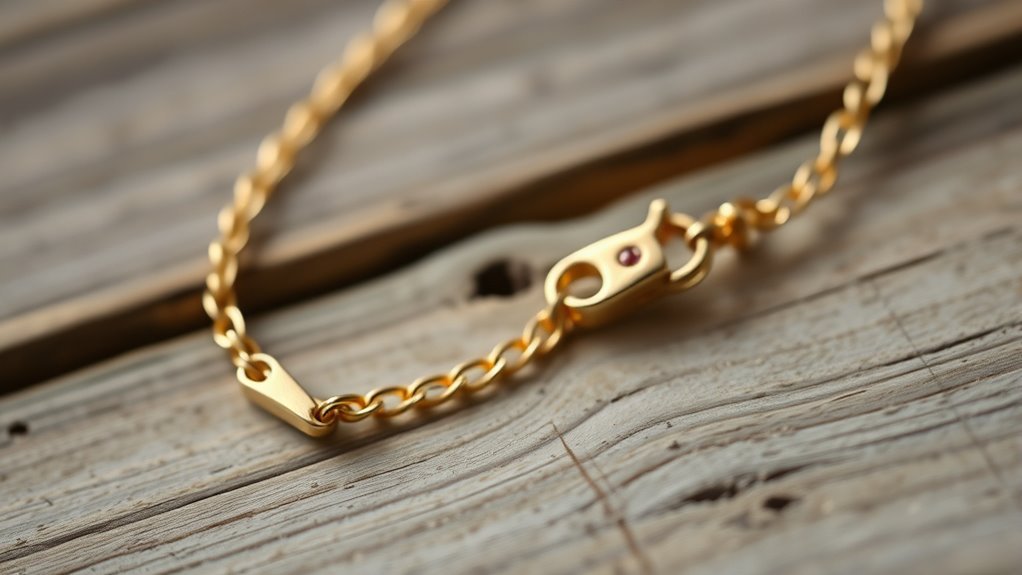
Although gold itself doesn’t tarnish, gold-plated necklaces can lose their shine because the thin layer of gold covers a base metal prone to reacting with moisture and air. When you wear a gold-plated necklace, the quality and thickness of the gold layer matter a lot. Thicker plating protects better, while thinner layers wear off faster, exposing the base metal underneath. Since common base metals like copper or silver can corrode, they may cause discoloration, especially if your necklace meets sweat, perfumes, or chemicals. Remember, gold plating isn’t permanent, so with frequent use, the gold layer will gradually wear away. To keep your necklace looking fresh longer, store it in airtight containers and clean it gently with non-abrasive cloths. This helps reduce tarnishing and preserves its shine.
Common Causes of Tarnishing in Gold Plated Necklaces
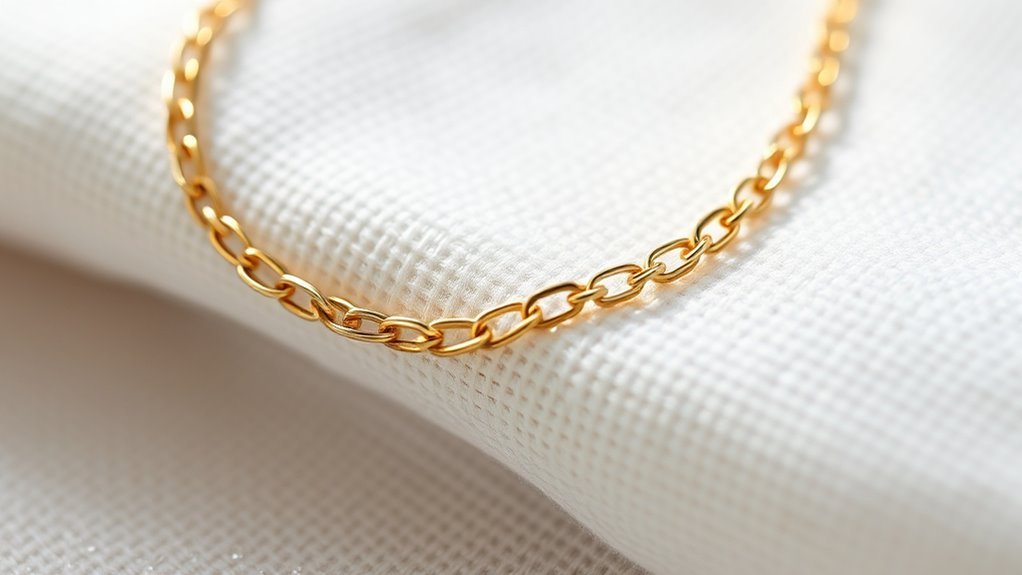
When you wear a gold-plated necklace, various factors can cause it to tarnish over time. The base metal beneath the gold layer—often silver or copper—reacts with air and moisture, leading to discoloration. The thickness and quality of the gold plating also matter: thinner layers wear off faster, exposing the reactive base metal. Chemicals in lotions, perfumes, and cleaning products speed up tarnishing, so be cautious about what touches your necklace. Sweat, skin oils, and humidity create an acidic environment, further affecting the underlying metal. To slow tarnish, clean your necklace regularly and store it properly, like in anti-tarnish pouches. Being mindful of these factors helps keep your gold-plated necklace looking its best for longer.
How to Identify Tarnish vs. Worn Gold Plating
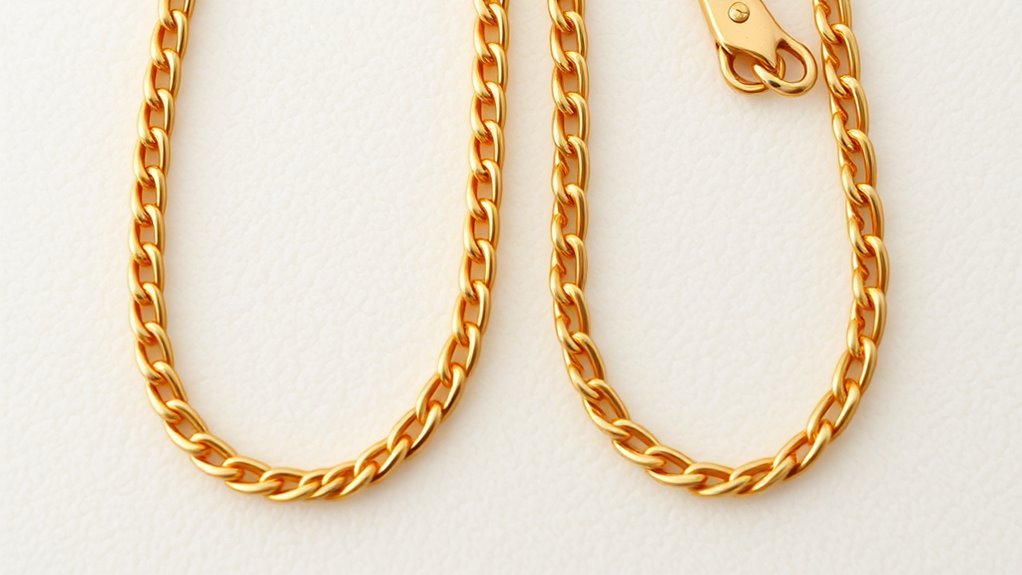
How can you tell if your gold-plated necklace is tarnished or simply losing its plating? Tarnish shows up as a dull, discolored film that usually covers the surface uniformly and can often be polished away. Worn gold plating, on the other hand, reveals uneven patches where the gold has worn off, exposing the underlying metal, which may look different in color or shine. You can test this by rubbing the necklace gently with a soft cloth—if it picks up dark residue, it’s likely tarnish; if the gold color fades or disappears, the plating is worn. Checking your necklace under good lighting helps too: tarnish looks more consistently dull, while worn areas show irregular discoloration and shine variations.
Effective Cleaning Methods for Gold Plated Jewelry
You’ll want to clean your gold plated necklace gently to avoid damaging its thin layer.
Using a soft polishing cloth made for gold or silver helps keep it shiny without scratching.
Steering clear of harsh chemicals and abrasive materials will protect the plating and extend its life.
Gentle Cleaning Techniques
Although gold plated necklaces boast a beautiful shine, their delicate surface requires careful cleaning to maintain that luster. You should use a soft, non-abrasive polishing cloth, like a Sunshine cloth, to gently wipe away dirt without scratching or wearing off the gold layer. For a deeper clean, soak your necklace in a mixture of warm water, white vinegar, sea salt, and liquid detergent for 15 minutes. Then, gently brush it with a soft toothbrush, rinse thoroughly, and dry completely. Avoid abrasive agents or toothpaste, as they can damage the plating. Regular maintenance and storing your necklace in airtight containers or anti-tarnish pouches will also help preserve its shine and prevent tarnishing over time.
Safe Polishing Materials
When caring for gold plated jewelry, choosing the right polishing materials is essential to avoid damaging the delicate gold layer. You should use sunshine or other gentle polishing cloths designed specifically for gold plated items. These cloths remove tarnish effectively without scratching or wearing down the plating. Avoid abrasive materials like toothpaste, which can accelerate tarnishing by harming the gold layer. For stubborn tarnish, try soaking your jewelry in a safe homemade solution—mix 1 pint warm water, 1 cup white vinegar, 1 tablespoon sea salt, and 1 teaspoon liquid detergent—then gently brush. Regularly store your pieces in anti-tarnish pouches and keep them dry to prolong their shine and prevent discoloration caused by the base metals underneath the plating.
Preventative Care to Extend the Life of Gold Plated Necklaces
To keep your gold plated necklaces looking their best, store them in airtight containers or jewelry boxes lined with anti-tarnish material to reduce exposure to air and moisture. You should also take these steps:
- Clean your necklaces regularly with a gentle, non-abrasive polishing cloth to remove buildup without harming the plating.
- Avoid contact with perfumes, lotions, and harsh cleaning chemicals that can speed up tarnishing.
- Remove your gold plated jewelry before swimming or exercising to limit exposure to sweat and water.
- Rotate your necklaces to prevent excessive wear on any single piece, giving plating time to recover.
Following these simple habits helps extend your jewelry’s life and keeps your gold plated necklaces shining longer.
Recommended Brands With Tarnish-Resistant Costume Jewelry
If you want costume jewelry that stands up to wear without tarnishing quickly, several brands have earned a reputation for quality and durability. Joan Rivers jewelry resists tarnish well, though some pieces might age with time. Brighton is another excellent choice, known for its sturdy and long-lasting designs. Anne Klein, available at Belk, offers pieces that maintain their shine and resist discoloration. Ralph Lauren’s costume jewelry, found in department stores, also holds up well against tarnishing, making it a reliable option. Finally, Napier, sold at Kohl’s, produces higher-quality jewelry that stays bright longer. Choosing any of these brands means you’ll enjoy costume jewelry that looks great and resists tarnish, saving you from frequent replacements or repairs.
Frequently Asked Questions
How Long Will Gold-Plated Jewelry Last?
You can expect your gold-plated jewelry to last 1 to 3 years, depending on how thick the gold layer is and how well you care for it.
Avoid moisture and chemicals to keep it looking fresh longer.
Can I Take a Shower With My Gold-Plated Necklace?
Think of your gold-plated necklace like a delicate painting; you wouldn’t splash water on it daily.
Will a 14K Gold-Plated Necklace Tarnish?
Yes, your 14k gold-plated necklace can tarnish over time, especially if exposed to moisture, chemicals, or abrasion.
To keep it shiny, avoid wearing it in the shower.
Also, make sure to store it properly when not in use.
Are Gold-Plated Necklaces Worth Buying?
You get what you pay for, so gold-plated necklaces are worth buying if you want affordable style.
Just remember they’ll need care to last, and they’re best for occasional wear.
Not daily use or rough conditions.
Conclusion
Now that you know gold plated necklaces can tarnish over time due to exposure and wear, wouldn’t you want to protect your jewelry with proper care?
By cleaning them gently and storing them wisely, you can keep their shine longer.
Remember, recognizing tarnish versus worn plating helps you decide when to refresh your pieces.
With a little attention, your favorite gold plated necklaces will stay beautiful and last much longer.
In conclusion, taking care of your gold plated necklaces is essential to prevent tarnishing.
Regular cleaning and smart storage can significantly extend the life of your jewelry.
By understanding the difference between tarnish and worn plating, you can make informed decisions about maintenance.
So, invest a little time in caring for your gold plated necklaces, and they will continue to sparkle beautifully for years to come!