Freeze Dried Vs Dehydrated Fruit: 7 Key Differences
You’ll notice seven key differences between freeze-dried and dehydrated fruit.
Freeze-dried fruit retains most of its nutrients, offers a light and crispy texture, and can last up to 25 years when stored properly.
On the other hand, dehydrated fruit tends to be chewier, loses more nutrients due to the heating process, and has a shorter shelf life.
There are also differences in equipment costs and drying times, which can influence convenience and the variety of uses for each type.
If you’re curious about the specifics of texture, nutrition, and cost, there’s a lot more to discover!
Key Takeaways
- Freeze-dried fruit retains over 90% of nutrients, while dehydrated fruit loses more due to heat exposure during drying.
- Freeze-drying results in a light, crispy texture; dehydration produces a chewier, leathery texture.
- Freeze-dried fruit has a much longer shelf life, up to 25 years if stored properly, compared to 1-2 years for dehydrated fruit.
- Freeze-drying uses more expensive equipment and higher energy but preserves flavor and nutritional value better than dehydration.
- Dehydrated fruit suits cooking and baking, while freeze-dried fruit is preferred for snacking and on-the-go consumption.
Historical Background of Fruit Drying Methods
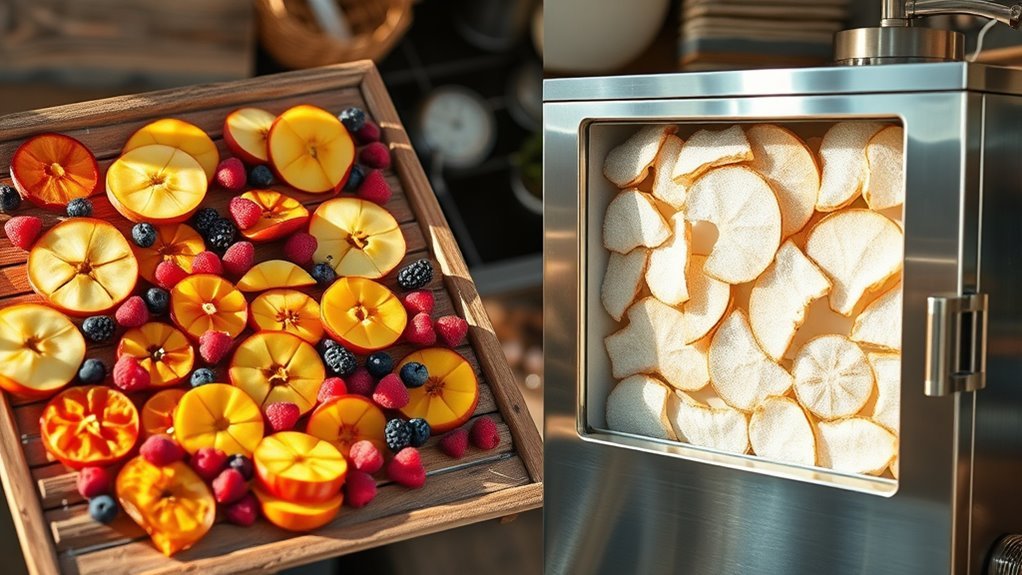
Although drying fruits seems like a modern convenience, people have been preserving fruit this way since around 12,000 BC. You’ll find that the historical significance of fruit drying lies in its role as an essential food preservation method. Early humans used traditional methods like sun-drying, fire, and smoke to remove moisture and prevent spoilage. These simple techniques allowed them to store surplus harvests and trade preserved fruits over long distances. As you explore this practice today, you’ll notice how modern techniques like dehydration and freeze-drying have taken food preservation to a new level. These advancements boost efficiency and maintain nutritional value and flavor, reflecting the ongoing evolution from traditional methods to cutting-edge technology in fruit drying.
Differences in Processing Techniques
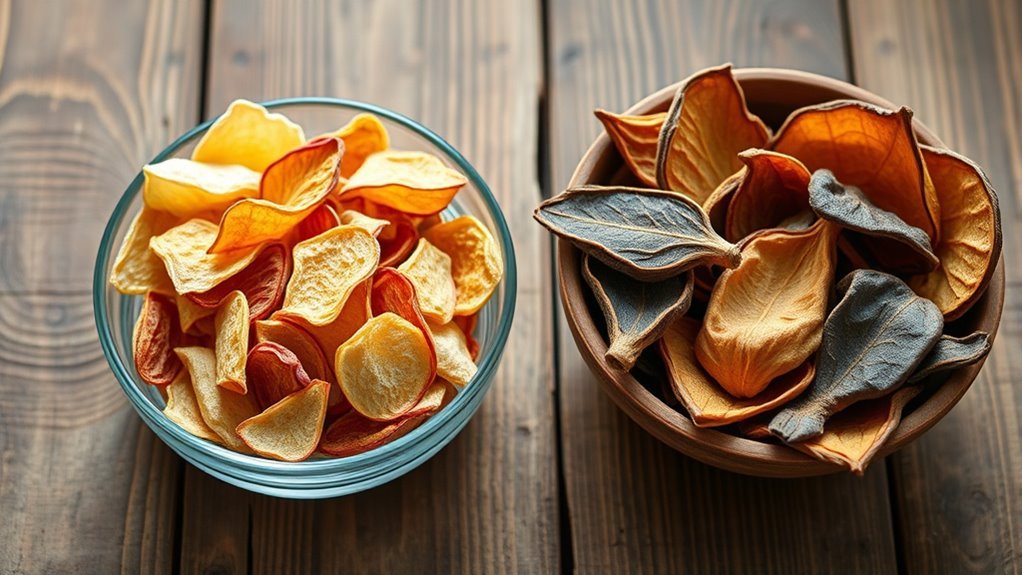
Building on the long history of fruit drying, modern methods like dehydration and freeze-drying use distinct processes to remove moisture. When dehydrating food, heat and airflow gradually pull out water, often leaving about 20% moisture and cooking the fruit, which changes its texture to chewy. Freeze drying, on the other hand, first freezes the fruit, then uses a vacuum to sublimate ice, resulting in only 1-4% moisture and preserving the fruit’s original structure for a light, crispy texture. These preservation methods differ not only in texture but also in speed—dehydration takes hours to days, while freeze drying usually finishes within a day. Plus, freeze drying better maintains the fruit’s nutritional value by avoiding heat damage, unlike dehydration.
Nutritional Value Comparison

When you compare freeze-dried and dehydrated fruits, you’ll notice that freeze-dried options retain over 90% of their nutritional value, while dehydrated fruits often lose more nutrients during drying. Freeze-dried fruit preserves vitamins, minerals, and antioxidants more effectively, thanks to its unique process that removes moisture without heat damage. In contrast, dehydrated fruit retains more moisture but is exposed to higher temperatures, which can degrade sensitive nutrients. If you’re serious about preserving food with maximum nutritional benefits, freeze-dried fruit is the superior choice. Its high nutrient retention makes it ideal for long-term storage and maintaining health benefits. So, when nutrition matters most, freeze-dried fruit outperforms dehydrated fruit in preserving the natural goodness of fruit.
Variations in Texture and Flavor
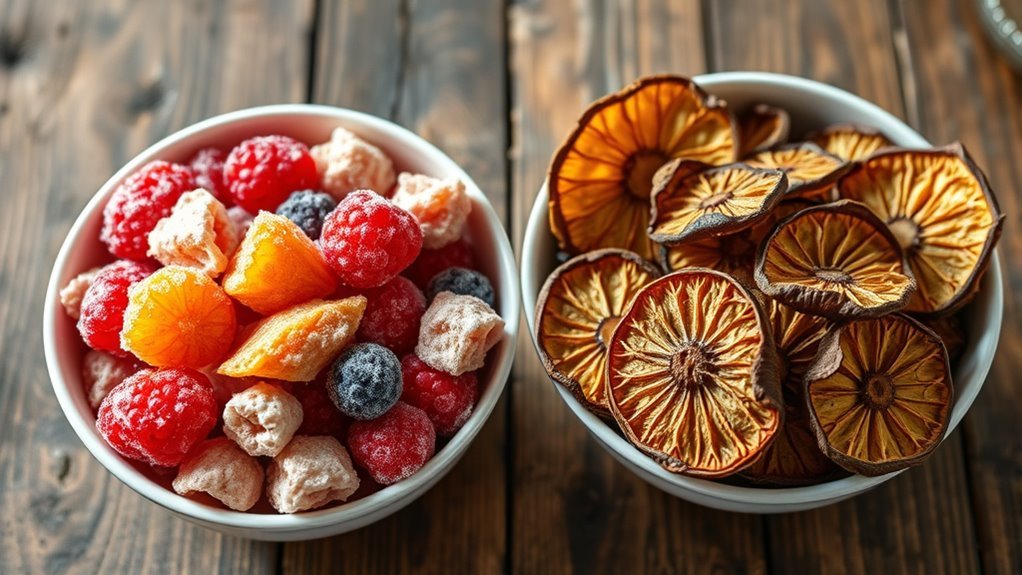
You’ll notice freeze-dried fruit has a light, crispy texture that almost melts in your mouth.
On the other hand, dehydrated fruit feels chewier and denser.
The flavor also stands out—freeze-dried fruit keeps its natural taste,
but dehydrated fruit can have a slightly altered flavor from the heat.
Let’s explore how these differences affect your snacking experience.
Texture Differences Explained
Although both freeze-dried and dehydrated fruits undergo moisture removal, their textures differ markedly, affecting how you experience their flavor and mouthfeel. Freeze-dried food retains a light, crispy texture that melts in your mouth, while dehydrated food becomes chewy and leathery due to prolonged heat and structural changes. These texture differences influence not only your snacking experience but also culinary uses, as freeze-dried fruits keep their size and shape, making them visually appealing. Plus, freeze-dried fruit retains original nutrients and can rehydrate closer to its fresh state, unlike dehydrated fruit, which often shrinks and loses some texture quality. So, when texture matters most, freeze-dried options provide a crunchier, more enjoyable bite compared to the denser, tougher feel of dehydrated fruit.
Flavor Profiles Compared
Since freeze-dried fruit preserves over 90% of the original flavor, you’ll notice a vibrant, intense taste that stays true to fresh fruit. In contrast, dehydrated fruits often lose some flavor depth due to heat exposure during dehydration. When comparing the flavor profile and texture, consider these key points:
- Freeze-dried fruits keep a light, crunchy texture that melts in your mouth.
- Dehydrated fruits develop a chewier, leathery consistency.
- The flavor profile of freeze-dried fruit remains bright and fresh.
- Dehydrated fruits may taste subdued and slightly altered.
If you prioritize preserving fruit’s natural taste and texture, freeze-dried fruits stand out as the superior choice compared to dehydrated fruits.
Shelf Life and Storage Requirements
You’ll notice that freeze-dried fruit lasts much longer than dehydrated fruit because it contains less moisture.
To keep both fresh, you’ll want to store them in cool, dry places away from sunlight.
Understanding these storage needs will help you get the most out of their shelf lives.
Moisture Content Impact
When you compare freeze-dried and dehydrated fruit, moisture content plays a crucial role in determining shelf life and storage needs. Freeze-dried fruit contains just 1-4% moisture, which greatly aids in preserving freshness and extending shelf life. In contrast, dehydrated fruit typically holds around 20% moisture, requiring more careful storage to avoid spoilage. Here’s how moisture content impacts you:
- Freeze-dried fruit resists spoilage longer due to minimal moisture.
- You can store freeze-dried fruit at room temperature without worry.
- Dehydrated fruit needs a cool, dry place to prevent mold.
- Freeze-dried fruit is lightweight and compact, simplifying storage and transport.
Understanding moisture content helps you choose the best option for preserving fruit effectively.
Ideal Storage Conditions
Understanding moisture content helps explain why freeze-dried and dehydrated fruits require different storage conditions to maintain their quality. With freeze-drying, the fruit’s moisture is almost completely removed, allowing you to store it in a cool, dry place without freezing. This process supports ideal storage conditions that preserve the natural taste and offer a longer shelf life—often up to 25 years if sealed properly. On the other hand, dehydrating retains slightly more moisture, so you need to keep the fruit in airtight containers with low humidity and stable temperatures to avoid spoilage. Both methods demand protection from moisture exposure, but freeze-drying gives you more flexibility and peace of mind, while dehydrated fruit requires more careful management to maintain quality over time.
Shelf Life Comparison
Although both freeze-dried and dehydrated fruits need airtight containers to stay fresh, their shelf lives vary greatly. Freeze-dried foods can last 25 to 30 years, while dehydrated fruit typically lasts only 1 to 2 years. This difference mainly comes down to moisture content. Here’s why freeze-dried fruit outlasts dehydrated fruit:
- Freeze-dried fruit has a moisture content of just 1-4%, minimizing spoilage risk.
- Dehydrated fruit retains more moisture, making it prone to mold and deterioration.
- Both require airtight storage to prevent humidity exposure and maintain shelf life.
- Freeze-dried fruit doesn’t suffer freezer burn, preserving quality longer.
Understanding these factors helps you choose the best option for long-term storage and freshness.
Cost and Equipment Considerations
Since investing in preservation equipment can impact your budget considerably, it’s important to weigh the costs carefully. Dehydrators are more affordable, ranging from $100 to $1,000, while freeze dryers start at $2,000 and can soar to $40,000. Besides purchase price, consider energy use: freeze dryers consume more power, increasing operational costs. However, they better preserve food quality and shelf life, which might justify the higher investment.
| Equipment | Cost Range | Energy Use (kW/hr) |
|---|---|---|
| Small Dehydrators | $100 – $300 | ~0.5 |
| Large Dehydrators | Up to $1,000 | ~1.0 |
| Basic Freeze Dryer | $2,000 – $5,000 | 1.5 |
| High-end Freeze Dryer | Up to $40,000 | 1.5 |
| Preservation Time | Dehydrators: ~12 hrs | Freeze Dryer: ~24 hrs |
Choose based on your budget and how you want to preserve food.
Practical Uses and Consumer Preferences
When choosing between freeze-dried and dehydrated fruit, think about how you plan to use them and what you prefer in texture and convenience. Freeze dried fruit appeals to many for its light, crispy texture and intense flavor, making it perfect for snacking. Dehydrated fruit, chewier and richer, suits baking and cooking but often needs rehydration. Consider these points about practical uses and consumer preferences:
- Freeze dried fruit offers a longer shelf life without refrigeration, ideal for hiking and camping.
- Dehydrated fruit enhances recipes but may require soaking.
- Both types retain nutritional value, though freeze dried usually preserves more vitamins and antioxidants.
- Consumers favor freeze dried for convenience—ready to eat anytime.
Choose based on your lifestyle and taste preferences.
Frequently Asked Questions
What Are the Key Differences Between Dehydrated and Freeze-Dried Food?
You’ll notice freeze-dried food keeps more nutrients, stays crispy, and lasts longer.
In contrast, dehydrated food loses more nutrition, becomes chewy, and has a shorter shelf life.
Freeze-drying uses freezing and vacuum; dehydration uses heat.
Is It Legal to Freeze Dry Skittles and Sell Them?
You can legally freeze dry Skittles for personal use.
But selling them commercially requires following FDA rules and local permits.
Over 70% of food businesses face inspections, so you’ll need to comply with safety and licensing regulations first.
Does Freeze-Dried Fruit Have the Same Nutrients as Fresh Fruit?
Freeze-dried fruit keeps over 90% of fresh fruit’s nutrients, so you’ll get most vitamins and antioxidants intact.
You can enjoy its health benefits almost like fresh fruit, making it a great nutritious snack option.
Can You Freeze Dry With a Regular Dehydrator?
You can’t freeze dry with a regular dehydrator since it can’t reach the 1-4% moisture freeze drying achieves.
Dehydrators usually leave about 20% moisture,
so you’ll need a freeze dryer for true freeze-dried food.
Conclusion
Now that you know the key differences between freeze-dried and dehydrated fruit, which one suits your needs better?
Whether you prioritize texture, nutrition, or shelf life, each method offers unique benefits.
Freeze-dried fruit keeps more nutrients and crunch, while dehydrated fruit is often more affordable and chewy.
So, next time you reach for a snack, consider what matters most to you—taste, cost, or convenience—and choose accordingly.
In conclusion, if you’re looking for a nutrient-dense option with a satisfying crunch, freeze-dried fruit may be the way to go.
On the other hand, if you prefer a budget-friendly snack that’s chewy and still delicious, dehydrated fruit is a great choice.
Ultimately, the decision comes down to your personal preferences and lifestyle needs. Enjoy your snacking!