How Many Watts Is a Hair Dryer?
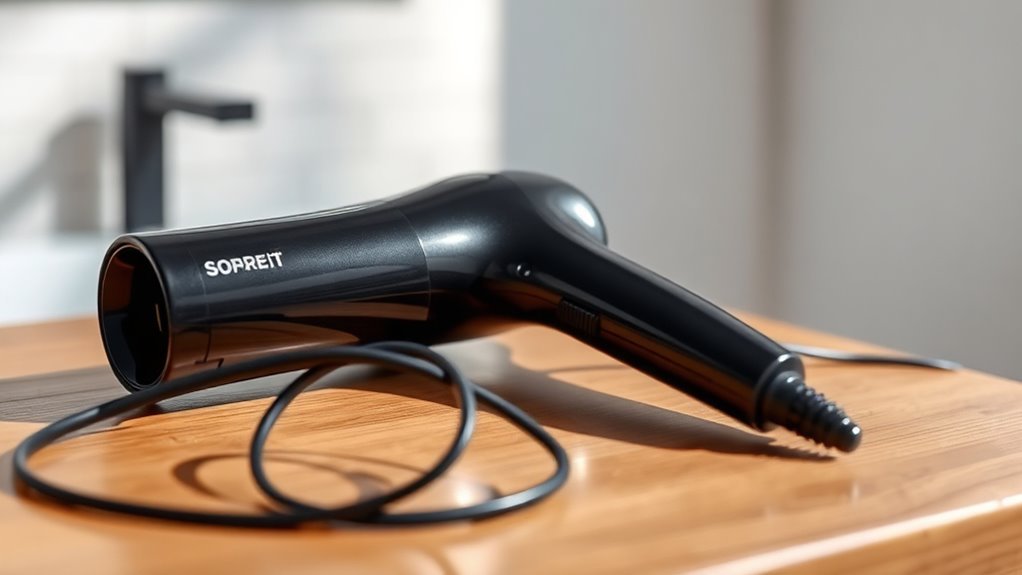
A hair dryer typically ranges from 800 to 2200 watts, depending on your hair type and drying needs.
If you have fine or thin hair, a lower wattage of around 1000–1400 watts is usually sufficient.
On the other hand, thicker or curly hair often benefits from higher wattage—think 1600–2200 watts—for faster, more efficient drying.
Higher wattage dryers get the job done quicker but also consume more energy.
So, it’s all about finding that sweet spot between power and portability.
Remember, taking care of your hair while drying is essential too!
Keep exploring to find the perfect fit for your style and routine.
Key Takeaways
- Most hair dryers operate between 800 and 2000 watts, depending on model and usage needs.
- Home-use dryers commonly range from 1200 to 1800 watts for balanced drying and portability.
- Travel hair dryers typically have lower wattage, around 800 to 1200 watts, for safety and convenience.
- Higher wattage dryers (1800–2200 watts) are ideal for thick or coarse hair to reduce drying time.
- Wattage affects power consumption and drying speed but doesn’t solely determine performance or hair safety.
Hair Dryer Wattage and Drying Performance
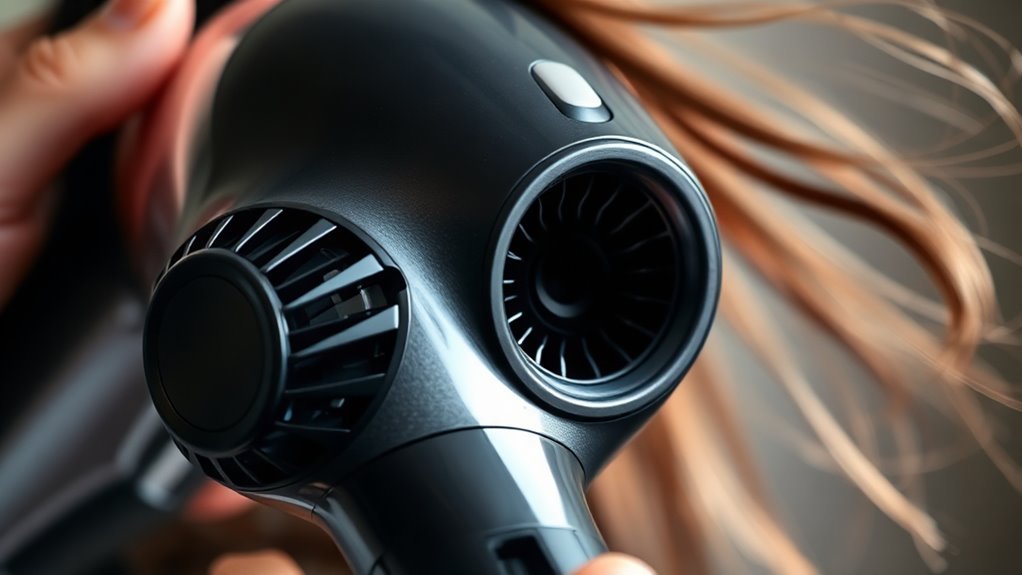
Understanding hair dryer wattage can help you choose the right tool for faster and more efficient drying. When you pick a hair dryer with higher wattage, it generally produces more heat and airflow, which speeds up drying time. This means you’ll spend less time with wet hair, reducing exposure to heat and minimizing damage. However, wattage alone doesn’t guarantee performance—you also need to take into account the dryer’s design and technology. Some models use advanced motors and airflow systems to deliver power efficiently, even at lower wattages. So, while wattage is a strong indicator of drying potential, it’s important to balance power with features that protect your hair, ensuring you get quick results without sacrificing hair health.
Typical Hair Dryer Wattage Ranges
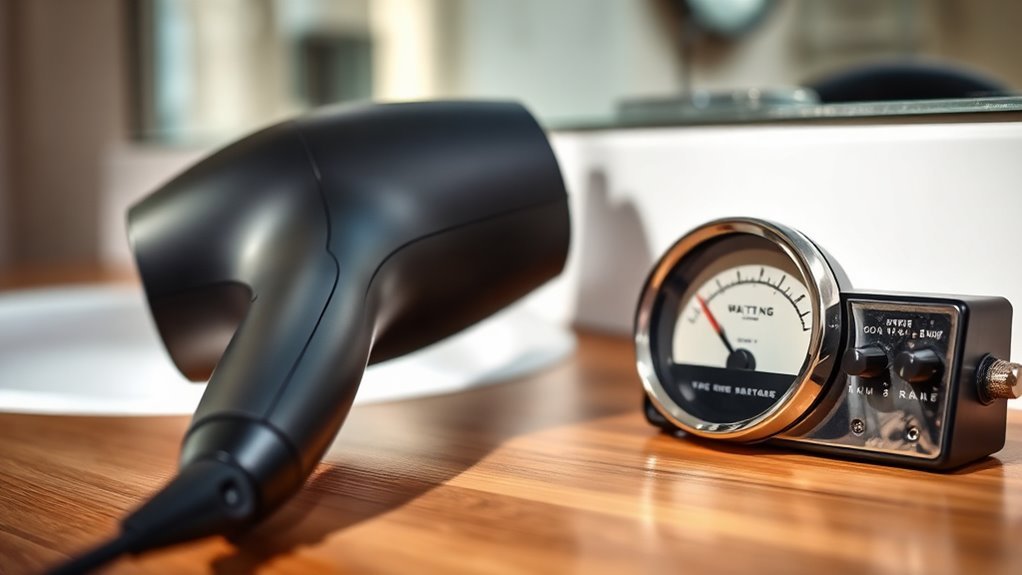
Hair dryers typically fall within a wattage range that balances power and safety for everyday use. Most home models operate between 800 and 1800 watts, giving you enough heat and airflow to dry your hair efficiently without risking damage or excessive energy use. Travel or compact hair dryers usually stay on the lower end, around 800 to 1200 watts, to remain portable and safe for various outlets. On the other hand, professional-grade hair dryers often reach 1800 to 2000 watts, providing stronger airflow for quicker drying times. When choosing a hair dryer, consider your hair type and drying needs—lower wattage suits fine or short hair, while higher wattage benefits thicker or longer hair without prolonged exposure to heat.
Why High-Watt Hair Dryers Use More Energy
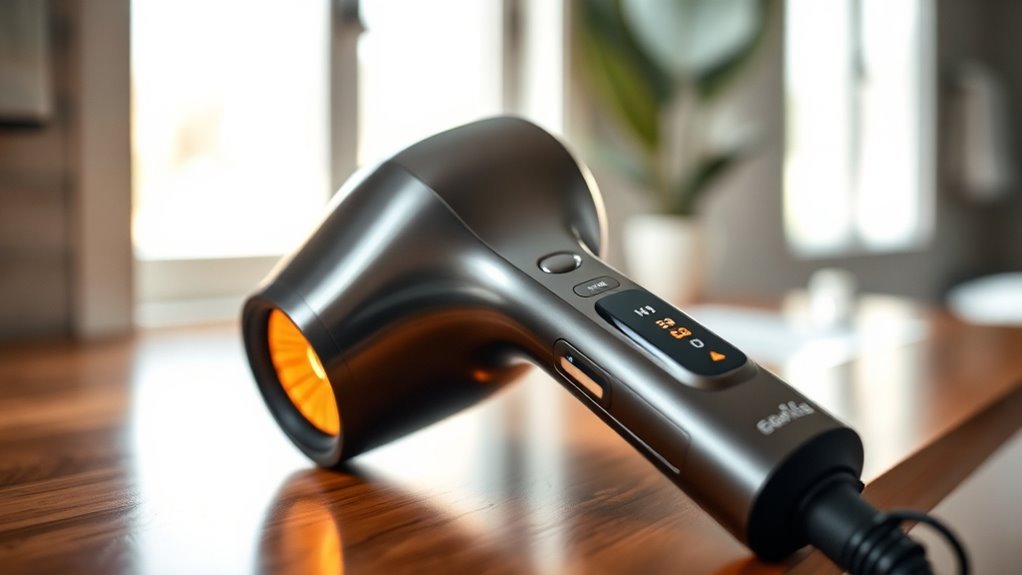
When you use a high-watt hair dryer, it pulls more power from the outlet.
This means it consumes more energy.
That extra power generates more heat, helping you dry your hair faster, but it also increases energy use.
Understanding how wattage impacts efficiency can help you choose the right balance for your needs.
Power Consumption Explained
Because high-watt hair dryers generate more heat and airflow, they draw substantially more electricity while running. When you use a higher wattage dryer, it demands more power from your electrical outlet, measured in watts. Watts indicate the rate of energy consumption, so a 2000-watt dryer consumes twice the energy per hour compared to a 1000-watt model. This means your energy bill can increase if you use a high-wattage dryer frequently or for extended periods. However, higher wattage often allows quicker drying, which might reduce overall usage time. Understanding this trade-off helps you manage your energy consumption better. So, when choosing a hair dryer, consider not just wattage but how long and how often you’ll use it to balance power use effectively.
Heat Generation Impact
Although it may seem straightforward, the amount of heat generated by a high-watt hair dryer directly affects its energy use. When you use a dryer with higher wattage, it produces more heat in less time, which means the heating element draws more electricity to reach and maintain that temperature. This increased heat output lets you dry your hair faster, but it also means the device consumes more power while running. The motor and fan also work harder to push hot air, contributing to overall energy consumption. So, while a high-watt hair dryer can save you time, it uses more electricity during each use. Understanding this trade-off helps you decide if the extra energy cost aligns with your drying needs and preferences.
Energy Efficiency Factors
If you want to understand why high-watt hair dryers consume more energy, you need to look beyond just their power rating. High wattage means the dryer uses more electricity per minute, but efficiency also depends on how well it converts that electricity into heat and airflow. Some models waste energy through poor heating elements or inefficient motors. Additionally, high-watt dryers often run at higher temperatures and faster speeds, increasing energy use. However, newer designs may include energy-saving technologies like ceramic or tourmaline components that help dry hair faster, reducing overall run time. When you consider both wattage and efficiency, you see why higher-watt dryers generally consume more energy—they demand more power and often run longer or hotter, which adds up on your electric bill.
How Hair Dryer Wattage Affects Drying Speed and Efficiency
Understanding how hair dryer wattage affects drying speed and efficiency can help you choose the right tool for your hair care routine. Higher wattage means the dryer generates more heat and airflow, speeding up drying time. However, wattage isn’t the only factor influencing efficiency. Here’s what you should know:
- Higher wattage dries hair faster but may increase heat damage risk
- Lower wattage is gentler but takes longer to dry
- Efficient motor design can optimize airflow beyond wattage alone
- Adjustable heat settings allow you to balance speed and hair protection
- Wattage affects energy consumption; higher watts use more power
Choosing the Right Wattage for Your Hair Type
You’ll want to pick a wattage that matches your hair thickness to dry efficiently without causing damage.
Thicker hair usually needs higher wattage for quicker drying.
On the other hand, finer hair benefits from lower settings to protect strands.
Let’s explore how to balance drying time and hair health with the right wattage choice.
Hair Thickness And Wattage
When selecting a hair dryer, matching the wattage to your hair thickness makes a significant difference in drying efficiency and hair health. If your hair is fine or thin, you don’t need a very powerful dryer. A lower wattage (around 1000-1400W) prevents overheating and damage. For medium-thick hair, a mid-range wattage (1400-1800W) is ideal to dry quickly without excessive heat. Thick or coarse hair demands higher wattage (1800-2000W+) to manage drying time effectively.
Consider these tips when choosing wattage based on hair thickness:
- Fine hair: opt for lower wattage to avoid heat damage
- Medium hair: choose moderate wattage for balanced drying
- Thick hair: use higher wattage for faster drying
- Adjust settings to control heat output
- Match wattage with your styling routine for best results
Damage Prevention Tips
Choosing the right wattage for your hair type does more than just speed up drying—it helps protect your hair from unnecessary heat damage. If you use a wattage that’s too high, you risk overheating and weakening your strands. Conversely, too low wattage may cause prolonged exposure to heat, which can also cause damage. Match your hair’s needs to the right wattage to keep it healthy.
| Hair Type | Recommended Wattage |
|---|---|
| Fine/Thin | 1000-1400 Watts |
| Medium | 1400-1800 Watts |
| Thick/Coarse | 1800-2200 Watts |
| Curly | 1600-2000 Watts |
This guarantees efficient drying with minimal heat exposure, preserving hair strength and shine.
Drying Time Efficiency
Although wattage may seem like a minor detail, selecting the right power level for your hair type dramatically cuts down drying time. Using a hair dryer with appropriate wattage guarantees you don’t waste time and energy while protecting your strands. Here’s how to match wattage to your hair:
- Fine or thin hair: 1000-1400 watts to avoid overheating
- Medium hair: 1400-1800 watts for balanced drying
- Thick or curly hair: 1800-2200 watts to speed up the process
- Short hair: Lower wattage works well, as drying time is naturally short
- Long hair: Higher wattage cuts down drying time markedly
Choosing the right wattage helps you style efficiently without compromising hair health.
Balancing Power and Portability in Hair Dryers
Finding the right balance between power and portability in a hair dryer can transform your daily routine. If you want quick drying without lugging around a heavy device, look for a model with moderate wattage—usually between 1,200 and 1,800 watts. This range offers enough power to dry efficiently while keeping the dryer lightweight. Compact designs with foldable handles or travel cases also make it easier to carry. On the other hand, ultra-powerful dryers may dry hair faster but tend to be bulkier and less convenient for travel. Consider how often you’ll use it on the go versus at home. By choosing a hair dryer that matches your lifestyle, you’ll enjoy both efficient drying and easy portability without compromise.
Frequently Asked Questions
Can I Use a Hair Dryer on Wet Hair Safely?
Yes, you can use a hair dryer on wet hair safely.
Just don’t hold it too close or use high heat.
Keep it moving to avoid damage and dryness,
protecting your hair’s health and shine.
How Often Should I Clean My Hair Dryer?
You should clean your hair dryer every one to three months, depending on usage.
Regular cleaning prevents lint buildup, guarantees efficient airflow, and prolongs its life.
Don’t forget to unplug it before cleaning!
Are Ionic Hair Dryers Better for Hair Health?
Imagine your hair is a plant—ionic dryers act like gentle rain, reducing frizz by breaking water molecules faster.
Yes, you’ll notice softer, shinier hair because they help lock in moisture better than regular dryers do.
Can Hair Dryers Cause Hair Damage or Breakage?
Yes, hair dryers can cause damage or breakage if you use them too often or on high heat.
To keep your hair healthy, try using lower heat settings.
Also, remember to keep some distance between the dryer and your hair.
Applying a heat protectant can make a big difference, too!
Is It Safe to Use a Hair Dryer Near Water?
No, it’s not safe to use a hair dryer near water because it can cause electric shock.
Always keep your dryer away from sinks, bathtubs, or wet surfaces to protect yourself from serious injury.
It’s just not worth the risk! Stay safe and dry while you style your hair.
Conclusion
When choosing a hair dryer, remember that most range between 800 to 1800 watts.
Higher wattage means faster drying but also higher energy use.
For example, an 1800-watt dryer can cut drying time in half compared to a 900-watt one, saving you time daily.
So, pick a wattage that fits your hair type and lifestyle.
Balancing power with convenience is key.
You want to achieve the best results without wasting energy.
In conclusion, understanding hair dryer wattage is crucial.
Opt for a model that meets your drying needs—whether it’s speedy or gentle.
This way, you’ll enjoy efficient drying while being mindful of energy consumption.
Ultimately, the right hair dryer can transform your routine, making it both effective and eco-friendly.