Understanding Anklets Meaning and Significance
You wear anklets not just for style but also for their deep cultural roots and symbolism.
Historically, anklets have marked status, life milestones, and identity across cultures.
From ancient Egypt’s gold anklets to Indian traditions lasting thousands of years, their significance is rich and varied.
Did you know that wearing anklets on your left or right ankle can convey meanings about your relationship status or personal beliefs?
Made from various materials, choosing the right fit guarantees comfort and care.
Keep exploring, and you’ll uncover even more fascinating insights about anklets’ significance!
Whether you’re drawn to their beauty or cultural importance, anklets are more than just accessories; they tell a story.
So next time you wear one, think about the history and meaning behind it!
Key Takeaways
- Anklets are ankle-worn jewelry with diverse styles, adding subtle elegance to daily fashion.
- Historically, anklets symbolize wealth, status, and cultural milestones in ancient civilizations like Egypt, India, and Africa.
- Cultural meanings vary; left ankle often indicates single status, right ankle taken, though interpretations differ globally.
- Made from metals, cords, or beads, anklets require proper sizing and comfortable fit for wearability and style.
- Care involves regular cleaning, proper storage, and removal during activities to maintain anklet durability and shine.
What Is an Anklet?
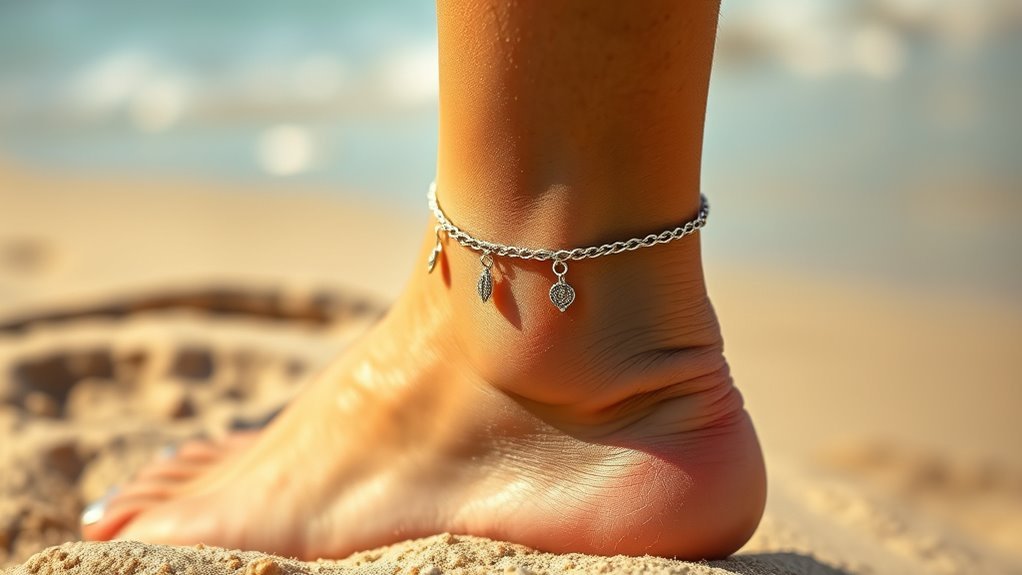
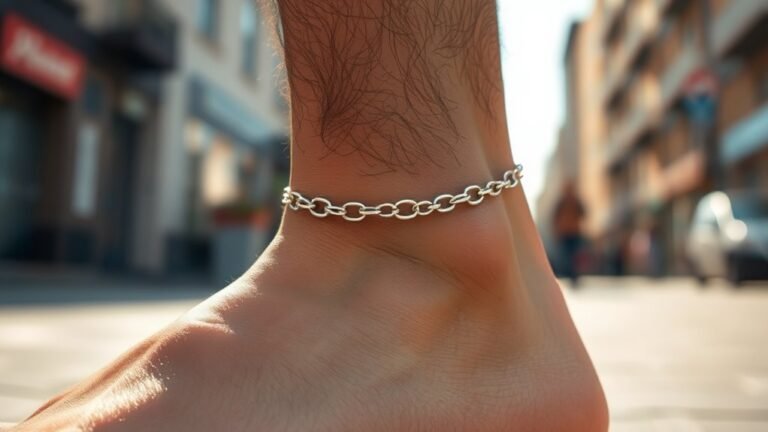
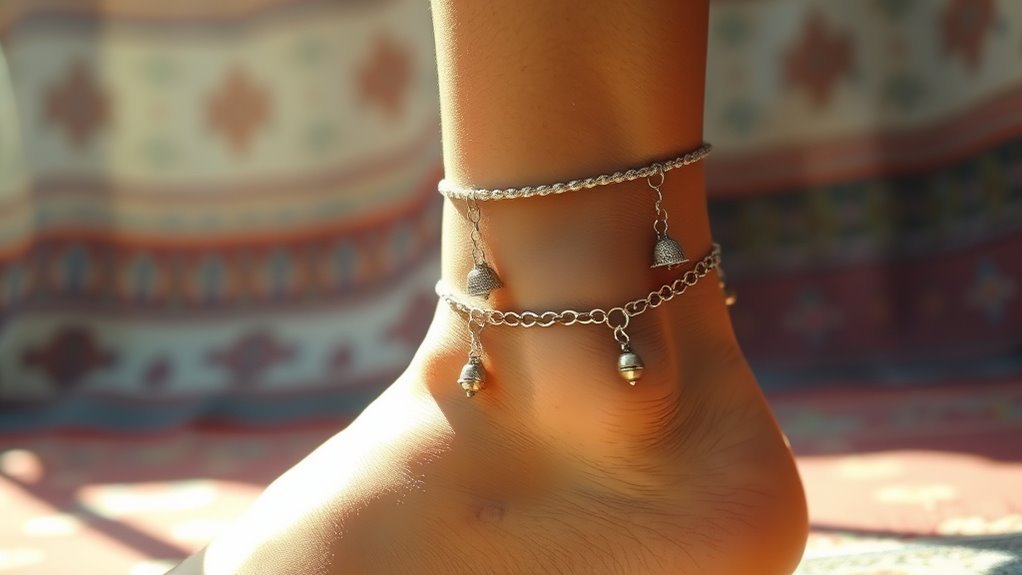
An anklet is a piece of jewelry you wear around your ankle, usually made from chains, cords, or beads. You’ll find anklets designed to sit right at or just below your ankle bone, offering comfort since they’re lighter and more flexible than wrist bracelets. This piece of jewelry comes in various styles like chain, charm, beaded anklets, ankle cuffs, and even bell anklets, each with its own distinct look. When you put one on, you’ll notice common fasteners such as lobster clasps, spring rings, or toggle closures keeping it secure, though some styles tie for a casual fit. Wearing an anklet adds a subtle yet stylish touch to your look while being easy to wear daily.
Historical Significance of Anklets
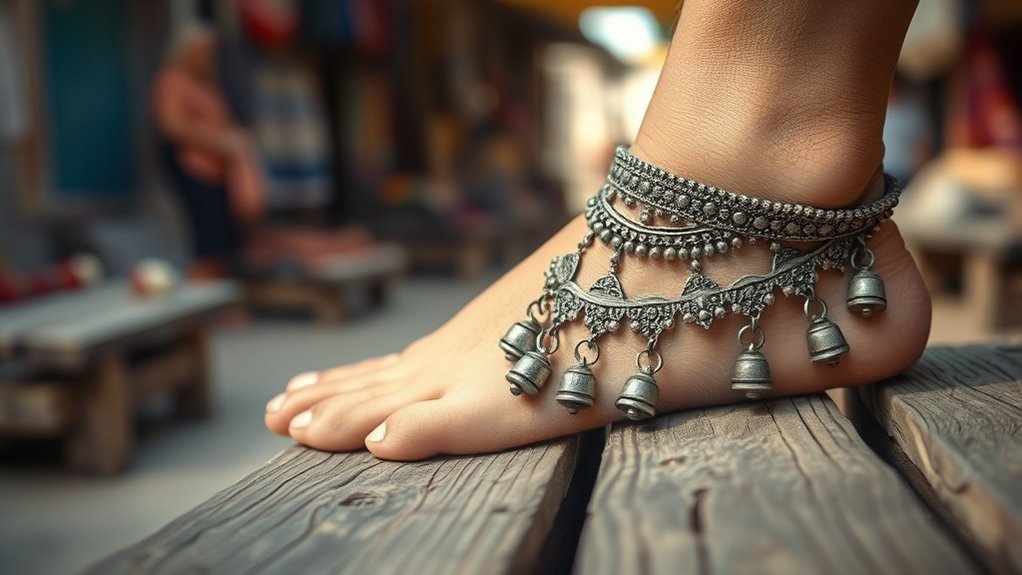
Although you might see anklets as simple fashion accessories today, they carry a deep historical significance that spans thousands of years and multiple cultures. Dating back to 6,000 BC in ancient Mesopotamia, anklets were crafted from materials like wood, bone, and precious metals, including solid gold. In ancient Egypt, solid gold anklets symbolized wealth and social status for women. Indian women have worn anklets for over 8,000 years, often with jingling charms marking important life events like marriage. Across African cultures, anklets signify milestones such as adulthood or marital status. Even though anklets have become trendy in Western fashion, their historical roots reveal a rich tradition of symbolism and cultural importance that goes far beyond mere decoration. You can appreciate anklets as more than just jewelry—they’re wearable history.
Cultural Interpretations and Myths
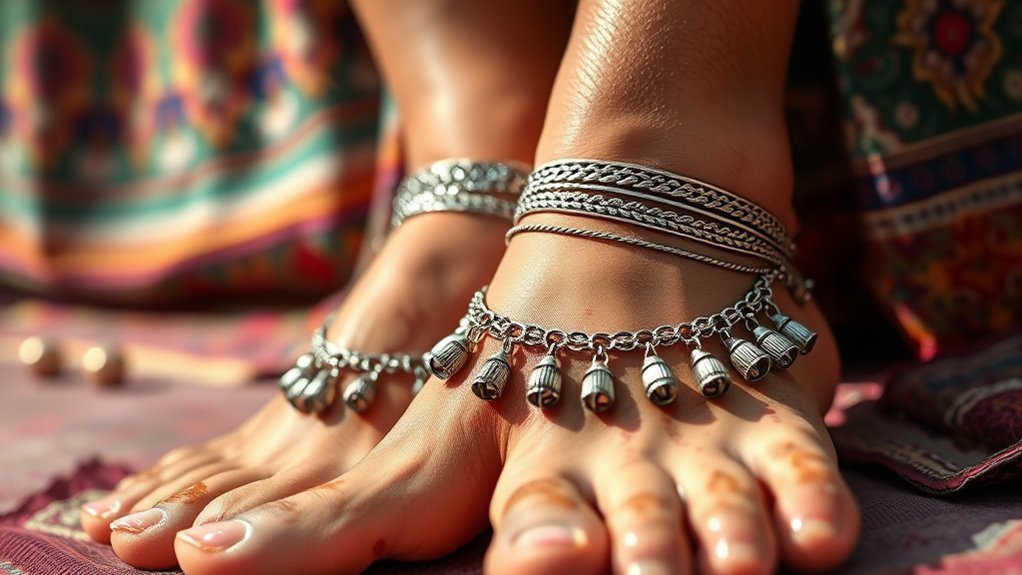
You might have heard that anklets on the left ankle mean someone is single, while on the right, they’re taken—but this varies widely across cultures.
In some places, the side you wear an anklet on carries specific meanings, while in others, it’s just a personal choice.
Understanding these regional differences helps you appreciate the rich cultural stories behind anklets.
Left vs. Right Anklets
When you choose to wear an anklet on either the left or right ankle, you tap into a variety of cultural meanings and myths that have evolved over time. In some cultures, wearing an anklet on the left ankle suggests you’re single or open to relationships, while the right ankle may indicate you’re committed or taken. Others believe the left ankle represents fertility and femininity, offering protection, especially in South Asian traditions. Conversely, wearing an anklet on the right ankle can symbolize freedom and independence. However, these interpretations aren’t universal—many see anklet placement as a fun fashion choice rather than a strict cultural symbol. Your cultural background and personal beliefs shape how you interpret the significance of wearing an anklet on either ankle.
Regional Symbolism Variations
Since anklets have a rich history across various cultures, their meanings shift dramatically depending on where you are. In ancient Egypt, ankle bracelets symbolized wealth, while in South Asia, they mark marital status. You might notice wearing an anklet on the Right Ankle suggests being taken in some cultures, but this varies widely. In the Middle East, anklets enhance dance performances, whereas Western fashion treats them as trendy accessories without strict symbolism.
| Region | Symbolism |
|---|---|
| Egypt | Wealth and social status |
| South Asia | Marriage and bridal tradition |
| Middle East | Dance and aesthetic appeal |
| Western World | Fashion and personal expression |
Understanding these variations helps you appreciate the deep cultural stories behind ankle bracelets.
Common Materials and Sizing Guidelines
Anklets come in a variety of materials, each offering distinct benefits to suit your style and comfort. When choosing materials, consider sterling silver, gold, stainless steel, titanium, woven cords, or beads. Metals provide durability and aesthetic appeal, while hypoallergenic options like titanium suit sensitive skin. Proper sizing guarantees comfort and style. Here’s what to keep in mind:
- Measure your ankle where you want the anklet to sit.
- Add 0.5 to 1 inch for comfort.
- Choose snug (8–9 in), standard (9–10 in), or loose (10–11+ in) fit based on preference.
- Use extender chains for minor adjustments.
These materials and sizing tips help you find the perfect anklet that feels great and lasts.
How to Wear and Care for Anklets
When you wear anklets, make sure they fit comfortably and match your other jewelry for a polished look.
Cleaning them regularly with a soft cloth is essential to keep them shining.
And don’t forget to store them properly to maintain their luster!
Also, be sure to remove your anklet before activities like swimming or exercising.
This helps protect it from damage and keeps it looking great for longer!
Styling Tips
Though it might seem simple, choosing the right anklet involves measuring your ankle accurately and adding half an inch to a full inch for comfort. An anklet is one accessory that can subtly elevate your style, so avoid a loose anklet that slips off or feels tight. Here are four styling tips to keep in mind:
- Match the anklet’s metal color with your other jewelry for a cohesive look.
- Opt for thicker anklets in casual settings and thinner ones for stacking.
- Remove your anklet before sleeping or exercising to prevent damage.
- Store anklets flat or hanging to avoid tangling and regularly wipe them with a soft cloth.
Follow these tips to wear your anklets confidently and stylishly.
Maintenance Practices
Since comfort is key, measure your ankle carefully and add half an inch to a full inch to ascertain your anklet fits just right. Whether you’re choosing anklets made of metal, beads, or cords, this guarantees ease of movement without slipping. Remember, men wear anklets too, so fit and style matter for everyone. After wearing, clean your anklet with a soft, dry cloth to prevent tarnishing and dirt buildup. Store it flat or hanging to avoid tangles, and keep cord anklets dry to prevent fraying. Always remove your anklet before sleeping or physical activities to avoid damage from friction or stress. Thicker anklets suit casual looks, while thinner ones work well for layering, balancing style and durability.
Health and Symbolic Benefits of Anklets
Because anklets often blend health benefits with rich symbolism, they hold a unique place in many cultures. When you wear anklets, you experience both healing and meaningful cultural expressions. Here are four key benefits to contemplate:
- Silver anklets may reduce inflammation and promote wound healing, offering physical health advantages.
- In some traditions, anklets protect against infertility and hormonal imbalances, supporting your well-being.
- The ankle you choose to adorn signals different social status or personal identity—left often symbolizes protection or marriage, right indicates being single.
- Colors and designs convey cultural messages, marking important life stages or achievements.
Frequently Asked Questions
What Does Wearing an Anklet on the Right Ankle Mean?
Wearing an anklet on your right ankle often means you’re single or open to relationships, but it varies culturally.
Sometimes, it symbolizes your independence or just a fashion choice you love.
You get to decide its meaning.
What Does the Bible Say About Wearing an Anklet?
When it comes to anklets, the Bible doesn’t call the shots directly, but it tells you to wear jewelry modestly.
The focus should be on inner beauty, not just showing off shiny baubles that catch the eye like a moth to a flame.
What Does Putting Anklet on Your Left Leg Mean?
Putting an anklet on your left leg often means you’re single or open to relationships.
It can also symbolize protection or femininity.
But remember, your personal meaning or style choice matters most over cultural interpretations.
What Are the Hidden Meanings of Wearing Anklets?
Wearing anklets can secretly express your relationship status, social standing, or personal beliefs.
You might signal openness, commitment, or protection, while also embracing cultural traditions.
Or maybe you’re just showcasing your unique style and personality.
Conclusion
Now that you understand anklets’ rich history and meanings, you can appreciate wearing one beyond just fashion.
Imagine a traveler in India who buys a silver anklet, feeling connected to centuries of tradition and local beliefs about protection and luck.
Whether you choose anklets for style, culture, or health, they carry stories and significance worth celebrating.
So, go ahead—wear your anklet with intention and care. Let it reflect your unique journey and personal style.
By embracing the meaningful aspects of anklets, you not only enhance your wardrobe but also connect with a deeper cultural heritage.
Incorporating an anklet into your life is a beautiful way to honor tradition while expressing individuality.
Celebrate the stories behind your anklet, and let it be a symbol of your journey, culture, and style.