How Many Amps Does a Hair Dryer Draw?
A typical hair dryer draws between 8 and 16 amps, depending on its wattage and your home’s voltage.
For instance, a 1500-watt dryer on a 120-volt circuit uses about 12.5 amps.
If you’re using a higher wattage or a 240-volt outlet, the current draw changes.
Knowing your dryer’s amperage is crucial.
It helps you avoid overloading your bathroom circuit and prevents those annoying breaker trips.
By understanding these important details, you can keep your electrical setup safe and efficient.
So, next time you reach for that hair dryer, remember to check its specs!
Key Takeaways
- Hair dryers typically draw between 8 and 16 amps depending on wattage and voltage.
- A 1500-watt dryer on a 120-volt circuit draws about 12.5 amps.
- Higher wattage models (up to 2000 watts) can draw up to 16.7 amps on 120 volts.
- Dryer amperage varies with heat settings, motor speed, and design features.
- Ensure your circuit breaker and wiring support the dryer’s amperage to avoid trips or hazards.
How Many Amps Does a Typical Hair Dryer Use?
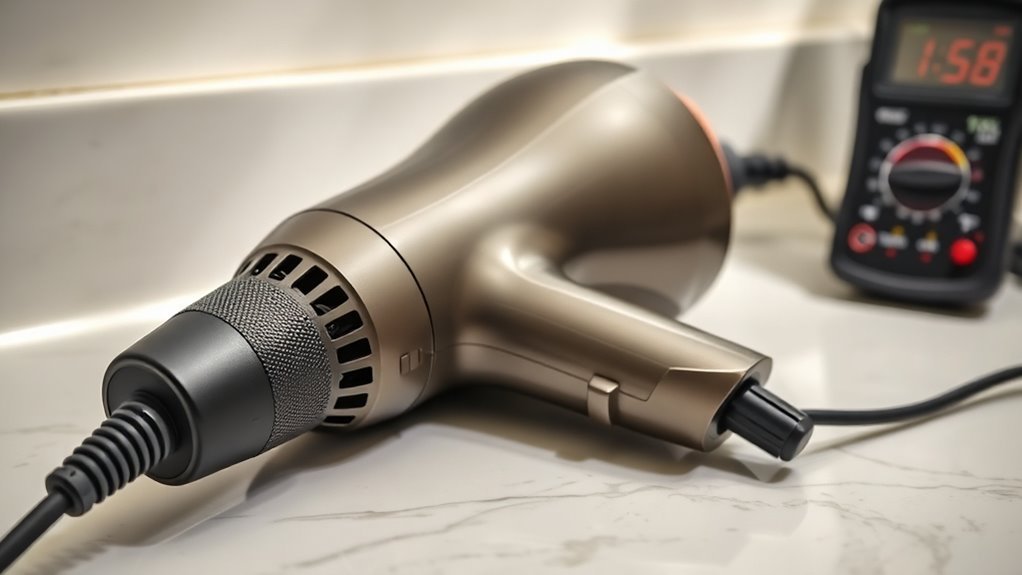
When you plug in a typical hair dryer, it usually draws between 10 and 15 amps of current. This range depends on the hair dryer’s wattage, which commonly falls between 1200 and 1875 watts. Since amps measure electrical current, higher wattage means more amps are required to power the device. For example, a 1500-watt hair dryer running on a 120-volt circuit will draw about 12.5 amps (1500 watts ÷ 120 volts = 12.5 amps). Most standard home circuits can handle this load without issue, but it’s important to avoid overloading outlets. Knowing this amperage helps you understand your hair dryer’s power needs and makes certain you use it safely with the correct electrical setup.
What Affects Your Hair Dryer’s Amperage?
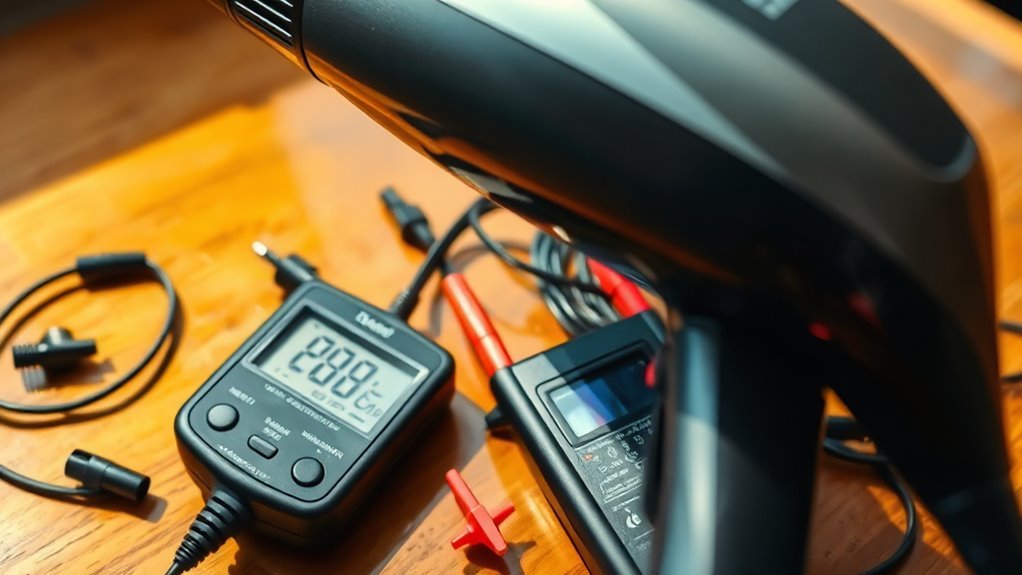
Your hair dryer’s amperage depends on a few key factors.
The wattage and power rating play a big role, along with the design of the heating element.
Plus, motor speed and load can change how much current it draws while you use it.
Wattage And Power Rating
Although many factors influence a hair dryer’s amperage, its wattage and power rating play the biggest roles. The wattage tells you how much energy the dryer uses per second, directly affecting the current it draws. Higher wattage means more amps required. Power ratings vary based on design and features, so checking the label helps estimate amperage.
Here’s a quick look at how wattage relates to amperage on a standard 120V outlet:
| Wattage (W) | Voltage (V) | Approximate Amps (A) |
|---|---|---|
| 1000 | 120 | 8.3 |
| 1500 | 120 | 12.5 |
| 1875 | 120 | 15.6 |
Knowing this helps you avoid overloading circuits when using your hair dryer.
Heating Element Design
The heating element design plays a crucial role in determining how many amps a hair dryer draws. When you look at the element, its material and resistance directly affect current flow. Lower resistance means more amps are needed to produce the same heat. Elements made from nichrome wire, for instance, balance resistance and durability efficiently. If the element is longer or thicker, its resistance changes, impacting amperage. Also, how the element is shaped and positioned influences heat distribution and efficiency, which can alter how much current is required. So, when you choose a hair dryer, understand that the heating element design isn’t just about warmth—it’s key to how much electricity it consumes and, ultimately, how many amps it pulls from your outlet.
Motor Speed And Load
Understanding how motor speed and load affect your hair dryer’s amperage can help you grasp why power consumption varies. When you increase the motor speed, it draws more current to spin the fan faster, pushing more air through the heating element. If the load on the motor increases—say, due to a clogged air intake or a heavier fan blade—the motor works harder, pulling additional amps to maintain speed. Conversely, if the motor runs under lighter load conditions, it uses less current. So, if your hair dryer struggles or the airflow feels weak, the motor might be drawing more amps than usual. By recognizing these factors, you can better understand the fluctuations in your hair dryer’s amperage and why it changes during different usage conditions.
How to Find Your Hair Dryer’s Amperage Rating

To find your hair dryer’s amperage rating, you’ll want to check its label or manual first. Most hair dryers list their voltage (V) and wattage (W). You can calculate the amperage (A) using the formula: Amps = Watts ÷ Volts. For example, if your dryer uses 1875 watts and 120 volts, it draws about 15.6 amps.
| Voltage (V) | Wattage (W) | Amperage (A) |
|---|---|---|
| 120 | 1500 | 12.5 (1500 ÷ 120) |
| 120 | 1875 | 15.6 (1875 ÷ 120) |
| 240 | 1875 | 7.8 (1875 ÷ 240) |
| 240 | 2000 | 8.3 (2000 ÷ 240) |
This method helps you know exactly how much current your hair dryer draws.
Why Hair Dryer Amperage Matters for Bathroom Wiring
Because hair dryers draw significant current, their amperage directly affects your bathroom’s electrical setup. When you use a high-amperage hair dryer, your wiring and circuit breakers must handle the load safely. If the wiring isn’t rated for the amperage, it can overheat, posing a fire risk. Bathrooms often have dedicated circuits with GFCI protection to prevent electrical shock, so knowing your hair dryer’s amperage helps guarantee compatibility. Using a hair dryer that demands more amps than your circuit can provide may cause frequent breaker trips or damage. By understanding your hair dryer’s amperage, you can verify if your bathroom wiring supports it, guaranteeing both safety and reliable performance every time you style your hair.
How to Prevent Circuit Breakers From Tripping Due to Hair Dryer Amperage
To keep your circuit breaker from tripping when using a hair dryer, you need to understand how much amperage your device draws and compare it to your breaker’s capacity.
If your hair dryer’s amps are close to or exceed the breaker’s limit, it’s time to reduce the load.
Simple steps like unplugging other devices or using a lower heat setting can help prevent overloads.
It’s all about being mindful of what else is running on the same circuit.
Understanding Hair Dryer Amperage
Understanding how much current your hair dryer draws can help you avoid tripping your circuit breaker. Most hair dryers typically pull between 10 to 15 amps, depending on their wattage and settings. Higher heat and speed settings generally increase amperage. If you know your hair dryer’s amp rating, you can better manage its use alongside other appliances on the same circuit. Avoid plugging multiple high-amperage devices into one outlet to prevent overloads. Checking the label on your hair dryer or its manual will give you specific amperage information. By staying aware of these numbers, you can use your hair dryer safely without causing electrical interruptions or damage. This simple knowledge helps you maintain a smooth and safe electrical flow in your home.
Circuit Breaker Capacity Limits
Knowing how much amperage your hair dryer draws is only part of the equation when it comes to preventing circuit breakers from tripping. You need to understand your circuit breaker’s capacity limits. Most household breakers are rated for 15 or 20 amps. If your hair dryer draws close to 15 amps and other devices share the same circuit, the combined load can easily exceed the breaker’s limit. When that happens, the breaker trips to protect your wiring from overheating. To avoid this, make sure your hair dryer is plugged into a circuit with enough capacity to handle its amperage along with any other devices you use simultaneously. Checking your breaker panel’s ratings and the total expected load helps you stay within safe limits and keeps your power flowing smoothly.
Tips To Reduce Load
You can often prevent circuit breakers from tripping by managing the load on your electrical circuit more effectively. First, avoid using multiple high-amperage devices, like hair dryers and space heaters, on the same circuit simultaneously. If possible, plug your hair dryer into a different outlet on a separate circuit. You can also reduce the hair dryer’s heat setting to lower its amperage draw. Inspect your circuit breaker panel to make certain it matches your home’s actual load capacity and consider upgrading if it’s outdated. Additionally, unplug devices when they’re not in use to free up circuit capacity. By balancing your electrical load and using your hair dryer thoughtfully, you minimize the risk of overloading and keep breakers from tripping unexpectedly.
Tips to Reduce Electricity Use When Using a Hair Dryer
Although hair dryers are essential for quick styling, they can consume a surprising amount of electricity. To cut down on your energy use, try drying your hair partially with a towel first. Use the lowest heat setting that works for you, and avoid running the dryer longer than necessary. Investing in an energy-efficient model can also make a big difference. Here’s a quick comparison of drying methods and their energy impact:
| Drying Method | Approx. Usage Time | Energy Consumption |
|---|---|---|
| Towel Dry + Low Heat | 5-7 minutes | Low |
| Full Drying on High | 10-15 minutes | High |
| Air Drying | 20+ minutes | None |
Use these tips to save energy while keeping your hair looking great!
Frequently Asked Questions
Can a Hair Dryer Damage My Hair With High Heat Settings?
Yes, using high heat settings can damage your hair by drying it out and causing breakage.
You should use lower heat or a heat protectant spray to keep your hair healthy.
This helps prevent damage over time.
Are Ionic Hair Dryers More Energy-Efficient Than Regular Ones?
Yes, ionic hair dryers are generally more energy-efficient because they dry your hair faster by breaking down water molecules.
This means you won’t need to use them as long, saving electricity and protecting your hair.
How Often Should I Clean My Hair Dryer for Optimal Performance?
You should clean your hair dryer every month to keep it running like a well-oiled machine.
Dust and hair buildup can clog it, reducing airflow and causing it to overheat or work harder than it should.
Can Using a Hair Dryer Cause Static Electricity in Hair?
Yes, using a hair dryer can cause static electricity in your hair because the hot air dries out moisture.
This makes strands more prone to friction and static.
To reduce it, try using a moisturizing product or a diffuser attachment.
Is It Safe to Use a Hair Dryer Near Water?
Using a hair dryer near water is like playing with lightning in a glass bowl—it’s unsafe.
You shouldn’t mix electricity with water because it risks shocks or injury.
Always keep your dryer dry and away from wet areas.
Conclusion
Now that you know how many amps your hair dryer draws, you can better protect your bathroom wiring and avoid tripped circuit breakers.
Wouldn’t you want to use your hair dryer without worrying about electrical issues?
By checking the amperage and following simple tips to reduce electricity use, you’ll keep your bathroom safe and save energy.
So, take a moment to understand your hair dryer’s power needs—it’s a small step that makes a big difference.
Understanding how many amps your hair dryer uses is crucial for safety.
It helps you prevent overloads and ensures efficient energy consumption.
With this knowledge, you can easily enjoy your hair-drying routine without any electrical anxiety.
In short, knowing your hair dryer’s amperage not only protects your home but also promotes energy savings.
So, take a few minutes to check it out—it’s worth it!