How to Get Knots Out of Necklaces
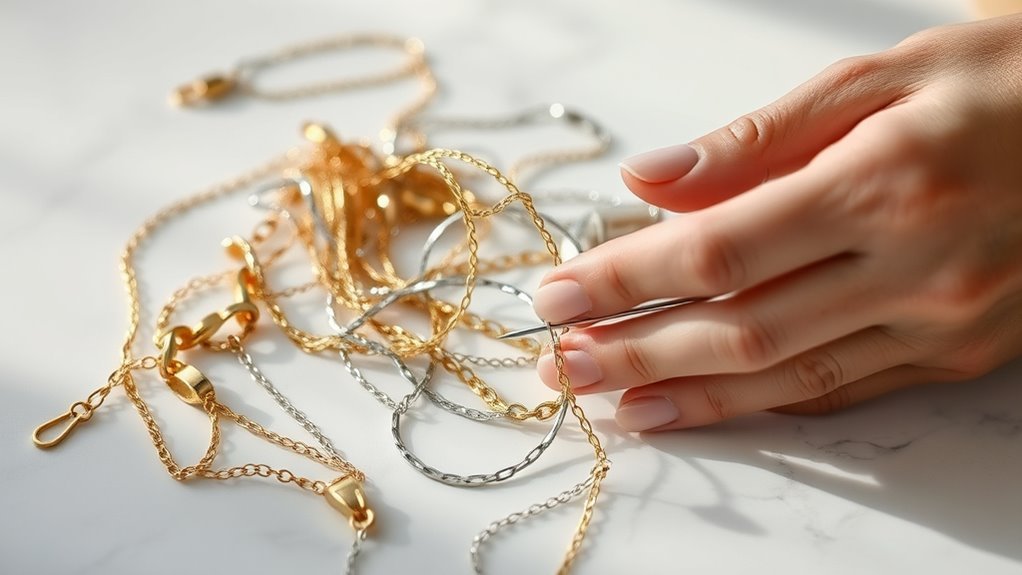
To get knots out of necklaces, start by laying your piece flat in a well-lit, quiet spot.
Gently tease apart the loops with your fingers, using a straight pin or needle to loosen stubborn knots.
If needed, apply a small drop of baby oil for lubrication.
Work slowly and patiently to avoid damage.
For tricky tangles, try additional tools and storage tips to keep your necklaces knot-free and looking great.
Keep exploring these methods for easier jewelry care.
Key Takeaways
- Lay the necklace flat on a clean surface in a well-lit area before starting to untangle knots gently with your fingers.
- Use a straight pin or sewing needle to carefully loosen tight knots without pulling or damaging the chain.
- Apply a small drop of baby oil to lubricate stubborn knots, making it easier to separate tangled strands.
- Work slowly from the outer loops inward, patiently teasing apart the necklace to avoid breaking delicate links.
- Store necklaces separately in organizers or soft cloth to prevent future tangling and maintain chain integrity.
Preparing Your Necklace for Untangling
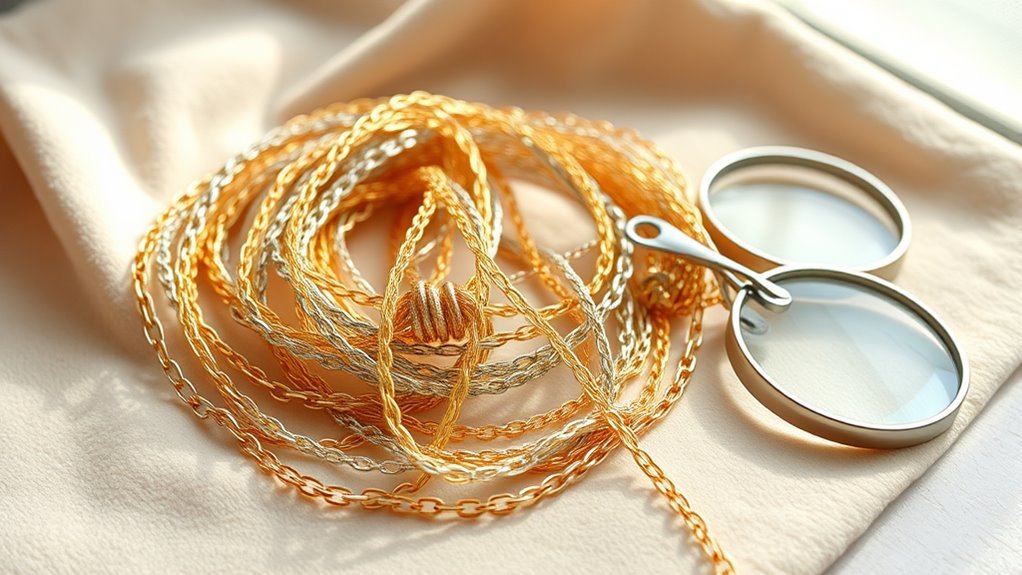
To prepare your necklace for untangling, start by finding a calm, quiet spot where you won’t be distracted. Choose a flat surface to lay your necklace down, ensuring it can settle so you can spot knots clearly. A clean, secure area helps prevent losing any small parts during the process. Avoid places like sinks or cluttered countertops where the necklace might slip away. Before you begin, gather tools like a straight pin, baby oil for lubrication, and a magnifying glass if the knots are tiny or complex. Taking your time is key—rushing can damage delicate chains. By setting up this focused, organized workspace, you’ll make the untangling process smoother and protect your necklace from harm.
Loosening Knots Using Fingers and Tools
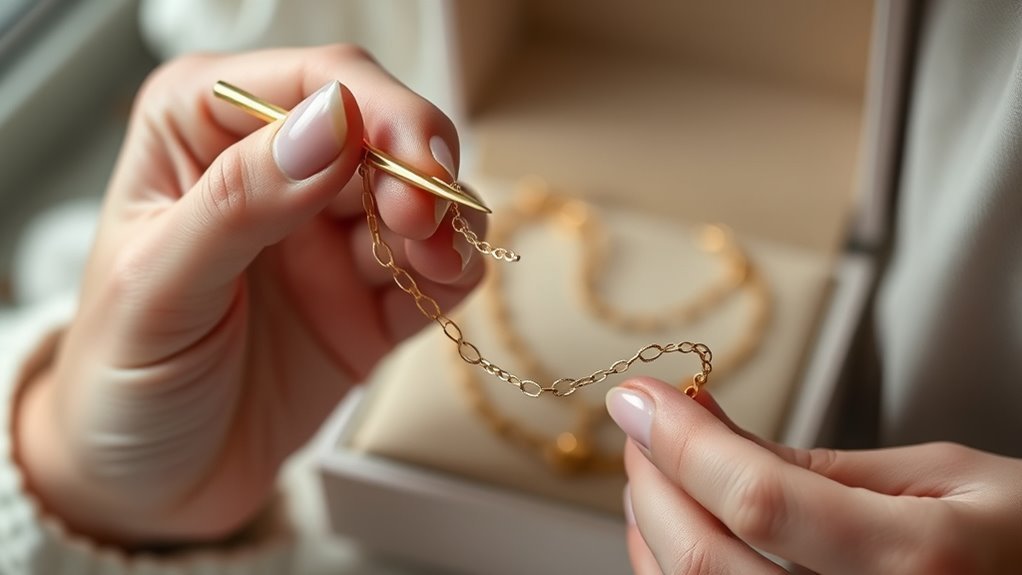
Start by gently warming the knot between your fingertips to loosen its tension before using any tools. Use your fingers to carefully tease apart the strands, focusing on the outermost loops first. If the knot feels stubborn, apply a tiny drop of baby oil to ease the chains without forcing them. When fingers alone aren’t enough, grab a pair of pliers for extra grip and precision, but handle the necklace gently to avoid damage. Work patiently, addressing one knot at a time, and use small, deliberate movements to avoid tightening the tangles further. This gradual approach guarantees you loosen the knot effectively without snapping delicate links or twisting the chain out of shape. Your fingers are your best tool—be patient and gentle.
Needle Method for Delicate Knots
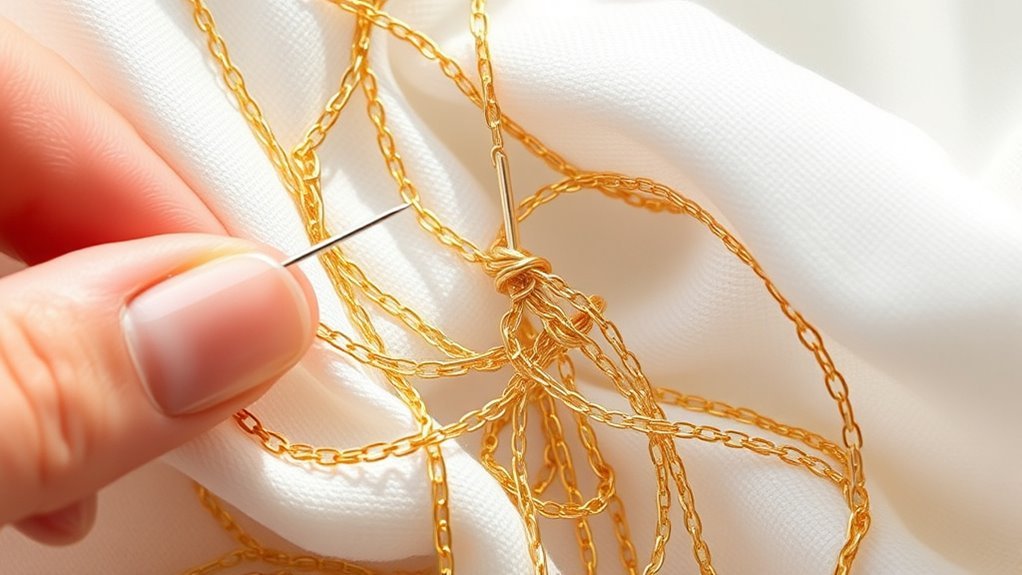
When tackling delicate knots, choose a fine sewing needle to avoid damaging your necklace.
Insert the needle carefully into the knot’s center to create a small opening.
Then, work gently to loosen the knot without pulling too hard.
Selecting Proper Needles
Choosing the right needle is essential for safely tackling delicate necklace knots without causing damage. When using the needle method, opt for fine sewing needles—they’re thin enough to slip into tight knots without harming fragile chains. Before you start, make sure the needle is clean and free of any debris to prevent contaminating the necklace. If the knot is especially intricate, use a magnifying glass to guide the needle precisely into its center. This helps you work carefully without forcing the needle, which could tighten the knot further. By selecting proper sewing needles and preparing them well, you can effectively loosen knots while preserving your necklace’s delicate integrity, setting you up for the next step in untangling.
Inserting Needle Carefully
Gently insert a fine sewing needle into the center of the knot, taking care to keep your hand steady so you don’t tighten the tangle further. Choose a needle with a sharp, fine point to slip into delicate knots without harming the necklace. Use small, gentle movements to work the needle through the knot’s loops, gradually creating space. Avoid forcing the needle, as this can worsen the tangle. Stay patient and precise, allowing the needle to loosen the knot bit by bit. Once you’ve created enough room, you can switch to using your fingers for further untangling. This careful method guarantees the knot loosens without damaging your jewelry, making the needle an essential tool for delicate knots.
Gentle Knot Loosening
Although delicate knots can be frustrating, you can carefully tease them apart using a fine sewing needle and small, precise movements. Insert the needle into the center of the knot and gently work the loops apart without pulling or twisting the chain. Keep the necklace flat and still to minimize tension—any movement risks tightening the knot further. Applying a small amount of baby oil or vegetable oil to the knot can help loosen it, making the process smoother. Be patient and avoid using force; precision is more effective than pressure when handling delicate chains. If the knot resists, take breaks to stay calm and persistent. With careful attention and steady hands, you’ll gradually free the knot without damaging your necklace.
Alternative Techniques: Oils, Powders, and Tweezers
You can apply a small amount of baby oil, coconut oil, or vegetable oil to lubricate the knot and make it easier to work with.
Sprinkling baby powder helps absorb moisture and makes untangling smoother.
Using tweezers gives you precise control to gently tease the strands apart without causing damage.
Using Oils Effectively
Three common oils—baby oil, coconut oil, and vegetable oil—can make a big difference when you’re trying to loosen knots in your necklace. Start by using a cotton swab to apply a small amount of oil to the knot, being careful not to oversaturate it. The oil reduces friction between the tangled links, making it easier to work through the knot. After applying oil, gently rub the knot with your fingers or use a needle to separate the strands. For tougher tangles, try combining the oil with a straight pin or fine-toothed comb to enhance your progress. Once you’ve loosened the knot, rinse the necklace in warm, soapy water to remove any leftover oil and keep your jewelry clean and shiny.
Applying Baby Powder
Sprinkling baby powder onto a tangled necklace can quickly ease the frustration of stubborn knots. The powder absorbs moisture and reduces friction, making it easier to work through the mess without the risk of over-saturation that comes with baby oil. Once you dust the knot, gently rub it with your fingers to help loosen the strands. If needed, use a needle or pin alongside the powder to carefully tease apart the tangle without forcing it. Baby powder provides lubrication that’s dry and controlled, unlike oils which can leave the chain greasy. After you’ve successfully untangled the necklace, rinse it with warm, soapy water to remove any leftover powder. This simple technique offers an effective, less messy alternative to using baby oil on delicate chains.
Tweezers for Precision
While baby powder helps reduce friction and loosen knots, sometimes you need a more precise tool to work through stubborn tangles. Tweezers provide a delicate grip, letting you carefully manipulate tangled links without applying too much force. Make sure you work under good lighting to clearly see the knot’s structure and find the best angles for untangling. Use a gentle touch—too much pressure can snap delicate chains or tighten the knot. For added ease, try combining tweezers with a drop of baby oil to lubricate the strands. If the knot remains stubborn, use tweezers alongside a needle or pin to create small openings, making it easier to carefully tease apart the tangled strands and restore your necklace to its original form.
Handling Complex and Stubborn Knots
Although complex knots can feel overwhelming, you should start by focusing on the outermost loops and work your way inward. In the first place, gently release the center of the knot to create space, making it easier to loosen surrounding loops gradually. Use a sewing needle or fine pin to carefully tease apart tangled sections, applying patience instead of pressure to avoid damaging the necklace. If a knot proves stubborn, try applying a small amount of baby oil to lubricate the fibers and ease the untangling process. Remember, taking breaks helps you stay calm and persistent. By approaching complex knots methodically and patiently, you’ll increase your chances of successfully freeing even the most tangled necklaces without causing harm.
Preventing Future Tangles and Proper Storage
One of the easiest ways to prevent necklace tangles is to store each piece separately. Using a jewelry box with individual hooks or compartments keeps your necklaces from intertwining and forming knots. When traveling, a jewelry case with designated slots protects your necklaces from tangling on the go. To maintain order at home, consider specialized organizers like T-bar stands or tiered trays.
Here are three tips to prevent future tangles:
- Store necklaces individually in a jewelry box or organizer.
- Use a travel jewelry case with separate slots when on the move.
- Regularly untangle minor knots to stop them from worsening.
Frequently Asked Questions
How to Unknot a Necklace Fast?
You can unknot a necklace fast by laying it flat, applying a drop of baby oil,
then gently teasing the knot apart with a needle or pin while using tweezers for grip.
Stay patient and avoid pulling too hard.
Does Baby Powder Untangle Necklaces?
Yes, baby powder helps untangle necklaces by reducing friction in knots.
Sprinkle it on, gently rub to loosen, then carefully pull strands apart.
Just remember to rinse your necklace afterward to remove any powder residue.
What Is the Easiest Way to Untie a Knot?
The easiest way to untie a knot is to lay it flat.
Warm it gently with your fingertips, then apply a bit of baby oil for lubrication.
After that, patiently tease it open using a needle or pin, working from the outside in.
How to Fix a Broken Necklace Chain at Home?
When your necklace snaps like a heart breaking, grab pliers and jump rings.
Gently reconnect the broken ends, closing links tightly.
Handle delicately, test strength, and your cherished piece will shine again, ready for your next story.
Conclusion
Untangling necklace knots might feel like wrestling a stubborn snake, but with patience and the right techniques, you’ll tame it in no time.
Remember to prepare your necklace gently. Use your fingers or tools carefully, and try oils or powders when needed.
For those tough knots, don’t rush—slow and steady wins the race.
Finally, store your necklaces properly to keep tangles at bay and save yourself future headaches.
You’ve got this!
In conclusion, dealing with tangled necklaces can be a frustrating experience, but it doesn’t have to be. With a little bit of patience and the right approach, you can easily untangle those knots. Always remember to handle your jewelry gently and utilize tools or oils if necessary. By storing your necklaces properly, you can prevent future tangles and maintain their beauty. So, next time you encounter a knot, keep these tips in mind for a hassle-free experience!