How Long Does Dried Fruit Last?
How Long Does Dried Fruit Last?
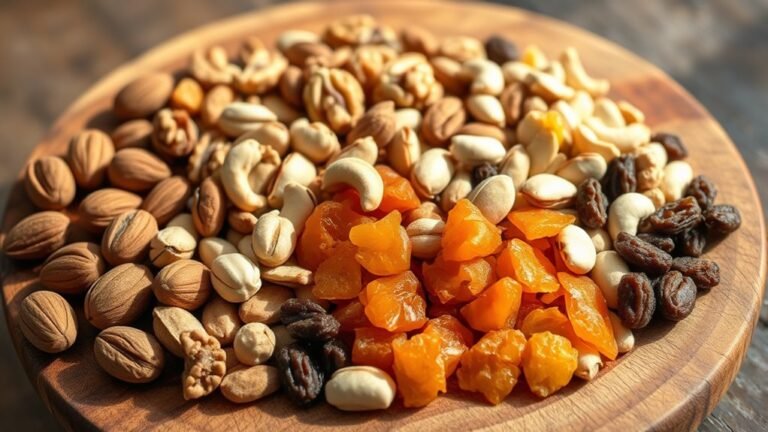
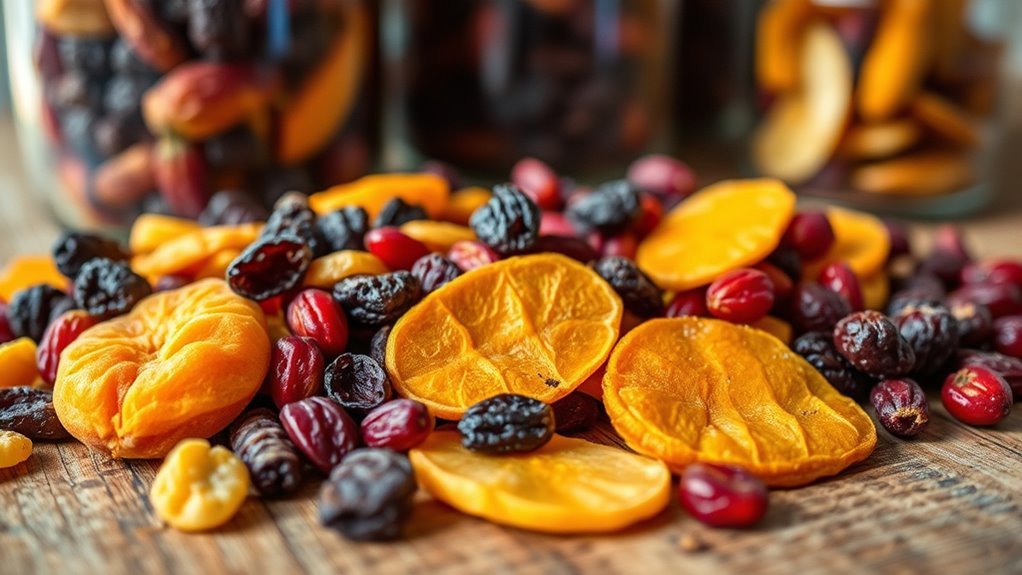
Dried fruit is a tasty and nutritious snack, but knowing how long it lasts is essential for enjoying its flavor and benefits.
When properly sealed and stored in a cool, dark place, you can expect dried fruit to last about 6 to 12 months.
Once opened, it typically stays fresh for 1 to 3 months at room temperature.
However, if you refrigerate it, dried fruit can last even longer—up to 6 to 12 months.
To maximize freshness, be sure to use airtight containers to block out moisture and air.
If you’re curious about how to spot spoilage or which types of fruits last the longest, keep exploring these handy storage tips!
Key Takeaways
- Sealed dried fruits typically last between 6 to 12 months, depending on the type and storage conditions.
- Opened dried fruits last 1 to 3 months at room temperature and up to 6 to 12 months if refrigerated.
- High sugar and low moisture content help dried fruits resist spoilage longer than higher-moisture varieties.
- Airtight containers and cool, dark storage areas are essential to maintaining dried fruit freshness.
- Signs of spoilage include discoloration, mold, off smells, unusual texture, and should prompt discarding the fruit.
Factors Affecting the Shelf Life of Dried Fruit
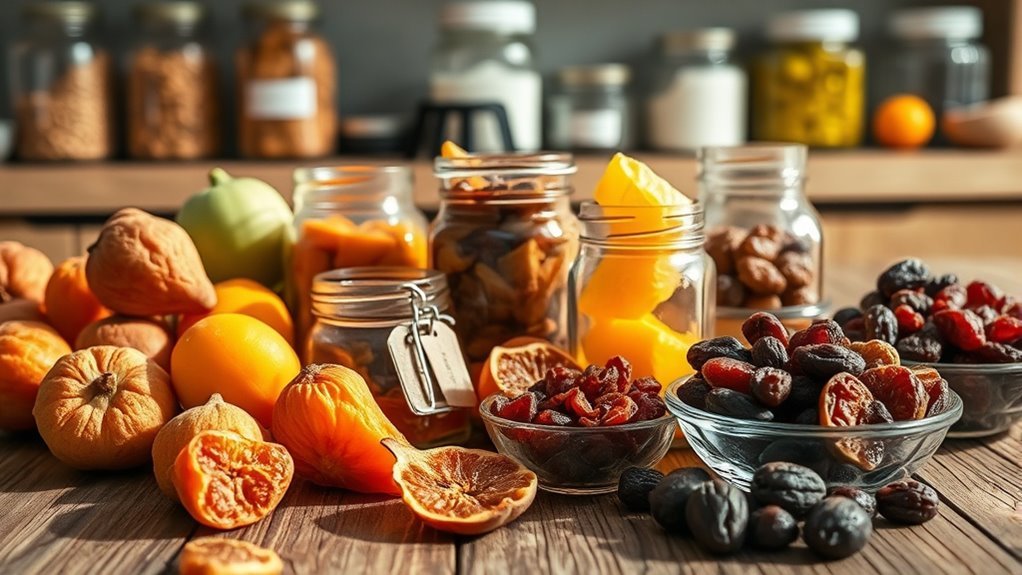
Because several factors influence how long dried fruit stays fresh, understanding them can help you store it properly and extend its shelf life. The moisture content plays a key role; dried fruits with lower moisture content, ideally below 20%, last longer and resist bacteria and mold better. Storage conditions matter too—temperature, humidity, and exposure to light affect quality loss over time. Using airtight containers or sealed packaging prevents moisture absorption and limits exposure to light, helping dried fruits can last from several months up to a year. Without proper storage, dried fruit can spoil quickly due to bacteria and mold growth. To maximize the shelf life of dried fruit, keep it in a cool, dark place inside airtight containers, ensuring you protect its flavor and texture while minimizing quality loss.
Shelf Life of Dried Fruit When Sealed and Unopened
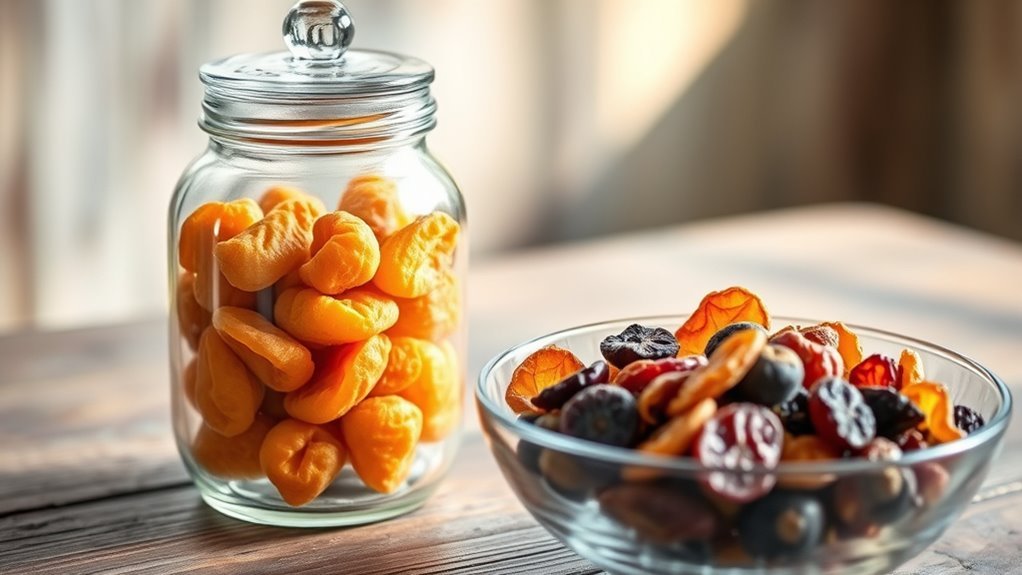
How long can you expect dried fruit to last when it’s sealed and unopened? Typically, dried fruit has a shelf life of 6 to 12 months, depending on the type and storage conditions. Higher-sugar, lower-moisture varieties like dried cranberries tend to last longer than higher-moisture ones such as dried apricots. To maintain quality, store your sealed dried fruit in cool, dark places, ideally in an airtight container or vacuum-sealed packaging. These storage methods can extend freshness and prevent spoilage. Always check the expiration date on the package, but remember that proper storage can sometimes keep dried fruit fresh beyond that. Despite being sealed, regularly inspect for discoloration or off smells to guarantee the dried fruit remains safe to eat.
How Long Dried Fruit Lasts After Opening
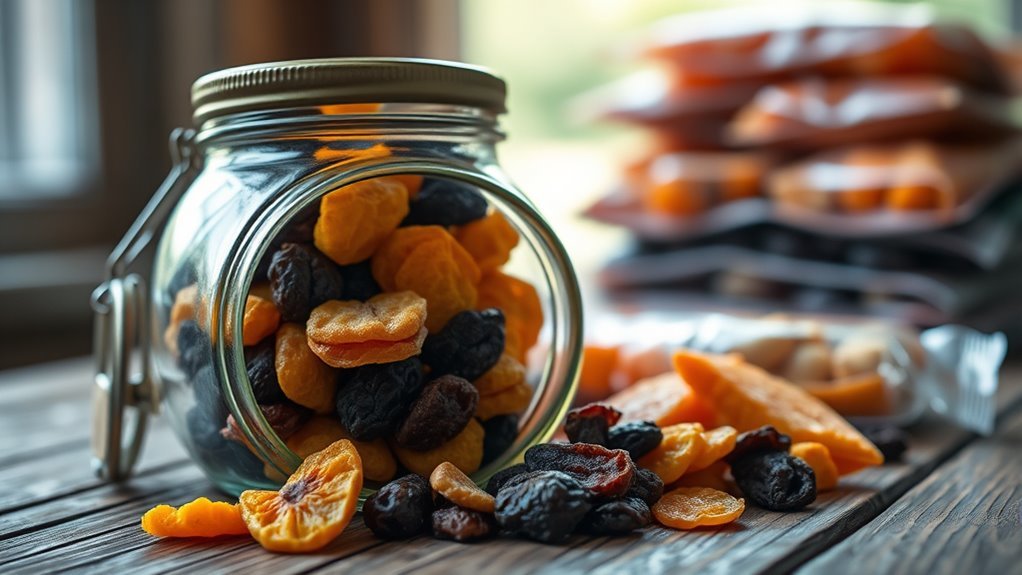
Once you open a package of dried fruit, its shelf life changes considerably. How long dried fruit lasts depends on how you store it after opening. Here’s what you need to know:
- Opened bags should be transferred to an airtight container to prevent moisture absorption.
- Properly sealed dried fruits stored in a cool, dry place can last 1 to 3 months at room temperature.
- Higher-sugar, low-moisture fruits like cranberries or dates last 2 to 3 months when stored this way.
- Refrigerating opened dried fruits extends their shelf life up to 6 to 12 months.
Keeping your dried fruit properly sealed and stored helps maintain freshness and slows spoilage signs, ensuring you enjoy your dried fruits safely for as long as possible.
Signs That Dried Fruit Has Gone Bad
You’ll want to watch for clear signs that dried fruit has gone bad before eating it.
Look for discoloration, strange smells, or changes in texture like excessive hardness or chewiness.
These indicators help you avoid spoiled fruit and keep your snacks safe.
Visual Spoilage Indicators
Visual cues play an essential role in determining whether dried fruit has gone bad. When inspecting your dried fruit for spoilage, look closely for these signs:
- Visible mold: Fuzzy spots on the surface indicate definite spoilage and mean you should discard the fruit immediately.
- Discoloration: Darker hues or unusual spots can signal that the dried fruit is no longer safe to eat.
- Texture changes: If the fruit feels excessively hard or overly chewy, it may have lost moisture and its quality.
- Sour smell: While this overlaps with odor, a sour or musty note can sometimes be noticed visually as mold growth correlates with odor changes.
Regular inspection guarantees safety and helps you catch spoilage early before consuming dried fruit past its prime.
Odor Changes
Although dried fruit often looks fine, a sour or musty smell can reveal it’s gone bad. Odor changes are a key sign that your dried fruit has spoiled. Fresh dried fruit should have a sweet, fruity aroma, so any unpleasant smell—like fermented or alcoholic scents—indicates moisture exposure or decay. Regular inspection is essential to monitor these changes and assess the fruit’s quality and shelf life. If you detect mold along with abnormal odors, discard the fruit immediately to avoid health risks. Ignoring odor changes can compromise safety and lead to consuming spoiled fruit. Trust your senses; when in doubt, throw it out to maintain both quality and safety of your dried fruit stash.
Texture Alterations
Noticing changes in smell is just one way to spot spoiled dried fruit; texture shifts offer equally important clues. Pay attention to these key signs of texture alterations that indicate spoilage:
- Dried fruit loses its pliable texture and becomes hard or chewy, signaling moisture loss and reduced quality and freshness.
- A wet surface or stickiness often results from moisture reabsorption, a clear sign of spoilage.
- If the fruit feels tougher or drier than when first opened, it’s likely past its prime.
- Powdery texture or clumping suggests moisture absorption, making the fruit unsafe to eat.
Regular inspections help you catch these signs of spoilage early and guarantee your dried fruit stays fresh and enjoyable.
Best Practices for Storing Dried Fruit
To keep your dried fruit fresh, store it in airtight containers to block out moisture and air.
You’ll want to keep these containers in cool, dark places like your pantry to maintain ideal freshness.
Following these simple steps can greatly extend your dried fruit’s shelf life.
Airtight Container Importance
When you store dried fruit in an airtight container, you lock out moisture and air that can cause spoilage and ruin its texture. Using a sealed container like a glass jar or vacuum-sealed bag helps maintain quality by minimizing exposure to air and bacterial growth. To keep your dried fruit fresh and extend its shelf life, follow these tips:
- Always seal the container properly after each use to prevent moisture intrusion.
- Store the airtight container in cool dark places to avoid temperature and light damage.
- Check regularly for any signs of spoilage, such as mold or off smells.
- Avoid exposing the fruit to air repeatedly, as this shortens its shelf life considerably.
Properly stored dried fruit in airtight containers can last 6 to 12 months without losing quality.
Optimal Storage Conditions
Three key factors help you keep dried fruit fresh: cool temperatures, dryness, and darkness. For ideal storage conditions, store dried fruit in airtight containers like glass jars or heavy-duty resealable bags to block moisture and odors. Aim to keep the temperature below 70°F to slow spoilage and maintain food safety. Moisture is the enemy—it encourages bacterial growth and shortens shelf life. Once opened, refrigerate dried fruit to extend its shelf life up to 18 months. For even longer storage, freeze in airtight containers, which can keep dried fruit safe indefinitely. Regularly inspect your dried fruit for signs of spoilage such as discoloration, off smells, or moisture buildup. Following these practices helps preserve quality and guarantees your dried fruit stays safe to eat.
Comparing Shelf Life of Different Types of Dried Fruit
Although dried fruits share similar preservation methods, their shelf lives can vary considerably depending on the type. Understanding these differences helps you maintain freshness and prevent premature expiration. Here’s a quick comparison of shelf life for popular dried fruits under best practices like airtight storage and moisture control:
Dried fruits last differently depending on type; airtight storage and moisture control are essential for keeping them fresh.
- Turkish apricots: 6-12 months sealed, 1-2 months opened (refrigerate after opening).
- Medjool dates: 3-6 months sealed, 1-2 months opened (refrigeration recommended).
- Deglet Noor dates: 6-12 months sealed, 2-3 months opened (may crystallize).
- Dried cranberries: 12 months sealed, 2-3 months opened.
Keeping dried fruit sealed tightly and controlling moisture are key to extending shelf life and preserving ideal freshness.
Frequently Asked Questions
How Can You Tell if Dried Fruit Has Gone Bad?
You can tell if dried fruit has gone bad by checking for discoloration, a sour or musty smell, excessively hard texture, or visible mold.
If you notice any of these signs, it’s best to toss the fruit immediately.
Trust your senses—if something seems off, it probably is!
What Dried Fruit Has the Longest Shelf Life?
You’ll find dried cranberries have the longest shelf life, lasting up to 12 months sealed and 2-3 months once opened.
Keep them airtight to enjoy that extended freshness and avoid spoilage.
Can Dry Fruits Expire?
Think of dried fruit like a ticking clock; yes, it can expire.
If you spot mold or a sour smell, don’t risk it—your health’s worth more than a few extra days of snacking.
How Long Does Dried Fruit Last Once Opened?
Once you open dried fruit, it usually lasts 1 to 3 months at room temperature if sealed well.
Refrigerate higher-moisture types like Medjool dates to keep them fresh for 1 to 2 months longer.
Conclusion
You might’ve heard that dried fruit lasts indefinitely, but that’s not quite true.
While properly sealed dried fruit can stay good for up to a year or more, exposure to air and moisture shortens its shelf life once opened.
By storing it in airtight containers away from heat and light, you can extend its freshness.
Keep an eye out for changes in smell, texture, or color to avoid eating spoiled fruit and enjoy your snacks safely.
In conclusion, while dried fruit can last a long time, proper storage is key.
Make sure to keep it sealed and away from elements that could affect its quality.
By doing so, you can enjoy your dried fruit longer and make the most of your healthy snacks!