How Hot Does a Hair Dryer Get?
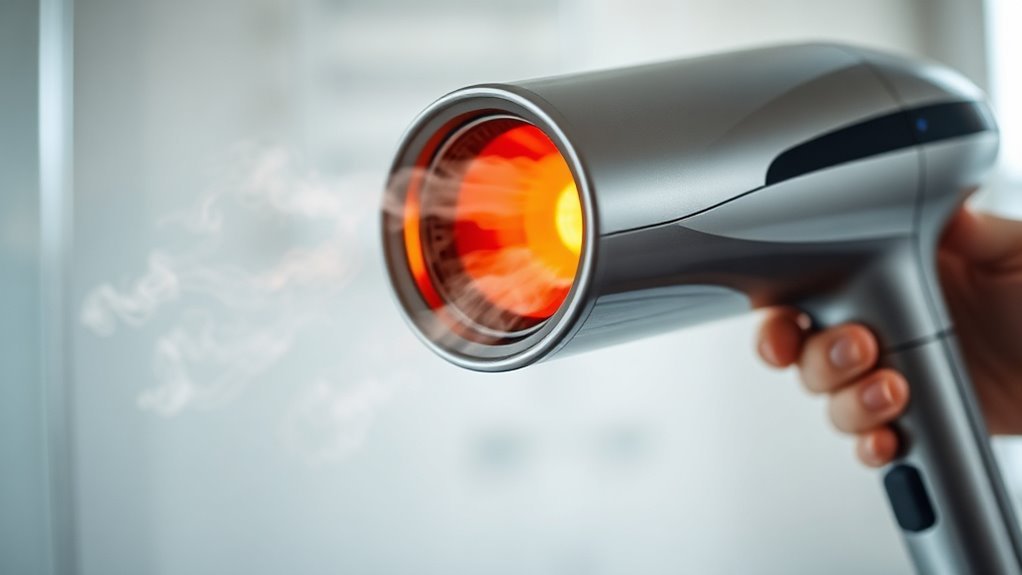
You’ll find most hair dryers heat up between 140°F and 200°F.
Lower settings around 140°F are great for gentle drying, while higher ones near 200°F provide faster results.
To protect your hair, it’s best to keep the heat below 140°F since hotter temperatures can cause damage over time.
Factors like wattage, heating elements, and airflow can significantly affect heat output.
If you want to learn how to use your dryer safely and avoid burns or damage, keep exploring these tips.
Understanding how hot your hair dryer gets is crucial for maintaining healthy hair.
By choosing the right settings and being mindful of heat exposure, you can achieve great results without risking damage.
So, let’s dive into how to use your hair dryer safely!
Key Takeaways
- Hair dryers typically operate between 140°F and 200°F, with professional models sometimes exceeding this range.
- Safe drying temperatures are generally below 140°F (60°C) to protect hair moisture and prevent damage.
- Low heat settings produce gentle warmth, while high heat speeds drying but risks hair damage if overused.
- Wattage, heating element type, and airflow design influence the dryer’s maximum heat output.
- Maintaining distance and using protective techniques helps prevent scalp burns from hot air exposure.
How Hot Do Hair Dryers Usually Get?
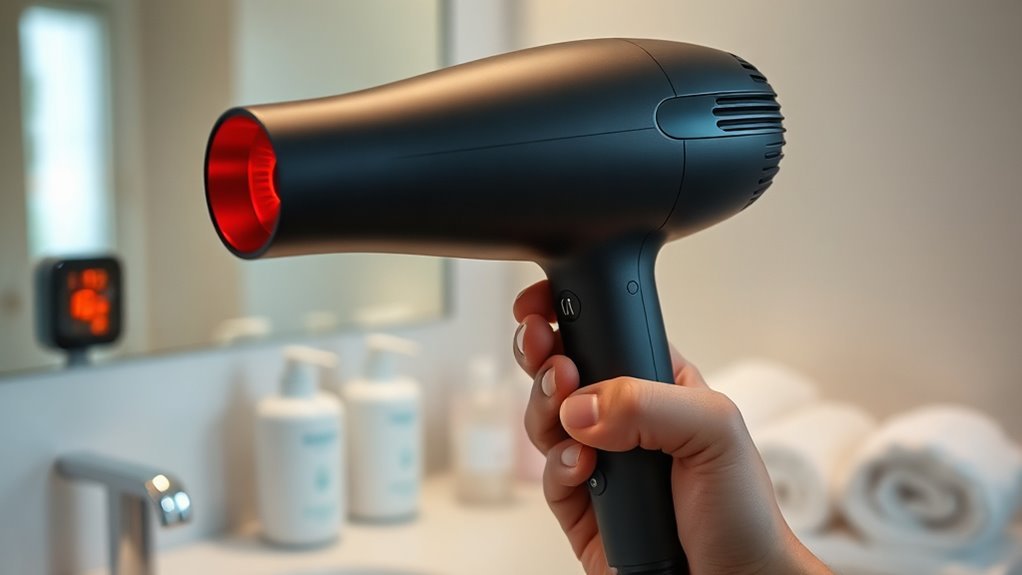
Hair dryers typically reach temperatures between 140°F and 200°F, depending on the model and heat setting you choose. When you use a hair dryer, it heats the air through an electric heating element, then blows it out to dry your hair efficiently. Lower settings often hover around 140°F, which is gentle enough for fine or damaged hair. Higher settings, closer to 200°F, offer faster drying but can risk overheating if you’re not careful. You’ll also find that some professional-grade hair dryers might go slightly beyond this range, providing more power and heat for thicker hair types. Knowing this temperature range helps you pick the right setting to protect your hair while drying it quickly and effectively.
Key Factors That Affect Hair Dryer Heat

Although you might assume all hair dryers produce similar heat, several key factors influence how hot they actually get. First, the wattage plays a vital role—higher wattage means the dryer can generate more heat. The heating element’s material also matters; ceramic and tourmaline elements tend to distribute heat more evenly and gently, while metal coils can produce hotter, more intense heat. Airflow design affects temperature too; stronger airflow can cool the heating element, reducing peak heat. Additionally, the dryer’s age and maintenance impact performance—dust buildup can cause overheating or inconsistent heat. Finally, safety features like thermal cutoffs prevent excessive temperatures, limiting how hot the dryer can get to protect both you and your hair. Understanding these factors helps you choose a dryer suited to your needs.
How Hair Dryer Settings Impact Heat Levels
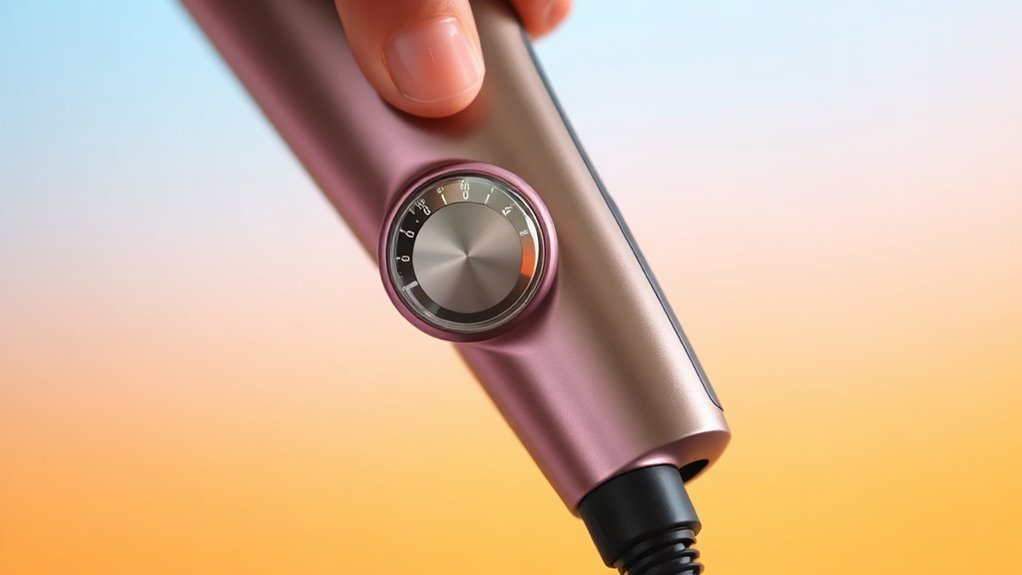
When you adjust the settings on your dryer, you directly control the heat it produces. Understanding these settings helps you manage how hot the air gets and how quickly your hair dries.
Here’s how different settings impact heat levels:
- Low Heat: Produces gentle warmth, ideal for delicate or fine hair.
- Medium Heat: Offers balanced warmth, suitable for everyday drying without excessive heat.
- High Heat: Generates maximum heat for faster drying but can be harsh if used too long.
- Cool Shot: Releases cool air to set your style without adding heat.
What Hair Dryer Temperature Is Safe for Hair?
Because excessive heat can damage your strands, it’s important to know the safe temperature range for drying your hair. Generally, keeping the hair dryer’s heat below 140°F (60°C) helps protect your hair’s natural moisture and prevents breakage. Most hair types respond well to temperatures between 120°F and 140°F, which dry hair effectively without causing excessive stress. If your hair is fine, color-treated, or damaged, aim for the lower end of this range to minimize harm. Avoid using the highest heat settings continuously, as they can strip away oils and weaken your hair’s structure. By sticking to these safe temperatures, you’ll maintain healthier, shinier hair while still enjoying the convenience of a hair dryer.
How to Avoid Heat Damage When Using Hair Dryers
To keep your hair healthy, you need to dial down heat exposure and take a few key precautions while using your hair dryer. Here’s how you can avoid heat damage effectively:
- Use the lowest heat setting that still dries your hair efficiently.
- Keep the dryer moving constantly to prevent concentrating heat in one spot.
- Maintain at least six inches of distance between your hair and the dryer.
- Apply a heat protectant spray before drying to shield your hair strands.
How to Use Hair Dryers Without Getting Burned
To avoid burns, keep your hair dryer at a safe distance from your skin and hair.
Choose the right heat setting to prevent overheating.
Consider using protective accessories like heat-resistant gloves or nozzles.
These simple steps help you stay safe while drying your hair efficiently.
Safe Distance Techniques
When using a hair dryer, keeping a safe distance between the device and your scalp is essential to prevent burns. You want to maintain control while drying your hair efficiently.
Here are four safe distance techniques you can follow:
- Hold the dryer about 6 to 8 inches away from your scalp to avoid direct heat contact.
- Constantly move the dryer around your head instead of focusing on one spot to prevent overheating.
- Use a diffuser attachment to disperse heat more evenly and reduce risk.
- Take brief breaks during drying to let your scalp cool down and avoid prolonged exposure to heat.
Optimal Heat Settings
Maintaining a safe distance from your scalp is just one way to protect yourself from burns, but adjusting the heat settings on your hair dryer plays an equally important role. You should start with the lowest heat setting, especially if your hair is fine or damaged. High heat can cause scalp burns and damage your hair cuticles, leading to dryness and breakage. Use medium heat for thicker hair types, but avoid max settings unless absolutely necessary. Many dryers come with a cool shot button—use it to lock in your style and give your scalp a break from constant heat. By paying attention to your hair type and adjusting the heat accordingly, you’ll dry efficiently without risking burns or hair damage.
Protective Accessories Use
Although hair dryers are convenient styling tools, you need the right protective accessories to prevent burns and heat damage. Using them properly keeps you safe and your hair healthy. Here’s how to protect yourself:
- Wear heat-resistant gloves to shield your hands from hot air and prevent accidental burns.
- Use a diffuser attachment to disperse heat evenly, reducing direct contact and minimizing scalp irritation.
- Invest in a heat protectant spray for your hair to avoid damage from prolonged heat exposure.
- Keep a microfiber towel handy to gently dry your hair first, cutting down on the time you need the dryer on high heat.
Frequently Asked Questions
Can I Use a Hair Dryer on Wet Hair?
Yes, you can use a hair dryer on wet hair, but don’t blast it on the highest heat.
Start with a lower setting to avoid damage.
Keep the dryer moving to protect your hair’s health.
Do Hair Dryers Consume a Lot of Electricity?
Think of a hair dryer like a small electric heater; it uses about 1200-1875 watts.
You’ll notice your bill a bit, but it’s not a massive energy hog if you don’t overuse it daily.
Just remember to keep your usage in check, and it shouldn’t break the bank!
What Is the Best Hair Dryer Brand for Curly Hair?
You’ll love DevaCurl or Dyson for curly hair since they reduce frizz and protect curls.
These brands use diffuser attachments and controlled heat to keep your curls defined and healthy.
Plus, they help avoid damage or dryness, which is a win for your hair!
How Long Does a Typical Hair Dryer Last?
A typical hair dryer lasts about 3 to 5 years with regular use.
You’ll want to replace it sooner if it starts overheating, making strange noises, or losing power.
This helps to avoid damaging your hair or causing safety issues.
Are Ionic Hair Dryers Better Than Regular Ones?
You’ll find ionic hair dryers reduce drying time by up to 30%.
This makes them better for minimizing heat damage.
They break down water molecules faster, so you’ll get smoother, shinier hair without over-drying or frizz.
Conclusion
Now that you know how hot hair dryers can get, you’re equipped to protect your hair like a true Renaissance artist guarding their masterpiece.
Always use the right heat settings and keep a safe distance to avoid damage.
Remember, your hair isn’t a piece of parchment from the 15th century—it deserves gentle care.
By following these tips, you’ll keep your locks healthy and shiny without risking burns or breakage.
Stay smart and dry safely!
—
In conclusion, understanding the temperature of your hair dryer is crucial for maintaining hair health.
Using appropriate heat settings and keeping a safe distance can make a significant difference.
Your hair deserves the best care, so treat it like the masterpiece it is.
With these simple strategies, you can enjoy styling without the worry of damage.
Stay informed, and your hair will thank you for it!