Dry Cat Food or Wet: 7 Key Differences to Know
Choosing between dry and wet cat food can be a bit of a challenge. Understanding the seven key differences can help you make the best choice for your feline friend.
Wet food is packed with about 75% moisture, which is great for hydration. This is especially important for kittens and senior cats, as proper hydration supports kidney health.
On the other hand, dry food provides a crunchy texture that can benefit dental health, but it contains less moisture.
When it comes to nutrition, wet food usually has higher protein and fat levels while offering fewer carbs. This aligns more closely with a cat’s natural diet.
Dry food tends to be easier to store and is often more affordable.
Ultimately, your cat’s age, health, and personal preferences will guide your decision. So, take the time to explore how each factor plays a role in this important choice.
Key Takeaways
- Wet cat food contains 70–80% moisture, aiding hydration, while dry food has about 10% water, requiring more drinking to stay hydrated.
- Wet food offers higher animal-based protein and fat, aligning better with cats’ carnivorous nutritional needs than typically carb-rich dry food.
- Dry food’s crunchy texture helps reduce dental plaque, whereas wet food is softer and easier for cats with dental issues to chew.
- Wet food requires refrigeration after opening and spoils quickly, while dry food stores longer and is more cost-effective per serving.
- Mixing wet and dry food balances hydration, nutrition, dental health, and cost, supporting cats’ overall well-being across life stages and health conditions.
Nutritional Differences Between Dry and Wet Cat Food
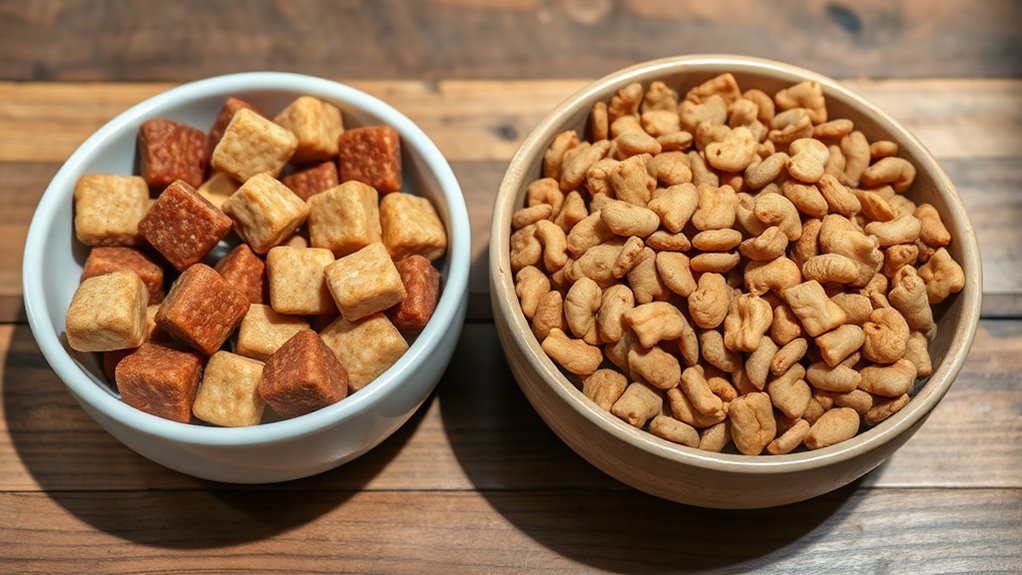
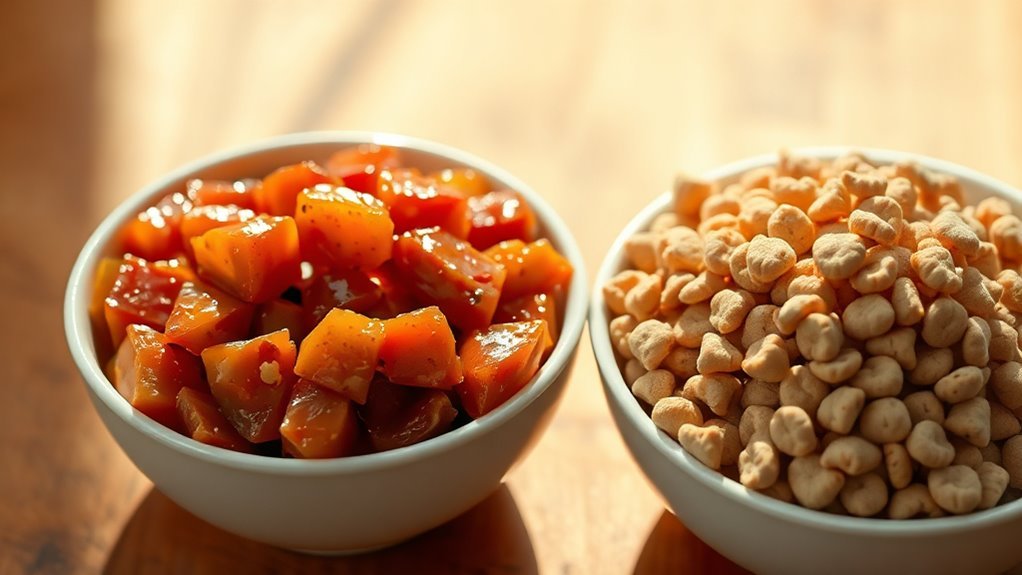
While both dry and wet cat foods provide essential nutrients, they differ markedly in moisture content and ingredient composition, which affects your cat’s hydration and digestion. Dry food usually has higher carbohydrate levels and less protein compared to wet food, which tends to be richer in animal-based proteins and fats. This matters because cats are obligate carnivores, meaning they thrive on protein and fat rather than carbs. When you choose dry food, you’re often feeding your cat more fillers like grains and plant-based ingredients. Wet food, on the other hand, mimics a cat’s natural diet more closely, offering higher protein quality and digestibility. So, when picking between dry and wet, consider your cat’s specific nutritional needs, preferences, and any health issues.
Moisture Content in Dry vs. Wet Cat Food
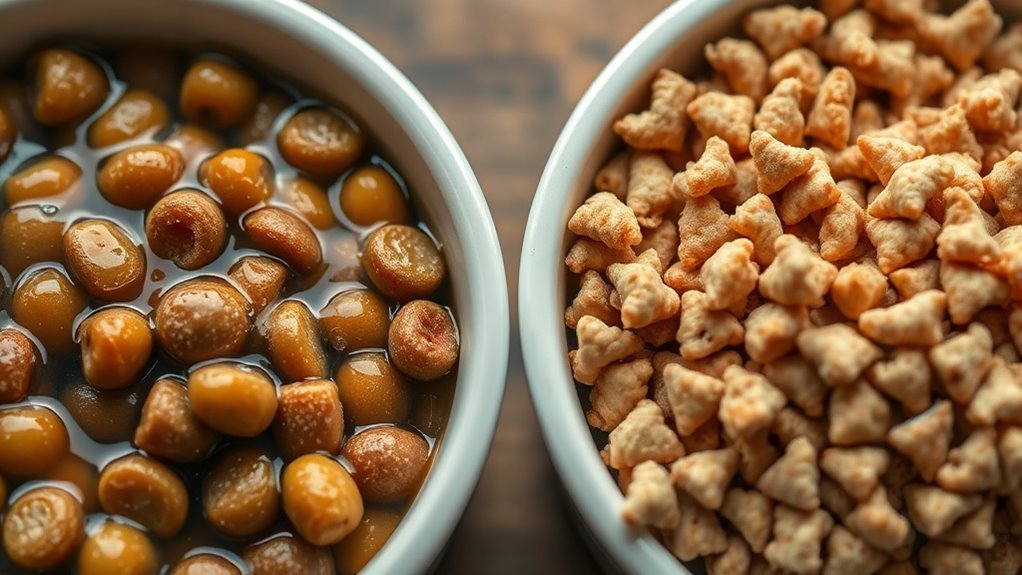
You’ll notice wet cat food contains about 70-80% water,
while dry food has only around 10%.
This difference can affect your cat’s hydration,
especially if they don’t drink enough water on their own.
Understanding moisture content helps you choose the best option
for your cat’s health.
Water Percentage Comparison
Because wet cat food contains up to 75-80% water, it naturally provides much more moisture than dry cat food, which typically holds only about 10% water. This difference affects how much hydration your cat gets directly from their food. Here’s a quick comparison:
- Wet Cat Food: Contains 75-80% water, making it a great source of additional moisture.
- Dry Cat Food: Contains roughly 10% water, so it’s much more concentrated and less hydrating.
- Moisture Impact: The high water content in wet food means your cat consumes more fluids with each meal compared to dry food.
Understanding these percentages helps you decide which type suits your cat’s needs better, especially if hydration is a concern.
Impact on Cat Hydration
Since cats naturally have a low thirst drive, the moisture content in their food plays a crucial role in keeping them hydrated. Wet cat food contains around 70-80% water, which directly contributes to your cat’s daily fluid intake. This extra hydration helps support kidney function, urinary tract health, and overall wellbeing. On the other hand, dry cat food typically contains only about 10% moisture, so your cat relies more on drinking water to stay properly hydrated. If your cat doesn’t drink enough water, feeding dry food alone could increase the risk of dehydration and related health issues. To keep your feline friend well-hydrated, consider incorporating wet food into their diet or encouraging regular water consumption alongside dry food meals.
Texture and Taste of Dry and Wet Cat Food

Cats often prefer the distinct textures and flavors that dry and wet foods offer. When choosing between them, consider how your cat responds to each type.
- Dry Food Texture: Crunchy and firm, dry kibble satisfies cats who love a crunchy bite, offering a different eating experience.
- Wet Food Texture: Soft and moist, wet food mimics natural prey, appealing to cats who enjoy tender, juicy meals.
- Flavor Intensity: Wet food often has stronger aromas and flavors, making it more enticing for picky eaters, while dry food provides milder tastes.
How Dry and Wet Cat Food Affect Your Cat’s Dental Health
Although dry and wet cat foods both provide essential nutrients, they impact your cat’s dental health differently. Dry food’s crunchy texture can help reduce plaque and tartar buildup by gently scraping teeth as your cat chews. Wet food, being soft, doesn’t offer this mechanical cleaning, which may increase the risk of dental issues if not balanced with proper care.
| Aspect | Dry Cat Food |
|---|---|
| Texture | Crunchy, abrasive |
| Plaque Control | Helps reduce plaque |
| Moisture Content | Low, may cause dryness |
| Risk of Dental Issues | Lower with chewing action |
| Recommended Usage | Supports dental health |
For optimal dental health, consider mixing both types or supplementing with dental treats.
Which Cat Food Is Easier to Store and Use?
When it comes to storing and using cat food, you’ll want to take into account packaging convenience and shelf life.
Dry food often lasts longer and is easier to portion.
On the other hand, wet food usually requires more careful storage.
Let’s compare how each option fits into your routine.
Packaging Convenience
Packing up and storing your cat’s food can make a big difference in daily convenience. Dry cat food usually comes in resealable bags or sturdy containers, making it easy to store and measure out portions without much hassle. Wet cat food, on the other hand, is often packaged in single-serving cans or pouches that need to be opened fresh each time, which can be less convenient.
Here are three key points about packaging convenience:
- Dry food’s bulk packaging makes it simple to store large quantities.
- Wet food’s single-serve cans or pouches minimize waste but require refrigeration after opening.
- Dry food is generally easier to scoop and serve quickly, while wet food often needs a utensil and plate.
Choosing packaging that fits your routine can streamline feeding time.
Shelf Life Differences
You’ll often find that dry cat food lasts much longer than wet food, making it easier to store and use over time. Unopened dry food can stay fresh for several months to a year, thanks to its low moisture content and airtight packaging. Once opened, if you seal it properly and keep it in a cool, dry place, it can remain good for weeks. On the other hand, wet cat food has a much shorter shelf life. Once opened, you need to refrigerate it and use it within a day or two to prevent spoilage. Even unopened cans or pouches typically last a year but require careful storage. So, if you want something that’s less perishable and simpler to store, dry food is the way to go.
Portion Control Ease
Managing how much food your cat eats can be simpler or more challenging depending on the type of food you choose. Dry cat food generally offers easier portion control because it comes in convenient, resealable bags or pre-measured servings. Wet food, on the other hand, requires more attention since cans or pouches often contain multiple servings that need to be stored properly after opening.
Here’s what you need to know about portion control ease:
- Dry food lets you quickly measure kibble with a standard cup or scoop, making consistent portions easier.
- Wet food needs refrigeration after opening, adding storage complexity and limiting how long it stays fresh.
- Leftover wet food can spoil quickly, so you must manage portions carefully to avoid waste and overfeeding.
Dry food wins for straightforward portion control and convenient storage.
Cost Differences Between Dry and Wet Cat Food
Although both dry and wet cat food provide essential nutrition, their costs can vary markedly. Generally, dry food tends to be more economical, especially if you buy in bulk. Wet food, however, often costs more per serving due to higher moisture content and packaging expenses. When budgeting for your cat’s diet, consider how price affects your choices without sacrificing quality.
| Factor | Dry Cat Food | Wet Cat Food |
|---|---|---|
| Price per pound | $1.50 – $3.00 | $3.00 – $6.00 |
| Packaging cost | Lower | Higher |
| Shelf life | Longer | Shorter |
| Serving size cost | Lower | Higher |
| Bulk purchase savings | Significant | Limited |
Understanding these differences helps you plan your cat’s meals efficiently.
Choosing the Right Dry or Wet Cat Food for Your Cat’s Age and Health
Balancing cost with quality is important, but your cat’s age and health should guide your food choices even more. Kittens, adults, and seniors have different nutritional needs, so picking the right food type can make a big difference. Here’s how to choose wisely:
- Kittens: Opt for wet food or a mix with dry to support growth and hydration.
- Adults: Choose balanced dry food for dental health, or wet food for extra moisture if your cat prefers.
- Seniors or health issues: Wet food often suits better, especially if your cat has dental problems or kidney issues, as it’s easier to chew and keeps them hydrated.
Tailor the food to your cat’s stage and condition to promote their well-being.
Frequently Asked Questions
Can Dry or Wet Cat Food Affect My Cat’s Hydration Levels?
Yes, wet cat food helps keep your cat hydrated because it contains more moisture.
On the other hand, dry food has less water.
Do Cats Prefer Dry or Wet Food Based on Their Breed?
You’ll find that most cats don’t have breed-specific preferences for dry or wet food.
Instead, their taste depends more on individual likes, texture, and smell.
How Does Packaging Impact the Freshness of Dry vs. Wet Cat Food?
You’ll find wet cat food stays fresh longer in sealed cans.
On the other hand, dry food’s freshness depends on airtight packaging.
Once opened, dry food can stale quickly, so resealing or storing in containers helps maintain quality.
Taking these precautions can really make a difference!
Are There Environmental Concerns Linked to Dry Versus Wet Cat Food Production?
Think of a steam engine burning coal—that’s the environmental impact of wet cat food’s heavy packaging and processing.
You’ll notice dry food uses less water and creates less waste, making it a greener choice overall.
Can Switching Between Dry and Wet Food Cause Digestive Issues?
Yes, switching between dry and wet food can cause digestive issues if you do it abruptly.
You should phase in gradually over 7-10 days to help your cat’s stomach adjust.
This gradual transition can help avoid vomiting or diarrhea.
Conclusion
Choosing between dry and wet cat food is like picking the perfect outfit—it depends on your cat’s unique needs and lifestyle.
You’ll want to balance nutrition, moisture, texture, and cost while also considering dental health and storage convenience.
By understanding these key differences, you can tailor your choice to keep your feline friend happy and healthy.
A well-balanced diet is essential, just like a well-tailored suit fits perfectly every day.
In conclusion, the decision between dry and wet cat food hinges on your cat’s individual needs.
Evaluate factors like hydration, dental benefits, and budget.
Making the right choice ensures your cat enjoys a nutritious and satisfying diet that supports their overall well-being.
So, whether you opt for crunchy kibble or savory pates, remember that your cat’s happiness and health are the ultimate goals!