Cat Food Raw Diet: How to Start
You can start your cat on a raw food diet by gradually introducing small amounts of raw meals into their current food.
Begin with about 10% raw and slowly increase that percentage over several days.
It’s essential to feed balanced meals that include muscle meat, organs, and safe bones.
While you make this transition, keep a close eye on your cat’s weight, appetite, and stool for any changes.
Always handle and store food safely to prevent contamination.
Monitoring your cat’s progress is crucial—there’s more you can do to ensure a smooth shift and optimal nutrition.
With patience and attention, your feline friend can enjoy the benefits of a raw diet!
Key Takeaways
- Introduce raw food gradually by mixing 10% raw with 90% current diet, increasing by 10–15% every few days.
- Start with balanced meals including muscle meat, organ meats, and raw meaty bones for complete nutrition.
- Feed about 2–4% of your cat’s body weight daily, adjusting portions based on age, activity, and health.
- Practice strict hygiene: wash hands, utensils, and surfaces thoroughly to prevent contamination.
- Store raw food properly by refrigerating immediately, freezing portions, and thawing only in the refrigerator.
Why Feed Your Cat a Raw Food Diet
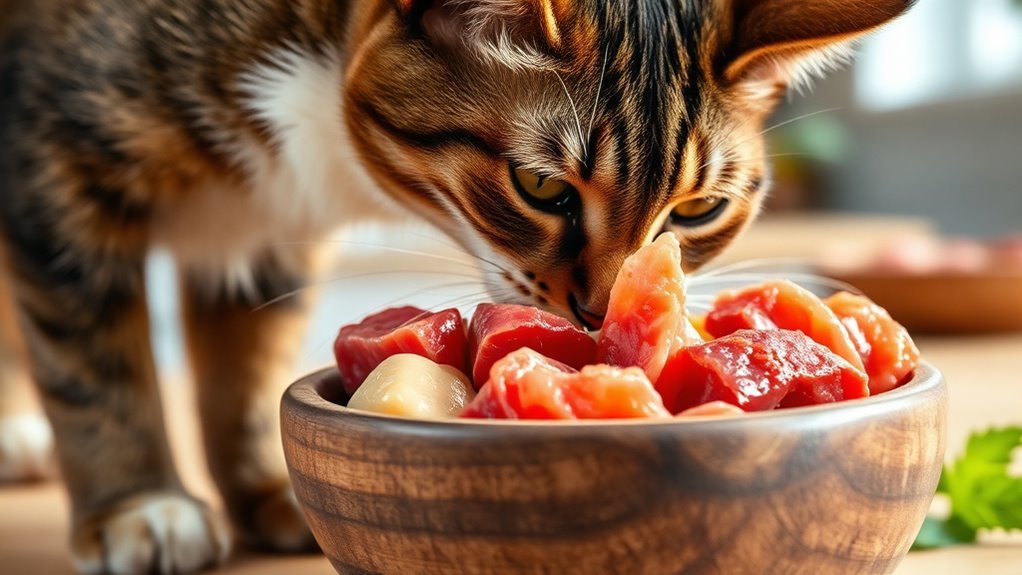
Although commercial cat foods are convenient, feeding your cat a raw food diet gives them nutrients in their most natural and bioavailable form, which can improve digestion, energy levels, and overall health. When you switch to raw, you provide your cat with proteins, fats, and enzymes closer to what they’d eat in the wild. This can reduce allergies, enhance coat quality, and support lean muscle maintenance. You’ll also notice better hydration since raw food contains more moisture than kibble. Plus, feeding raw encourages natural chewing behavior, which helps keep teeth clean. While it takes more effort, you’re giving your cat a diet aligned with their biological needs. This often leads to a happier, more energetic feline with improved overall importance.
Ingredients for a Balanced Raw Cat Diet

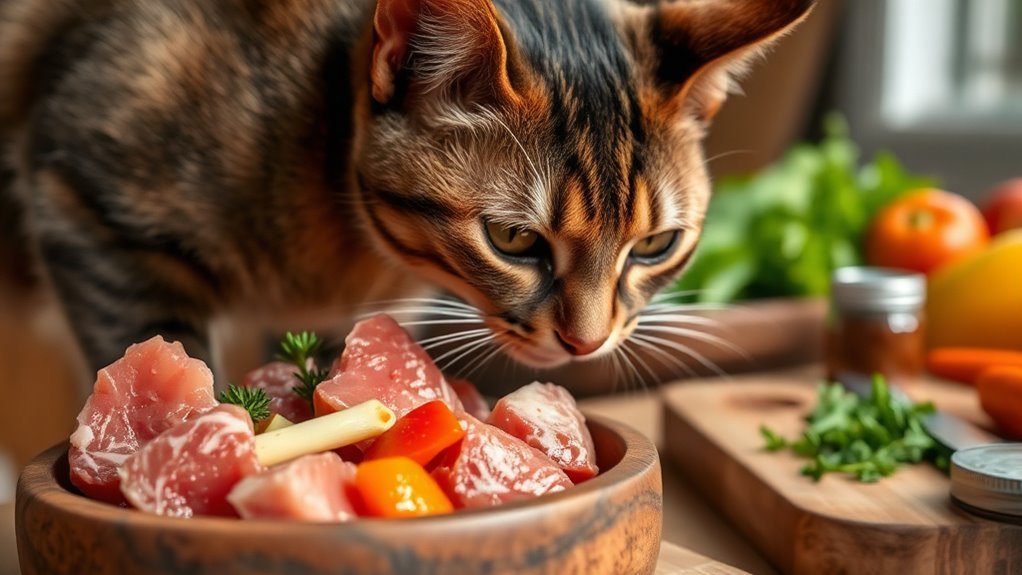
Providing your cat with a raw food diet means paying close attention to the ingredients you include to make sure they get all the nutrients they need. Your cat’s diet should primarily consist of muscle meat, which provides essential protein and amino acids. Include raw meaty bones for calcium and phosphorus, vital for strong bones and teeth. Don’t forget organ meats like liver and kidney, which supply vitamins A, D, and B-complex. Small amounts of finely ground eggshells or bone meal can help balance minerals. You can add tiny portions of cat-safe vegetables or herbs for fiber and antioxidants, but keep it minimal since cats are obligate carnivores. Always guarantee the ingredients are fresh and handled safely to avoid contamination. This balance keeps your cat healthy and thriving on a raw diet.
How Much Raw Food to Feed Your Cat

Determining how much raw food to feed your cat depends on their weight, age, activity level, and overall health. Typically, cats require about 2-4% of their body weight in raw food daily. Kittens and active cats may need more, while older or less active cats require less. Monitor your cat’s weight and energy to adjust portions accordingly.
Feed your cat 2-4% of their body weight daily, adjusting for age, activity, and health.
Consider these factors when feeding raw:
- Body Condition: Keep your cat lean but not underweight to avoid health issues.
- Caloric Needs: Higher activity demands more calories; sedentary cats need fewer.
- Health Status: Illness or recovery periods may require tailored feeding amounts.
Transitioning Your Cat to Raw Food Safely
You’ll want to switch your cat to raw food gradually to avoid digestive upset.
Keep a close eye on their health and behavior throughout the changeover.
Make sure their new diet provides all the essential nutrients they need to stay balanced and healthy.
Gradual Diet Changes
Switching your cat to a raw food diet takes patience and careful planning to avoid digestive upset. You’ll want to introduce the new diet slowly, blending small amounts of raw food with your cat’s current diet. This gradual shift helps their digestive system adjust comfortably.
Here’s how to manage the changeover effectively:
- Start by mixing 10% raw food with 90% current food for 3-4 days.
- Increase the raw portion by 10-15% every few days, watching for any signs of discomfort.
- Maintain a consistent feeding schedule to help your cat adapt smoothly.
Taking these steps helps minimize stress and supports your cat’s health as they switch to a raw diet.
Monitor Health Closely
Although shifting your cat to a raw food diet can offer many benefits, it’s essential to monitor their health closely throughout the process. Watch for any changes in behavior, appetite, or litter box habits. Diarrhea, vomiting, or lethargy may indicate your cat isn’t adjusting well. Keep an eye on their weight to make certain they’re neither losing nor gaining too quickly. Regularly check their coat for shine and skin for irritation, as these reflect overall health. If you notice any concerning symptoms, consult your veterinarian promptly. Keeping a journal of your cat’s progress can help you track changes and share detailed information with your vet. Monitoring closely guarantees your cat’s shift is safe and smooth, allowing you to address issues before they become serious.
Balanced Nutrient Intake
Keeping a close eye on your cat’s health sets the foundation for introducing a raw food diet safely. To guarantee your cat thrives, you must balance nutrients carefully. Cats require specific ratios of protein, fat, vitamins, and minerals that a raw diet can provide if done right. Start by incorporating muscle meat, organs, and bones appropriately.
Focus on these key components:
- Protein: Essential for energy and muscle maintenance; prioritize high-quality sources like chicken or turkey.
- Calcium and Phosphorus: Crucial for bones and teeth; balance with raw meaty bones or supplements.
- Taurine: An amino acid critical for heart and eye health; make sure organ meats like heart are included.
Common Raw Feeding Challenges: And How to Fix Them
You might face challenges like nutritional imbalances and food safety when feeding your cat a raw diet.
Don’t worry—you can fix these by carefully planning meals and handling ingredients properly.
Let’s explore how to keep your cat healthy and safe on raw food.
Nutritional Imbalance Solutions
Addressing nutritional imbalances in a raw cat food diet requires careful attention to ingredient variety and portion sizes. You need to make certain your cat gets the right balance of protein, fats, vitamins, and minerals. Too much or too little of any nutrient can lead to health issues. To fix imbalances, start by diversifying protein sources and including organ meats and bones for essential nutrients.
Here are three key tips:
- Rotate meats like chicken, beef, and fish to cover different amino acids.
- Incorporate supplements such as taurine and omega-3 fatty acids if your recipe lacks them.
- Measure portions accurately to avoid overfeeding or nutrient shortages.
Managing Food Safety
Although feeding your cat a raw diet offers many benefits, managing food safety presents some common challenges that you must tackle to protect your pet’s health. You need to handle raw meat carefully to avoid bacterial contamination. Always wash your hands, utensils, and surfaces thoroughly before and after preparing meals. Store raw ingredients in sealed containers and keep them frozen until use to prevent spoilage. Thaw meat in the refrigerator, not at room temperature, to limit bacterial growth. Regularly clean your cat’s bowls and feeding area. Watch for signs of illness like vomiting or diarrhea, and consult your vet if they appear. By following these steps, you’ll minimize risks and keep your cat safe while enjoying the advantages of a raw diet.
Tips for Storing and Handling Raw Cat Food Safely
Handling raw cat food safely prevents contamination and keeps your pet healthy. You need to store it properly and maintain cleanliness during preparation. Always keep raw food in a sealed container and store it in the coldest part of your freezer or refrigerator to preserve freshness and prevent bacteria growth.
Store raw cat food sealed in the coldest part of your fridge to ensure freshness and safety.
When handling raw cat food, wash your hands thoroughly before and after touching the food. Clean all utensils, cutting boards, and surfaces with hot, soapy water immediately after use. Avoid cross-contamination by using separate tools for raw pet food and human food.
- Thaw raw food in the fridge, not at room temperature, to prevent bacterial growth.
- Portion meals in small batches to reduce repeated thawing and refreezing.
- Dispose of uneaten food promptly to avoid spoilage and health risks.
Frequently Asked Questions
Can Raw Food Diets Prevent Common Cat Diseases?
Raw food diets can help reduce some common cat diseases by boosting their immune system and improving digestion.
But you shouldn’t rely on it alone.
Regular vet check-ups and balanced nutrition are still essential for your cat’s health.
Are Supplements Necessary With a Raw Cat Food Diet?
You can’t just toss raw meat and expect a miracle!
Yes, you’ll need supplements like taurine and calcium to keep your cat’s health rocket soaring.
Skip them, and you risk serious nutritional black holes.
How Does Raw Feeding Affect Cat Dental Health?
Raw feeding can improve your cat’s dental health by reducing plaque and tartar buildup.
Chewing raw meaty bones naturally cleans teeth.
But you’ll still need regular vet check-ups to keep their mouth healthy.
Can Kittens Be Fed a Raw Diet Safely?
You might wonder if feeding kittens raw food is safe.
Yes, it can be, but you’ll need to make certain balanced nutrition is met.
Proper hygiene is also essential, and consulting your vet is a must.
This helps avoid risks like bacterial infections or nutrient deficiencies.
What Are the Cost Differences Between Raw and Commercial Cat Food?
You’ll find raw cat food usually costs more upfront than commercial options due to higher-quality ingredients and preparation time.
However, raw diets might reduce vet bills by promoting better health, balancing out expenses long-term.
Conclusion
Switching your cat to a raw food diet can seem overwhelming, but remember, “Rome wasn’t built in a day.”
Take it slow, stay consistent, and pay close attention to your cat’s needs.
With the right ingredients, proper portions, and safe handling, you’ll help your feline thrive on a natural diet.
Be patient, and you’ll soon see the benefits of a healthier, happier cat enjoying every bite of their raw meals.
—
In conclusion, transitioning your cat to a raw food diet is a journey that requires care and attention.
By introducing new ingredients gradually and maintaining a consistent routine, you can ensure your cat adjusts well.
Focus on providing balanced nutrition and safe food handling, and watch your kitty flourish.
Soon, you’ll notice the positive changes in their energy and overall health.
With a little patience and effort, a raw diet can lead to a happier, healthier cat!