Key Steps in Sportswear Manufacturing
You start by selecting high-quality, moisture-wicking fabrics, ensuring they meet your standards by inspecting them thoroughly for defects.
Next, you create detailed tech packs that outline designs and specifications.
Then, it’s time to develop precise patterns and produce samples to fine-tune the fit and quality.
After that, you cut and sew with care, utilizing strong stitching techniques while checking for any errors along the way.
Finally, branding is applied, and each piece is inspected meticulously before packaging.
These key steps in sportswear manufacturing come together seamlessly to produce exceptional products.
Keep exploring to discover how the entire process evolves from concept to creation!
Key Takeaways
- Select high-quality, durable, and breathable fabrics with strict quality control to ensure performance and customer satisfaction.
- Develop detailed tech packs defining design, fabric, colors, and sizing to guide consistent production.
- Create precise patterns and produce samples to verify fit, fabric behavior, and stitching quality.
- Employ accurate cutting, durable sewing techniques, and conduct thorough quality inspections during manufacturing.
- Package finished garments with sustainable materials, coordinate efficient shipping logistics, and maintain supplier relationships.
Fabric Selection and Quality Control
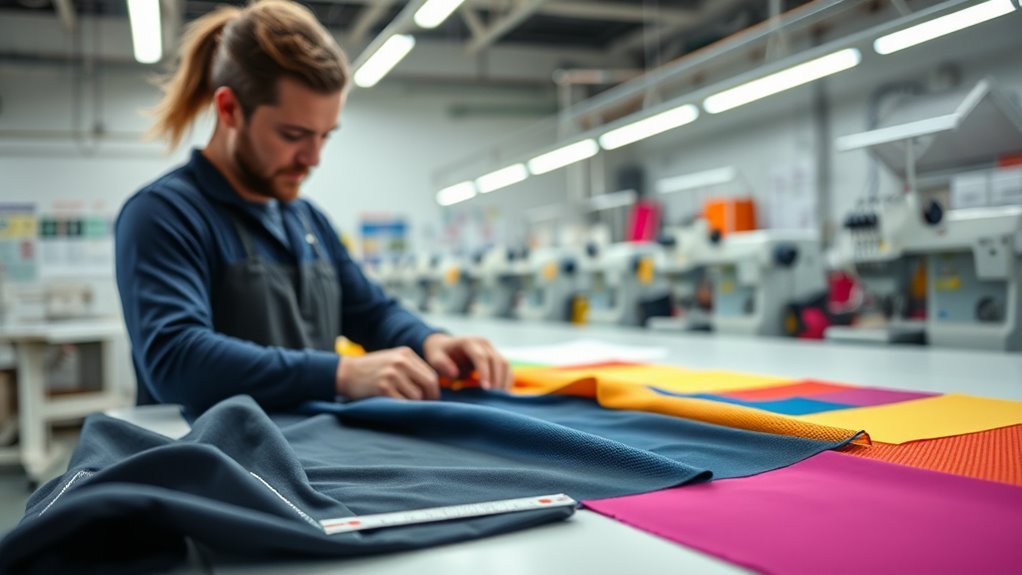
When you choose high-quality fabrics like moisture-wicking polyester, nylon, and elastane blends, you assure your sportswear stays durable, breathable, and performs at its best. Fabric selection is the foundation of effective sportswear production, so you need to be meticulous. Implementing strict quality control during fabric sourcing helps you spot inferior materials that could undermine your garment’s longevity and fit. Inspecting every fabric roll for defects guarantees only superior textiles move forward to cutting and sewing. Additionally, using outstanding printing and precise stitching techniques preserves fabric integrity, preventing fading and peeling during wear and washing. By prioritizing fabric selection and quality control, you create sportswear that stands up to performance demands and keeps customers satisfied.
Design Development and Tech Pack Creation

Selecting the right fabric sets the stage, but shaping your sportswear’s design brings it to life. You start by defining the silhouette, fit, target customer, and size range, ensuring your design aligns with your brand vision and user needs. Next, you create a detailed tech pack that specifies fabric choices, colors, design details, and construction requirements. This tech pack serves as an essential guide throughout the manufacturing process. Clear documentation helps prevent misunderstandings and keeps everyone aligned on design intent and production standards. It also includes graded measurements, allowing consistent fit across sizes. By developing a precise tech pack, you streamline manufacturing, ensuring your sportswear is produced exactly as envisioned, ready to move seamlessly into pattern making and sample production.
Pattern Making and Sample Production
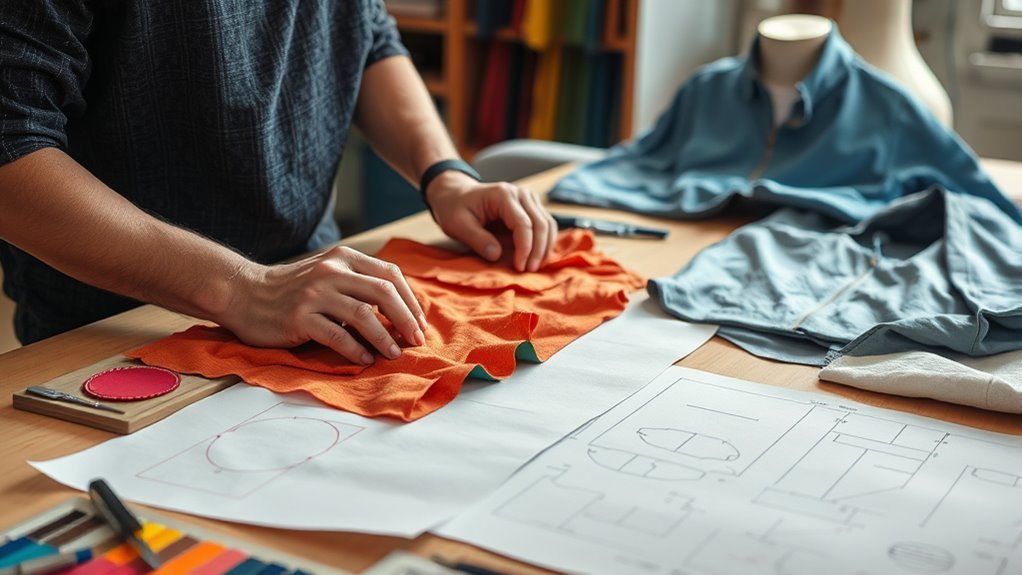
You start by creating precise patterns that serve as templates for your sportswear designs, ensuring every measurement is spot on.
Then, you produce samples to check fit, fabric behavior, and stitching quality before moving to full production.
This evaluation process helps you catch issues early and refine the product to meet both style and function standards.
Pattern Creation Techniques
Although pattern making might seem straightforward, it demands precision and skill to create templates that define each garment’s shape and structure. In sportswear manufacturing, you start by interpreting tech packs to develop accurate pattern pieces that reflect the design specifications. These patterns must accommodate different sizes through grading, guaranteeing consistent fit across the range. Clear documentation is vital to avoid miscommunication about construction details. Once patterns are ready, you produce sample garments to test fit, fabric behavior, and stitching quality. This hands-on step helps you spot issues early and refine the patterns as needed. By carefully managing revisions, you make sure the final patterns deliver the desired performance and aesthetic, setting a solid foundation for efficient bulk production.
Sample Evaluation Process
How do you guarantee a sportswear design meets all expectations before mass production? You rely on a thorough sample evaluation process. This starts with creating sample garments from approved patterns, letting you assess fit, fabric behavior, and overall appearance early on. You’ll likely go through multiple sample iterations to catch and fix issues before production. During review, focus on stitching quality, fabric drape, and how the garment moves during wear. Your feedback is essential—it guides adjustments to design, fit, and construction, ensuring the final product aligns perfectly with specifications. Remember, finalized samples must match production specs exactly, including size grading from XS to XXL. This step is critical for maintaining consistency and quality throughout the design to delivery journey.
Cutting and Sewing Processes
Since precision in cutting directly impacts fabric use and garment fit, the cutting process starts with preparing and spreading fabric layers according to approved markers. This guarantees accuracy and reduces waste during the sewing phase. When you move to sewing, skilled operators assemble garment parts, joining panels, attaching sleeves, and installing closures with the right equipment. Throughout both cutting and sewing, quality control is key to maintain consistent stitching and perfect alignment. Here’s what you focus on:
- Laying out fabric layers precisely using approved markers
- Cutting fabric accurately to prevent fitting issues
- Employing sewing techniques like overlocking and topstitching for durability
- Conducting quality control checks to guarantee flawless seams and garment appearance
Mastering these steps ensures efficient production and high-quality sportswear.
Branding and Logo Application Techniques
When you apply branding and logos to sportswear, choosing the right technique is crucial to balance durability, appearance, and cost. In the manufacturing process, high-heat sublimation offers vibrant, long-lasting logo printing, perfect for moisture and frequent washing. Screen printing provides a cost-effective option, delivering bold, multi-colored branding on various fabrics, though it may wear faster under heavy use. Embroidery adds a premium, textured feel, boosting the garment’s aesthetic and perceived quality. You also need to carefully place logos—commonly on the chest, sleeves, or back—to maximize visibility without compromising functionality. Finally, coordinating branding elements like colors and sizes with the overall design and fabric guarantees consistency and strengthens your brand’s identity across the entire sportswear line.
Quality Assurance and Final Inspection
You’ll start by inspecting each garment carefully, checking for fabric flaws, stitching errors, and measurement accuracy.
Identifying defects early helps you fix issues before products leave the factory.
Consistent quality checks guarantee every piece meets your brand’s standards before packaging and shipping.
Inspection Procedures Overview
Although producing high-quality sportswear involves many steps, inspection procedures play an essential role in guaranteeing every garment meets the required standards. You need to carefully check garment measurements to confirm proper fit and sizing consistency. Quality assurance includes examining fabric, stitching, and overall appearance to catch any production issues early.
Here’s a quick overview of key inspection procedures:
- Verify garment measurements against specs for accurate sizing.
- Inspect fabric and stitching to guarantee durability and finish.
- Conduct final inspections, including trimming threads and pressing.
- Document all quality control steps to maintain standards and improve processes.
Defect Identification Methods
Defect identification methods play an essential role in ensuring the quality and performance of sportswear before it reaches customers. You rely on quality control teams to perform visual inspections, spotting stitching flaws, fabric defects, and irregular appearances. Automated inspection systems help you detect fabric pattern inconsistencies swiftly during large production runs, boosting accuracy and efficiency. You also apply statistical sampling techniques like AQL to assess a set percentage of finished products, balancing quality with productivity. During final inspection, measuring garment dimensions guarantees sizing precision, which is crucial for fit and customer satisfaction. By documenting defects and enforcing corrective actions promptly, you enhance quality control processes and prevent recurring issues, ensuring every batch meets your high standards before packaging and shipping.
Frequently Asked Questions
How Is Sustainability Addressed in Sportswear Manufacturing?
You address sustainability in sportswear manufacturing by choosing eco-friendly materials,
reducing waste, recycling fabrics, and optimizing energy use.
You also guarantee ethical labor practices and promote durability
to minimize environmental impact throughout production.
What Role Does Technology Play in Reducing Waste During Production?
Technology helps you minimize waste by optimizing fabric cutting and using 3D design to prevent errors.
It enables precise material measurements, which is crucial for efficient production.
Additionally, it supports recycling processes and allows for real-time monitoring, so you can produce sportswear more efficiently and sustainably.
How Do Manufacturers Ensure Ethical Labor Practices?
How would you feel working in unsafe conditions?
Manufacturers guarantee ethical labor by auditing factories, enforcing fair wages, and providing safe environments.
They also partner with certified suppliers to ensure compliance.
You can trust they’re committed to treating workers with respect and fairness.
What Innovations Are Shaping Future Sportswear Materials?
You’ll see innovations like bioengineered fabrics, recycled materials, and smart textiles that adapt to temperature or monitor health.
These advancements make sportswear more sustainable, comfortable, and functional, totally changing how athletes perform and recover.
How Is Custom Sizing Handled for Athletes?
You provide your precise measurements through digital scanning or input.
Manufacturers use this data to create tailored patterns.
This guarantees your sportswear fits perfectly, enhancing comfort and performance during your athletic activities.
Conclusion
By carefully selecting fabrics and guaranteeing quality, developing precise designs and tech packs, crafting accurate patterns and samples, executing cutting and sewing with skill, applying branding meticulously, and conducting thorough inspections, you create sportswear that stands out.
You build durability and style. You boost performance and comfort, and you deliver consistency and satisfaction.
Following these key steps guarantees your sportswear not only meets but exceeds expectations every time.
In conclusion, the process of sportswear manufacturing involves a meticulous approach to fabric selection, design development, and quality control. By focusing on these essential steps, you ensure that your products are not only stylish and durable but also enhance performance and comfort for the wearer.
Ultimately, the result is a line of sportswear that consistently satisfies customers and elevates their athletic experience.