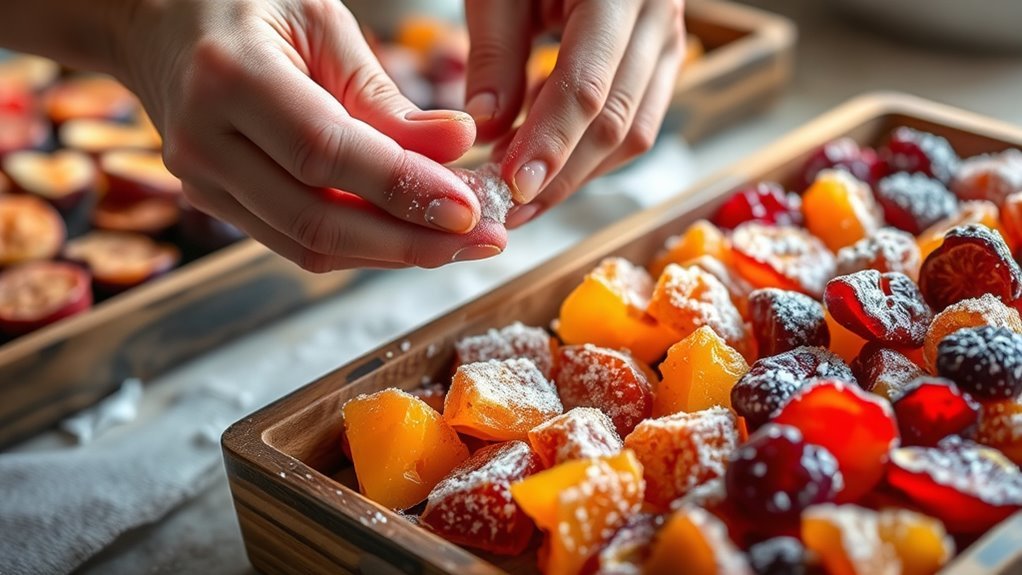
What Is Dried Fruit Candy and How Is It Made?
Dried fruit candy is a delicious and nutritious snack that combines the natural sweetness of dried fruits like apricots and mangoes with the crunch of nuts and the richness of shredded coconut.
To sweeten the deal, natural sweeteners such as honey or maple syrup are added, making this treat both tasty and wholesome.
The process begins by blending these ingredients until they’re finely chopped.
Next, you shape the mixture into bars or balls, and sometimes roll them in sugar or coconut for an extra touch.
This candy is not only packed with natural sugars but also rich in fiber, providing a quick energy boost while adding nutritional value to your diet.
Keep reading to learn how to customize flavors and store your homemade dried fruit candy properly!
Key Takeaways
- Dried fruit candy is a nutrient-dense snack made from chopped dried fruits, nuts, and sometimes shredded coconut combined into bars or balls.
- It is typically prepared by finely chopping ingredients in a food processor and mixing them with binders like honey or almond butter.
- Common ingredients include raisins, apricots, mangoes, almonds, cashews, pistachios, shredded coconut, and natural sweeteners like honey or maple syrup.
- The mixture is shaped, optionally rolled in sugar or coconut, and can be customized with various flavor combinations and coatings.
- Store dried fruit candy in airtight containers at room temperature or refrigerated to maintain freshness for up to two weeks.
Understanding Dried Fruit Candy
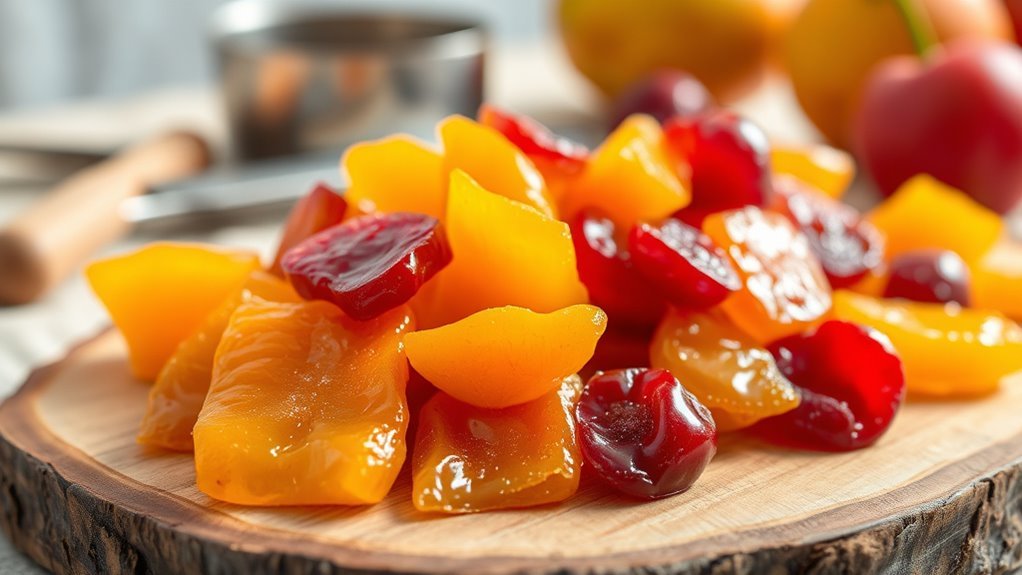
Although dried fruit candy might seem simple, it combines dried fruits, nuts, and sometimes shredded coconut into a flavorful treat. When you make dried fruit candy, you typically use a food processor to finely chop the dried fruits and nuts until they stick together. You can adjust the mixture’s consistency with a little liquid, like orange juice, to help bind everything. This candy is nutrient-dense, packed with natural sugars, fiber, and potassium, which gives you a quick energy boost. You’ll find dried fruit candy shaped into bars, squares, or balls, often rolled in sugar or coconut for extra sweetness and texture. Don’t hesitate to experiment with different dried fruits and nuts to create your own unique dried fruit candy combination.
Ingredients Commonly Used in Dried Fruit Candy
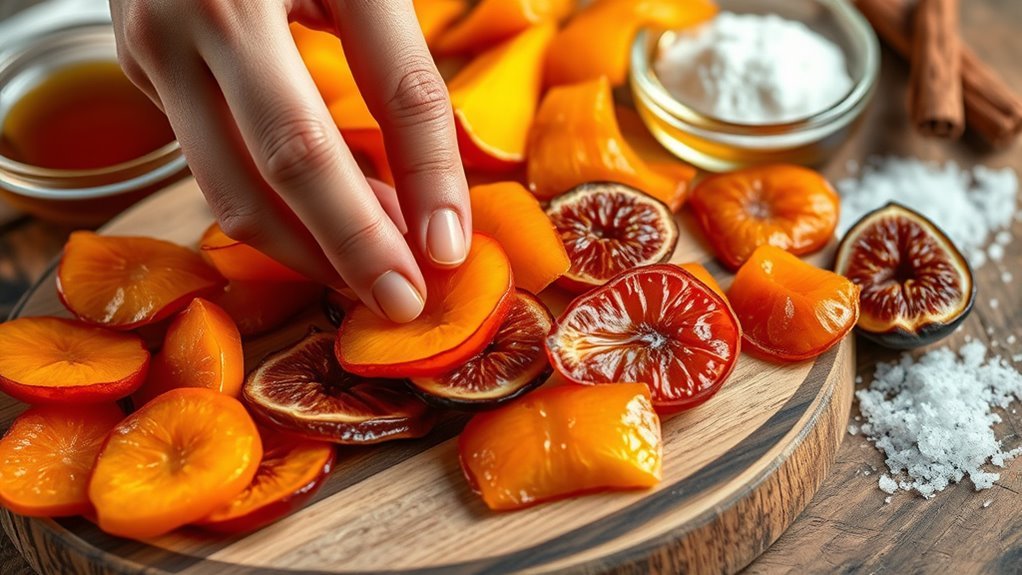
When making dried fruit candy, you’ll often start with fruits like raisins, apricots, and mangoes for natural sweetness and energy.
Adding nuts or shredded coconut gives your candy a satisfying crunch and extra nutrition.
To bring it all together, sweeteners like honey and binders like orange juice help enhance flavor and texture.
Typical Fruit Selections
Because dried fruit candy relies heavily on natural sweetness, you’ll often find ingredients like raisins, apricots, figs, and dates featured prominently. These fruits bring rich flavors and essential nutrients, making your candy both tasty and wholesome. You might also see chopped dried apricots, which add a delightful chewiness and vibrant color. Alongside these, dried fruit and nuts combinations are popular, though nuts will be discussed later. Other fruits like cranberries and mangoes can introduce a sweet-tart twist while boosting vitamins A and C. The drying process concentrates sugars, so these fruits naturally sweeten your candy without extra additives. Plus, their extended shelf life means you can store and use them anytime, perfect for crafting your homemade dried fruit candy treats.
Nut and Coconut Additions
If you want to add crunch and richness to your dried fruit candy, nuts like almonds, cashews, and pistachios are excellent choices. These nuts not only boost flavor but also provide a satisfying texture contrast to the chewy dried fruits. Incorporating nuts and coconut into your dried fruit candy elevates the taste profile with a tropical twist from shredded coconut, which adds a chewy texture that complements sweetness. Beyond flavor, this combination creates a nutrient-dense snack packed with protein, healthy fats, and dietary fiber. Keep in mind, the nuts and coconut also increase the calorie content, making your dried fruit candy more energy-rich. Using these ingredients thoughtfully can help you craft a delicious, balanced treat that’s both tasty and nourishing.
Sweeteners and Binders
Adding nuts and coconut brings texture and flavor, but sweeteners and binders play a key role in holding your dried fruit candy together and enhancing its taste. You can use natural sweeteners like honey, maple syrup, or agave nectar to add natural sweetness while keeping your candy sweet and chewy. Binders such as almond butter, peanut butter, or coconut oil help stick the ingredients together without making the candy too sticky or dry. Dates are a versatile choice, acting as both a natural sweetener and binder. Balancing these ingredients lets you create delicious, healthier dried fruit candies with unique flavors.
| Sweetener | Binder | Role |
|---|---|---|
| Honey | Almond Butter | Adds sweetness & binds |
| Maple Syrup | Peanut Butter | Enhances flavor & texture |
| Agave Nectar | Coconut Oil | Natural sweetness & cohesion |
| Dates | – | Sweetness & moisture binder |
| Experimentation | Combination Use | Unique flavor and texture |
Traditional and Modern Preparation Techniques
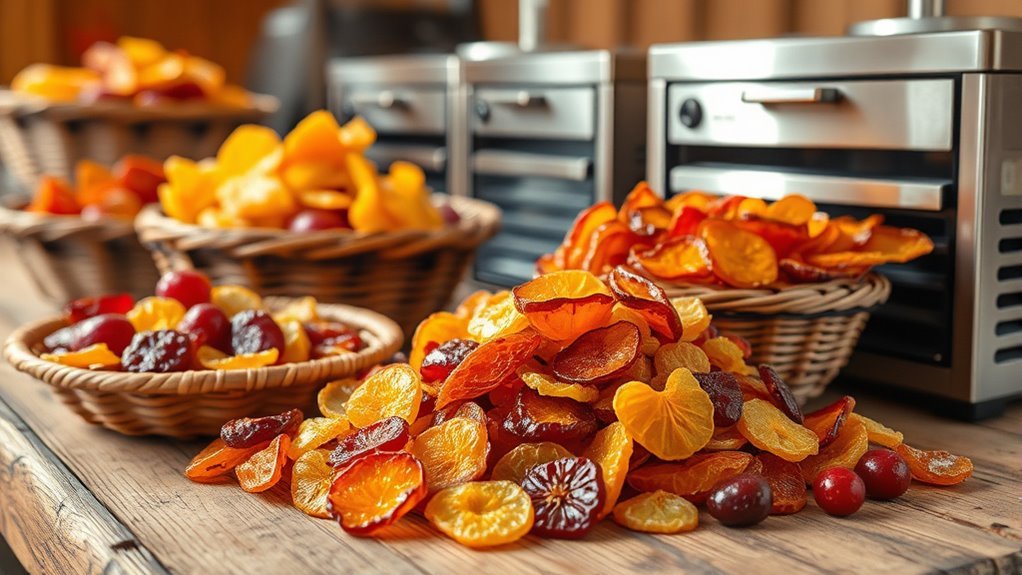
You’ll start with classic recipe basics, combining dried fruits and nuts by hand or with a food processor to speed things up.
Pay close attention to the mixture’s consistency, adjusting it with ingredients like orange juice as needed.
Then, shape your candy into bars, squares, or balls before rolling them in sugar or coconut for extra flavor.
Classic Recipe Basics
Although dried fruit candy blends simple ingredients like dried fruits, nuts, and sometimes shredded coconut, the preparation methods offer room for creativity. When making fruit candies, you start by chopping everything finely until the mixture sticks together. Then, you shape it using traditional or modern methods. Here’s what you can do:
- Press the mixture into a loaf pan or form squares and balls by hand for a rustic touch
- Use molds for uniform shapes and easier portioning in modern kitchens
- Adjust texture and flavor by adding a splash of orange juice to the mix
Originating from a 1952 recipe in The Star Weekly, dried fruit candy offers a nostalgic yet versatile treat you can personalize by experimenting with various nuts and dried fruits.
Food Processor Usage
Harness the power of a food processor to speed up the preparation of dried fruit candy, chopping and blending ingredients into a smooth, uniform mixture in minutes. Using a food processor, you can finely chop dried fruit and nuts much faster than with traditional methods, saving you valuable time. To help the mixture bind, add a splash of liquid like orange juice while processing. This guarantees the candy holds together well without compromising flavor. The food processor also lets you experiment with various dried fruit and nut combinations, creating unique textures and tastes. Once processed, you can easily shape the mixture by hand into bars or balls. Overall, the food processor streamlines making dried fruit candy, making it accessible and fun for anyone wanting a quick, delicious treat.
Consistency and Shaping
Many dried fruit candy recipes depend on achieving the right consistency to guarantee the mixture holds together when shaped. You’ll find that processing dried fruits and nuts finely creates a sticky base perfect for shaping. If the mixture feels too dry, you can add a bit of orange juice or another liquid to improve consistency. For shaping, traditional methods have you hand-pressing the candy into loaf pans or forming squares and balls. Modern techniques often use molds for uniform shapes. To finish, consider rolling the candy in sugar or shredded coconut for extra texture and flavor. Key points to remember include:
- Adjusting moisture to perfect consistency
- Choosing between hand-shaping or molds
- Adding coatings for taste and appearance
Nutritional Benefits and Considerations
Since dried fruit candy packs a high concentration of natural sugars, it gives you quick energy boosts while delivering essential nutrients like vitamins A and C, potassium, and dietary fiber. These nutritional benefits make dried fruit candy a smarter snack choice compared to traditional sweets. The fiber content supports digestion and helps you feel full longer, which can assist with weight management. However, you should watch portion sizes, as calorie counts can rise considerably when nuts or chocolate are added. Although it’s a healthier alternative, dried fruit candy still contains high sugar levels, so moderation is key. Knowing these nutritional benefits and considerations helps you enjoy dried fruit candy as a tasty, nutrient-rich treat without overdoing it.
Popular Variations and Flavor Combinations
When you combine dried fruits with nuts and a touch of shredded coconut, you create a chewy, nutrient-packed candy that’s both satisfying and flavorful. You can explore popular variations by mixing different dried fruits and nuts to suit your taste. Try these combinations to enjoy diverse textures and flavors:
- Dried cranberries with pistachios and shredded coconut for a tart, crunchy bite.
- Dried mango paired with cashews and a light dusting of sugar for tropical sweetness.
- A blend of dried apricots, walnuts, and melted chocolate for a rich, indulgent treat.
Feel free to roll your candy in coconut or sugar to add texture, or drizzle with chocolate to enhance the natural sweetness of dried fruits. This flexibility lets you tailor your candy to your preferences perfectly.
Tips for Storage and Shelf Life
Although dried fruit candy is a delightful treat, you’ll want to store it properly to maintain its freshness and flavor. For the best shelf life, keep your candy in an airtight container at room temperature, where it can last up to two weeks. Refrigeration can extend freshness even further, especially if your recipe includes moisture-rich ingredients like orange juice. To maximize shelf life, consider omitting such ingredients and adjusting the amount of coconut, which helps with preservation. Since dried fruits lack moisture, they naturally have a longer shelf life, but proper storage is still essential. Experiment with ingredient ratios to find the balance that boosts both flavor and durability, ensuring your dried fruit candy stays delicious whenever you enjoy it.
Frequently Asked Questions
Is Dried Fruit Healthier Than Candy?
Yes, dried fruit is healthier than candy because it provides natural sugars, fiber, vitamins, and antioxidants.
You’ll avoid added sugars and artificial ingredients, which is a big plus.
This helps you maintain better digestion and steady energy without the blood sugar spikes from candy.
Why Is Regularly Eating Dried Fruit Not Recommended?
You shouldn’t eat dried fruit regularly because it’s high in concentrated sugars and calories.
This can spike your blood sugar and lead to overeating.
Moderation helps you avoid these risks while still enjoying its nutrients.
What’s the Big Deal About Freeze-Dried Candy?
You’ll love freeze-dried candy because it lasts up to five years without spoiling!
It keeps the original flavor and crunch, making it a tasty, long-lasting snack you can enjoy anytime without worry.
What Is the Healthiest Dried Fruit You Can Eat?
You’ll find apricots among the healthiest dried fruits since they’re packed with vitamin A, fiber, and potassium.
They support your eye health and digestion, making them a smart snack choice for overall wellness.
Conclusion
So, you’ve discovered dried fruit candy—because who wouldn’t want their fruit to masquerade as candy?
It’s basically fruit playing dress-up, sweetened and preserved to trick your taste buds. Sure, it’s got some nutrients, but don’t pretend it’s a health tonic.
Enjoy it, but remember: it’s fruit’s cheeky little cousin, not a miracle snack.
Store it well, or it’ll sulk in your pantry like forgotten candy royalty.
In conclusion, dried fruit candy is a delightful twist on traditional fruit. It combines sweetness with a bit of that fruity goodness, making it a fun snack. Just keep in mind, it’s not a health food, but rather a whimsical treat.
So, next time you reach for that bag of dried fruit candy, embrace the indulgence while savoring the unique flavors it offers!