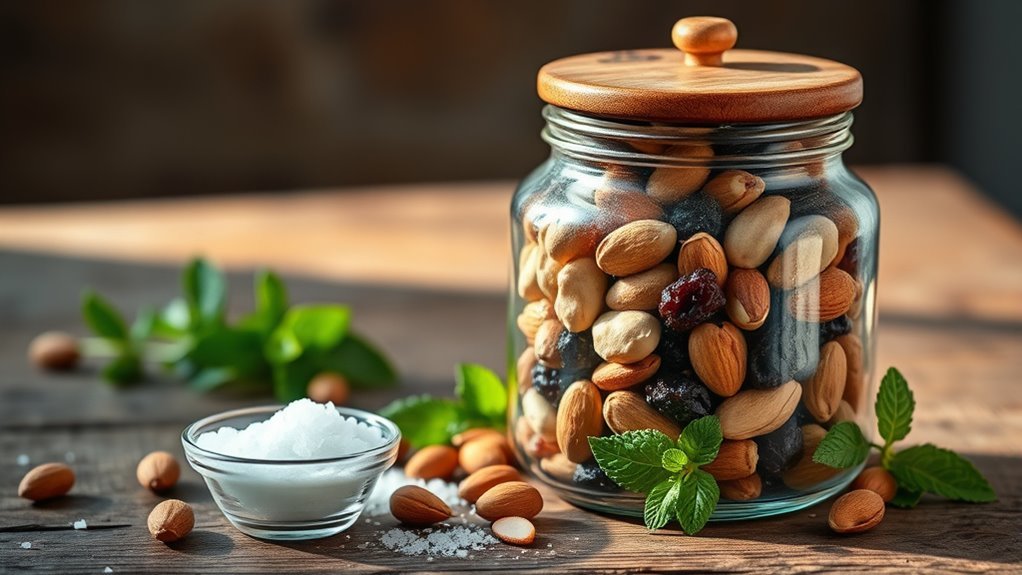
Tips to Preserve Dry Fruits for Long-lasting Freshness
To keep your dry fruits fresh longer, it’s essential to store them properly. Using airtight glass or BPA-free plastic containers is a great way to block moisture and air, which can lead to spoilage.
Make sure to keep these containers in a cool, dark place, ideally between 60°F and 70°F. If you live in a warmer area, refrigeration can be a good option to extend their shelf life.
Before storing, ensure that the fruits are clean and completely dry. It’s also helpful to label the containers with dates so you can easily track their freshness.
Regularly check your dry fruits for any signs of spoilage and rotate your stock, using the older ones first.
With these simple tips, you can significantly improve the quality and longevity of your dry fruits!
There’s always more to learn about keeping them fresh and delicious.
Key Takeaways
- Store dry fruits in clean, airtight containers made of glass or BPA-free plastic to prevent moisture and oxygen exposure.
- Keep dry fruits in a cool, dark place with temperatures between 60°F and 70°F to maintain freshness.
- Use vacuum-sealed bags or moisture-absorbing packets to extend shelf life and reduce spoilage risk.
- Portion dry fruits into smaller containers and label with purchase or drying dates for easy rotation and freshness tracking.
- Regularly inspect stored dry fruits for mold or spoilage and discard any compromised items promptly.
Choosing the Right Storage Containers
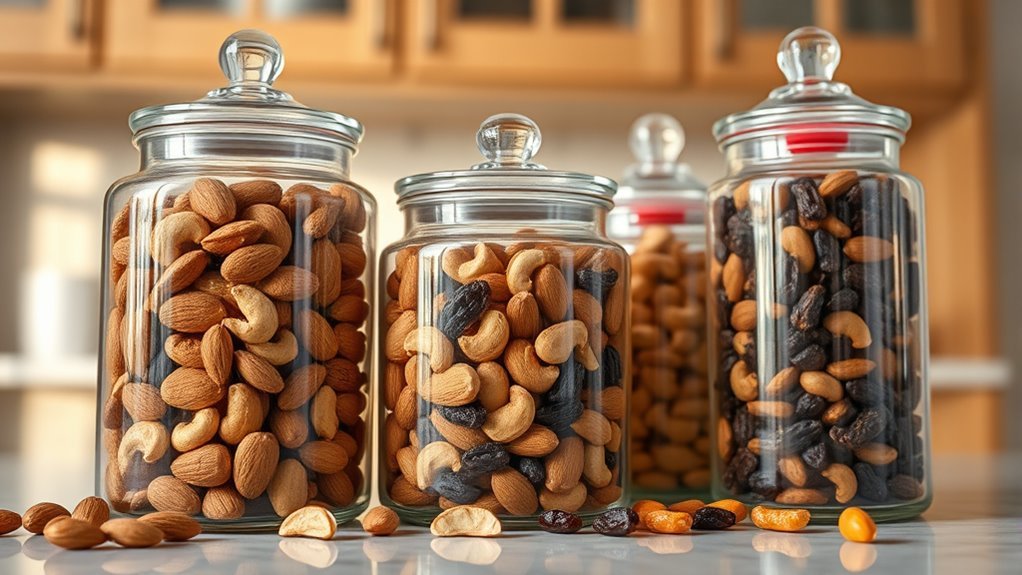
When you choose the right storage containers, you protect your dry fruits from moisture, oxygen, and light that can spoil their freshness. Use airtight containers made of glass jars or BPA-free plastic to keep air and moisture out. Make sure these containers are clean and completely dry before you fill them to prevent mold and spoilage. For longer storage, vacuum-sealed bags or jars work best because they minimize air exposure and extend shelf life. Opt for opaque containers or store your containers in dark places to shield dry fruits from light, which can degrade flavor and nutrients. Label your containers with purchase or expiration dates to keep track of freshness and rotate stock properly. Proper storage starts with the right container, so choose wisely to maintain your dry fruits’ quality.
Optimal Temperature and Light Conditions
To keep your dried fruits fresh, store them in a cool, dry place between 60°F and 70°F and away from direct light.
Light exposure can break down vitamins and oils, so use opaque containers to protect them.
Also, watch for temperature swings, as fluctuations can harm their quality over time.
Ideal Storage Temperatures
Although dried fruits can tolerate a range of temperatures, storing them at around 60°F (15°C) will help you keep their freshness for up to a year. Ideal storage temperatures prevent spoilage and help extend their shelf life. If you live in a warm or humid area, dried fruits are best stored in the fridge to avoid rancidity and maintain quality. Keep an eye on temperature fluctuations and opt for airtight containers to protect your snacks.
| Temperature Range | Expected Shelf Life |
|---|---|
| 60°F (15°C) | Up to 1 year |
| 80°F (27°C) | About 6 months |
| Refrigerated | Extended freshness |
| Room Temperature | Shorter shelf life |
Effects of Light Exposure
Since light exposure breaks down vitamins and alters flavor, you should store dried fruits in dark containers to preserve their quality. Ultraviolet (UV) rays accelerate spoilage by causing rancidity in oils and reducing nutritional value. To achieve ideal preservation, keep your dried fruits in opaque or dark-colored storage containers that shield them from harmful light exposure. Avoid placing them in direct sunlight or brightly lit areas, as this can cause moisture reabsorption, leading to mold growth and spoilage. Storing dried fruits in a cool, dark place not only protects their flavor and nutrients but also extends their shelf life. By controlling light exposure with proper containers, you guarantee your dried fruits stay fresh and delicious much longer.
Temperature Fluctuation Risks
When you store dried fruits, keeping the temperature steady between 60°F and 70°F is essential because fluctuations can cause condensation inside containers, leading to moisture buildup and mold growth. Temperature fluctuations also accelerate spoilage by affecting the fruit’s oils and vitamins. To follow Best Practices, guarantee your dried fruits are:
- Stored in a cool, dark place away from direct light to prevent degradation.
- Kept in airtight, opaque containers to minimize exposure to air and light.
- Monitored regularly to maintain a consistent environment and avoid temperature swings.
Avoid exposing dried fruits to heat spikes or cold drafts, as these changes encourage rancidity and mold. By controlling temperature fluctuations and light exposure, you’ll maximize freshness and shelf life effectively.
Preparing Dry Fruits Before Storage
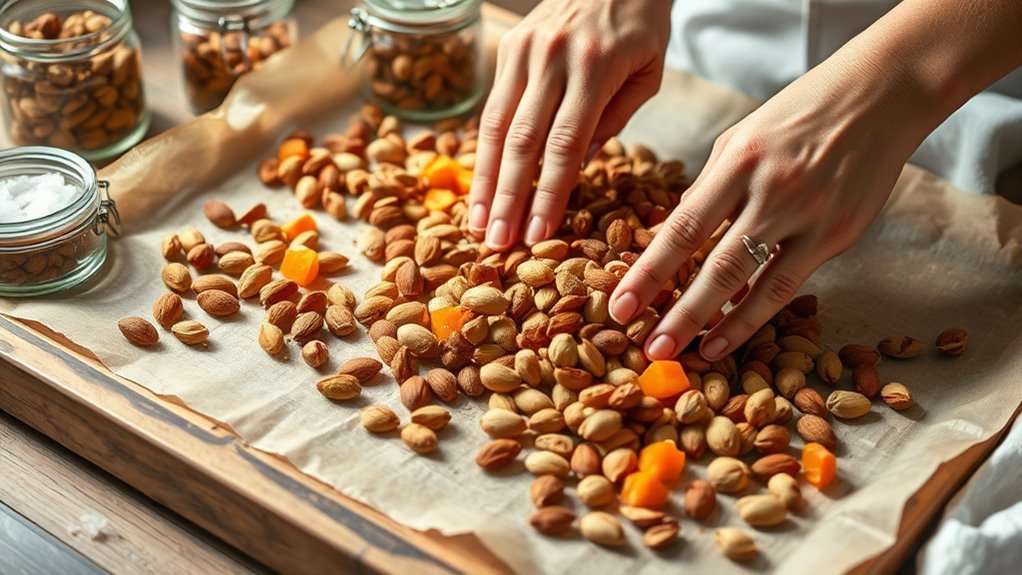
To preserve the quality of your dry fruits, make certain they’re completely cool before storing to prevent moisture buildup and mold. Start by cleaning your dry fruits thoroughly, removing any debris or broken pieces to reduce contamination risks. If you’ve washed them, dry the fruits completely before you store them to avoid excess moisture. Next, portion your dry fruits into smaller containers; this limits air exposure and helps maintain freshness. Be sure to use airtight containers to store your dry fruits securely. Don’t forget to label each container with the purchase or drying date. This way, you can track freshness and use your dry fruits before they lose quality. Proper preparation guarantees your dry fruits stay fresh longer and safe to enjoy.
Methods to Extend Shelf Life
To keep your dry fruits fresh longer, focus on storing them in airtight containers and choosing a cool, dark spot.
Controlling moisture is key, so consider using moisture-absorbing packets or silica gel inside your storage.
These simple methods help you preserve flavor and prevent spoilage effectively.
Optimal Storage Conditions
Although dried fruits are less perishable than fresh ones, you’ll want to store them properly to maintain their quality and extend their shelf life. Choosing the right place to store your dry fruits is crucial. Ideally, keep them in a cool, dark area away from direct sunlight rather than just at room temperature to avoid heat damage. Here’s how to optimize storage conditions:
- Use airtight containers, like glass jars or vacuum-sealed bags, to keep moisture out.
- Refrigerate dried fruits if you live in a hot or humid climate to prevent spoilage.
- Regularly inspect your dried fruits for any signs of mold or moisture and discard spoiled pieces immediately.
Following these tips guarantees your dry fruits stay fresh and tasty much longer.
Moisture Control Techniques
Three key moisture control techniques can help you extend the shelf life of your dry fruits by preventing spoilage and maintaining their quality. First, always store dried fruits in airtight containers, preferably glass, to minimize exposure to moisture and oxygen. Second, include moisture-absorbing packets or a piece of dry bread inside the containers to combat excess humidity and keep the fruits dry. Third, keep your containers in cool, dark places away from direct sunlight and heat, which can speed up moisture absorption and deterioration. Regularly check your stored dried fruits for any signs of moisture or spoilage, and reseal the containers tightly after each use. For even longer preservation, consider vacuum sealing to further reduce air exposure and maintain freshness.
Preventing Moisture and Pest Contamination
When you store dry fruits properly, you can keep moisture and pests at bay by using airtight containers. These containers create a sealed environment that prevents humidity and insects from spoiling your dry fruits. To enhance protection, consider these steps:
- Use moisture-absorbing packets or place dry bread inside glass containers to absorb excess moisture.
- Always choose airtight containers made of glass containers or food-safe plastic to maintain freshness.
- Store containers in a cool, dark place away from heat and sunlight, which attract pests and increase moisture levels.
Before storing, clean and dry your containers thoroughly to avoid introducing any moisture or contaminants. Regularly inspect your dry fruits to catch early signs of spoilage. With these simple habits, you’ll enjoy fresh and pest-free dry fruits for a long time.
Monitoring and Rotating Stored Dry Fruits
Keeping your dry fruits fresh goes beyond proper storage—it also means regularly checking and rotating them. Make it a habit to monitor stored dry fruits every three months, looking for moisture, spoilage, or pests. Use clear, airtight containers so you can easily spot any condensation or changes. Label each container with purchase or expiration dates to track freshness accurately. Apply a first-in, first-out (FIFO) approach by consuming older dry fruits before newer ones, preventing waste and ensuring you always enjoy fresh snacks. To further extend shelf life, consider dividing your dry fruits into smaller portions. This limits exposure to air and moisture whenever you open a container, keeping your dry fruits fresh and safe longer. Regular monitoring and rotation are key to maintaining quality.
Frequently Asked Questions
How to Keep Dry Fruits Fresh for a Long Time?
You should store dry fruits in airtight containers.
Keep them in a cool, dark place, and refrigerate if it’s humid.
Use moisture absorbers and check regularly for spoilage.
Also, avoid exposure to heat or light to keep them fresh longer.
Why Do Fruits Not Get Spoiled if Preserved After Drying Well?
You might think dried fruits spoil quickly, but they don’t because drying removes moisture that microbes need to grow.
Without water, spoilage slows, letting you enjoy their flavor and nutrition much longer than fresh fruits.
Is It Better to Store Nuts in Glass or Plastic?
You should store nuts in glass because it’s airtight, keeps moisture and odors out, and doesn’t leach chemicals.
Glass jars also let you check freshness easily and help nuts last longer than plastic containers.
Which Dried Fruit Has the Longest Shelf Life?
Dates have the longest shelf life among dried fruits, lasting up to 1-2 years thanks to their low moisture and natural preservatives.
Store them in airtight containers in a cool, dark place to keep them fresh longer.
Conclusion
You want your dry fruits to stay fresh, not shriveled or spoiled.
By choosing airtight containers and storing them in a cool, dark place, you’re protecting their natural crunch and flavor from moisture and pests.
Preparing them properly before storage contrasts with careless tossing into any jar.
Regularly checking and rotating your stash guarantees you enjoy their peak freshness.
This way, you turn what could be a forgotten heap into a vibrant, tasty treat every time.
To keep your dry fruits fresh for longer, remember to use airtight containers and find a cool, dark spot for storage.
Don’t forget to check your stash regularly and rotate the fruits to enjoy their best flavor and crunch.
With these simple steps, you’ll ensure that your dry fruits remain a delicious and healthy snack option for weeks to come!