How Do I Dry My Hair Without a Hair Dryer in 7 Steps?
How Do I Dry My Hair Without a Hair Dryer in 7 Steps?
Drying your hair without a hair dryer can be both gentle and effective. Whether you want to avoid heat damage or simply save time, these steps will help you achieve perfectly dried hair.
Start by gently squeezing excess water from your hair without twisting.
Next, wrap it in a microfiber towel to reduce frizz and speed up the drying process.
Use a wide-tooth comb to detangle softly, being careful to avoid breakage.
Applying leave-in conditioner can help smooth and protect your strands.
Air dry your hair in a well-ventilated spot with good airflow.
If you have natural curls, try plopping to enhance their shape and definition.
Finally, expose your hair to cool air or indirect sunlight for faster drying.
Keep going to discover more tips and tricks!
Key Takeaways
- Gently squeeze out excess water using hands and a microfiber towel without rubbing to reduce moisture and prevent damage.
- Detangle hair softly with a wide-tooth comb, starting from ends to roots to avoid breakage.
- Apply leave-in conditioner or curl-enhancing products evenly on damp hair before air drying or plopping.
- Dry hair in a well-ventilated, shaded area with good airflow, using fans or natural breeze to speed evaporation.
- Flip or tilt hair occasionally to expose different sections to air and promote even, natural drying without heat.
Start By Gently Squeezing Out Excess Water

Before you move on to drying your hair, start by gently squeezing out excess water with your hands. Avoid wringing or twisting, as that can cause breakage and frizz. Instead, cup sections of your hair and press downward to let the water drip naturally. Work from the roots to the tips, focusing on removing as much moisture as possible without rough handling. This step helps speed up drying time and reduces damage. Don’t use too much force—your hair is more fragile when wet. Once you’ve removed most of the water, your hair will feel lighter and less dripping, making it easier to style or air dry. Taking this simple step sets the foundation for healthier, smoother hair without needing heat.
Use a Microfiber Towel to Reduce Frizz and Speed Drying
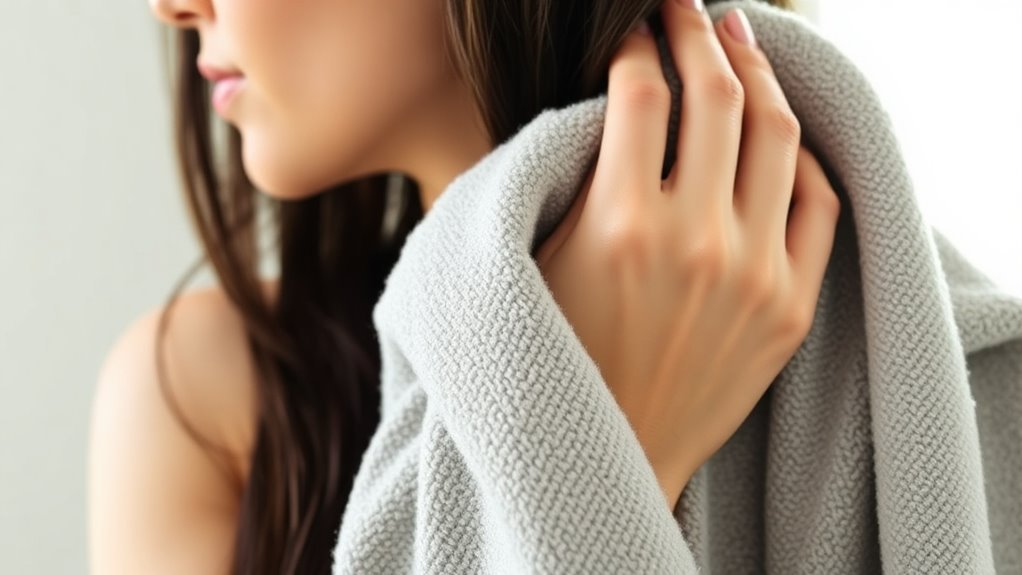
Using a microfiber towel can make a big difference in how quickly your hair dries and how much frizz you get. Unlike regular towels, microfiber gently absorbs water without roughing up your hair cuticles, which reduces breakage and frizz. To use it, wrap your hair in the microfiber towel and gently press or scrunch your hair to soak up excess moisture. Avoid rubbing, as this can cause tangles and damage.
| Benefit | Why It Helps |
|---|---|
| Faster drying | Absorbs water efficiently |
| Less frizz | Smooths hair cuticles |
| Gentle on hair | Minimizes friction and damage |
| Lightweight & soft | Comfortable to use and durable |
Switching to a microfiber towel is a simple step that protects your hair while speeding up drying.
Comb Your Hair Carefully to Detangle Without Damage
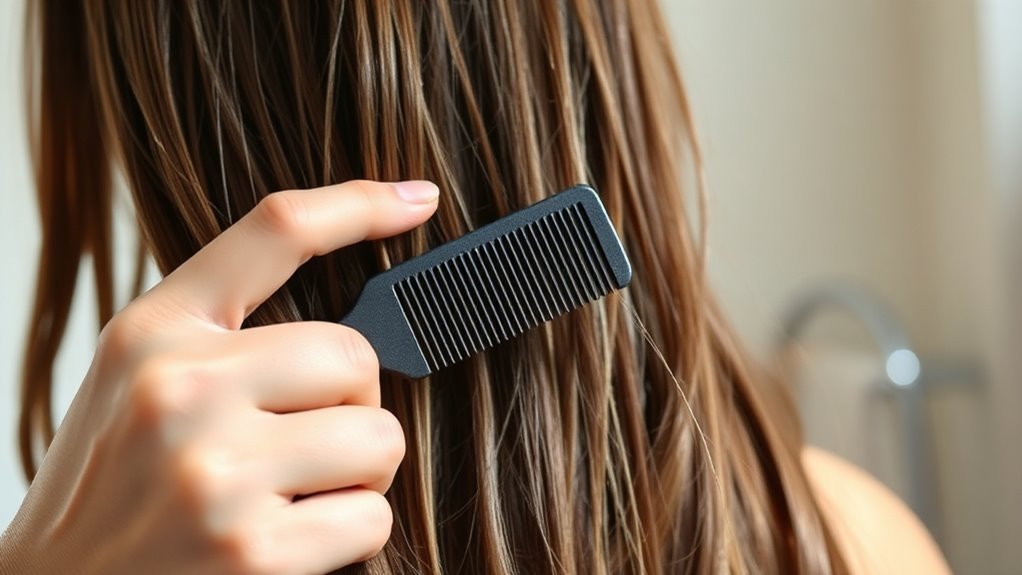
You’ll want to pick a wide-tooth comb to gently work through your hair.
Start detangling from the ends and slowly move upward to avoid breakage.
This careful approach helps keep your hair healthy while drying naturally.
Choose The Right Comb
Select a wide-tooth comb to gently work through your hair, minimizing breakage and split ends. Unlike fine-tooth combs, wide-tooth versions glide through wet hair without tugging. Choose one made from smooth materials like wood or plastic to reduce static and friction. Avoid metal combs, as they can snag and damage strands. Make sure the teeth are evenly spaced and rounded at the tips to prevent scalp irritation. Using the right comb helps you detangle softly, preserving your hair’s natural texture and moisture. Keep your comb clean by washing it regularly to avoid buildup. By selecting the proper comb, you set the foundation for healthier hair that dries naturally with less damage and frizz.
Detangle From Hair Ends
Start by gently working through your hair from the ends upward to prevent unnecessary breakage. When your hair is wet, it’s more fragile, so avoid pulling or tugging harshly. Use a wide-tooth comb or a detangling brush designed for wet hair. Focus on small sections, slowly unraveling knots instead of forcing them apart. If you hit a stubborn tangle, hold the hair above it to reduce tension and carefully work through it. Detangling from the ends helps stop damage and split ends, keeping your hair healthier and smoother. Taking your time with this step minimizes breakage and makes drying without a hair dryer easier since your hair won’t be tangled or messy.
Apply Leave-In Conditioner to Smooth Hair and Aid Drying
Applying a leave-in conditioner helps smooth your hair while speeding up the drying process. After detangling, evenly distribute a small amount of leave-in conditioner through your damp hair, focusing on the mid-lengths and ends where dryness and frizz are common. This product adds moisture and reduces flyaways, making your hair more manageable. It also creates a light barrier that helps seal in hydration, so your hair dries healthier and shinier. Avoid applying too much, as it can weigh your hair down and slow drying. Use your fingers or a wide-tooth comb to guarantee even coverage. This step not only improves texture but also protects your strands from damage while you air dry, setting a good foundation for smooth, soft hair without heat.
Air Dry Your Hair in a Well-Ventilated Spot
Choose a spot with plenty of open air to help your hair dry faster.
Make sure there’s good airflow around you to speed up the process.
Avoid humid areas, since moisture in the air can slow drying and leave your hair feeling damp longer.
Choose Open Air Spaces
When you air dry your hair, picking a well-ventilated spot can speed up the process and keep your strands fresh. Choose open air spaces like a balcony, patio, or near an open window where fresh air circulates freely. Avoid cramped or stuffy rooms where moisture lingers and slows drying. Fresh air helps evaporate water quickly, reducing dampness that can cause scalp discomfort or odor. If you’re indoors, find a spot with ample room around you to let your hair breathe. Open air spaces also prevent your hair from absorbing indoor humidity, which can make it feel heavy or sticky. By selecting a breezy, open location, you’ll dry your hair efficiently and maintain its natural texture without relying on heat.
Maximize Natural Airflow
Finding an open air space sets the stage for maximizing natural airflow around your hair. Once you’re in a well-ventilated spot, position yourself so the breeze can flow freely through your strands. You can stand near an open window, door, or even outdoors on a gentle day. Tilt your head from side to side or flip your hair occasionally to expose different sections to the air. This encourages faster evaporation of moisture without heat damage. Avoid crowded or stuffy rooms where air circulation is limited, as stagnant air slows drying. Remember, the more air movement around your hair, the quicker it dries naturally. By making airflow your drying partner, you’ll keep your hair healthy and fresh without reaching for a hair dryer.
Avoid Humid Environments
Although it might seem tempting to air dry your hair in a cozy, warm bathroom, humid environments actually slow down the drying process. When the air is already saturated with moisture, your hair struggles to release water, leaving it damp for longer. Instead, choose a well-ventilated spot with lower humidity levels. Open a window or head outdoors where the air can circulate freely around your hair. This helps moisture evaporate faster, speeding up drying time naturally. If you can’t get outside, a room with a fan or air conditioner works well too. By avoiding humid spaces, you’ll cut down on drying time and reduce the risk of frizz caused by excess moisture lingering in your hair.
Use Plopping to Define Your Natural Waves and Curls
If you want to enhance your natural waves and curls without heat, plopping offers a gentle and effective method. After washing your hair, apply your favorite curl-enhancing product while it’s still wet. Lay a soft, breathable cotton t-shirt or microfiber towel flat on a surface. Flip your head over and carefully lower your curls onto the center of the fabric, then wrap the sides around your head, securing it snugly. This technique helps absorb excess water and encourages your curls to form without frizz. Leave your hair wrapped for 15 to 30 minutes or until it feels damp but not wet. When you unwrap, your curls will be more defined and less prone to frizz. Plopping lets you skip heat while boosting your natural texture effortlessly.
Speed Dry Your Hair With Cool Air or Sunlight Safely
Speeding up your hair drying process without heat is easier than you might think. Using cool air or sunlight can safely speed up drying while protecting your hair from damage. Here’s how to do it effectively:
- Choose a shaded spot outdoors to avoid direct sun exposure, which can dry out your hair and scalp.
- Use a fan or natural breeze indoors or outside to circulate cool air around your damp hair.
- Comb your hair gently to separate strands and let air flow through, speeding evaporation.
- Wear a wide-brimmed hat if you’re in sunlight for long, to shield your scalp while still allowing hair to dry.
These simple steps let you dry your hair faster without risking heat damage or dryness.
Frequently Asked Questions
Can I Use a Regular Towel Instead of a Microfiber Towel?
Yes, you can use a regular towel, but it might cause more friction and frizz compared to a microfiber towel.
To protect your hair, gently squeeze out water instead of rubbing.
Avoid rough towel-drying techniques.
How Long Does Air Drying Usually Take for Thick Hair?
Air drying thick hair usually takes two to four hours.
But that slow pace lets your natural texture shine, unlike quick drying that might damage it.
You’ll appreciate the patience when your hair feels healthier and softer.
Is It Safe to Sleep With Damp Hair?
It’s generally safe to sleep with damp hair, but it might cause scalp irritation or a mildew smell.
To avoid issues, loosely braid your hair or use a silk pillowcase.
This can help reduce friction and keep your scalp comfortable.
Can Natural Oils Help Speed up Hair Drying?
Yes, natural oils can help speed up drying by reducing water retention on your hair strands.
Just apply a small amount, and they’ll help repel moisture.
This way, your hair dries faster while still keeping it soft and shiny.
Does the Water Temperature Affect Drying Time?
Water temperature is like a traffic light for drying—warm water greenlights faster evaporation, while cold water slows it down.
Conclusion
Drying your hair without a dryer can be just as effective and healthier for your strands.
Did you know that using a microfiber towel can reduce drying time by up to 50% compared to regular towels?
By gently squeezing out water and detangling carefully, you’ll protect your hair from heat damage.
Air drying in a ventilated space is also key to maintaining your hair’s health.
Try plopping to enhance your natural waves, and you’ll enjoy softer, shinier hair without the hassle of a blow dryer.
In conclusion, drying your hair without a hair dryer not only saves time but also promotes healthier hair.
Utilizing a microfiber towel, air drying, and techniques like plopping can significantly improve your hair’s texture and shine.
So, embrace these methods for a more natural drying experience and say goodbye to heat damage!