7 Steps to Dry Hair Fast Without a Hair Dryer
7 Steps to Dry Hair Fast Without a Hair Dryer
Want to dry your hair quickly without a hair dryer? You’re in the right place!
Start by squeezing out excess water with a microfiber towel or an old cotton T-shirt. This helps reduce moisture while preventing frizz.
Next, plop your hair by wrapping it in a soft fabric. This technique absorbs water quickly and efficiently.
Now, apply a lightweight leave-in conditioner. This will help speed up the drying process.
Gently comb your hair with a wide-tooth comb to detangle.
Position yourself near a fan or an open window for good airflow.
Lastly, finish drying naturally. You can use sunlight or warm towels to help.
Follow these simple steps, and you’ll discover even more effective drying tips!
Key Takeaways
- Squeeze excess water gently using a microfiber towel or old cotton T-shirt, avoiding rubbing to reduce frizz and damage.
- Apply a lightweight, fast-drying leave-in conditioner or serum focused on mid-lengths and ends to speed up drying.
- Use hands-free wrapping or plopping with a soft cotton T-shirt or microfiber towel for 15–30 minutes to absorb moisture efficiently.
- Position yourself near a fan or open window, tilting your head to expose roots and increase airflow for faster evaporation.
- Finish drying by gently blotting with towels, using sunlight exposure, and keeping hair loose to maximize air circulation and minimize dampness.
Prep Your Hair to Soak Up Water Faster
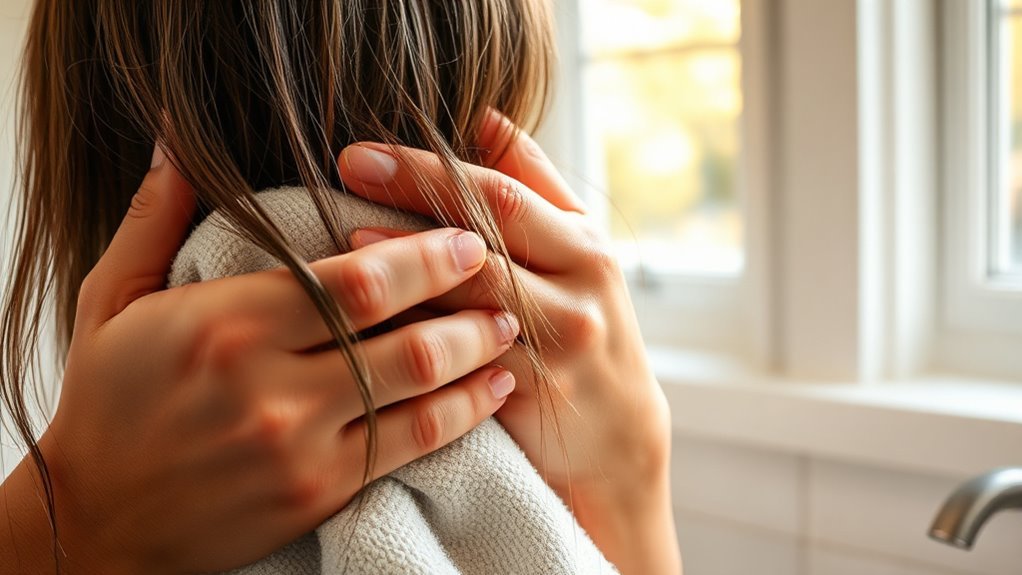
Start by gently squeezing your hair with a microfiber towel or an old cotton T-shirt to absorb excess water without causing frizz or damage. Next, apply a lightweight, water-absorbing leave-in conditioner or a hair serum designed to speed up drying. These products help break down water molecules, allowing your hair to release moisture faster. Comb through your hair gently with a wide-tooth comb to detangle and evenly distribute the product. Avoid rubbing or rough handling, which can cause breakage. If your hair is thick, section it into smaller parts to help water escape more quickly. By prepping your hair with these steps, you set the stage for quicker drying, reducing the time your hair stays damp and vulnerable to damage or discomfort.
Blot Hair Dry With a Microfiber Towel or T-Shirt
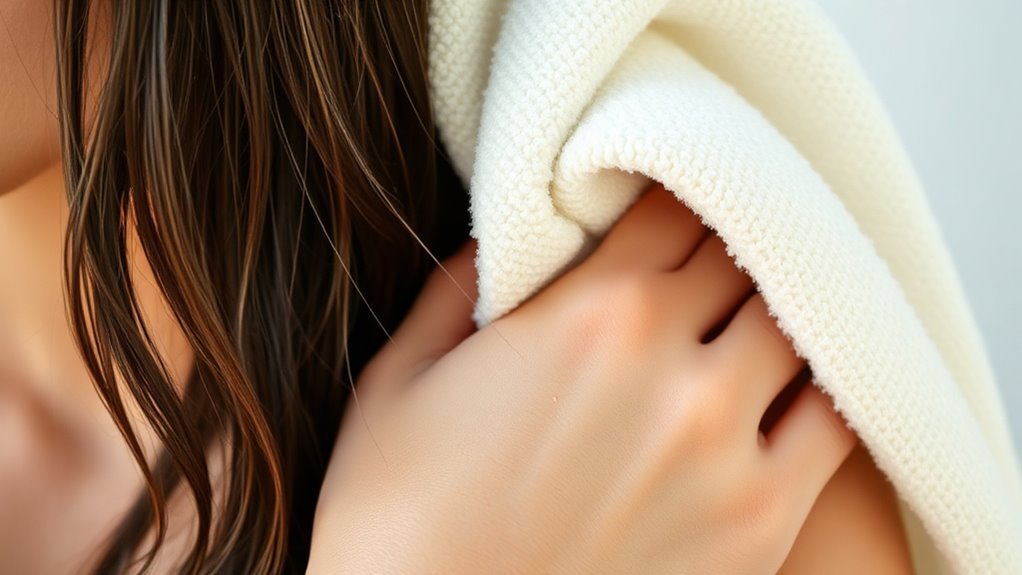
Grab a microfiber towel or an old cotton T-shirt and gently blot your hair to remove excess water. Unlike regular towels, these materials reduce friction, preventing frizz and breakage. Avoid rubbing, which can damage your strands and extend drying time. Instead, press the fabric softly against your hair to absorb moisture efficiently.
| Material | Absorbency | Hair-Friendly |
|---|---|---|
| Microfiber Towel | High | Yes |
| Cotton T-Shirt | Medium | Yes |
| Regular Towel | High | No |
Using the right fabric helps speed up drying while keeping your hair smooth. Keep blotting in sections to target wet spots, and you’ll notice your hair drying faster without any harsh damage.
Plop Hair to Remove Excess Water Quickly
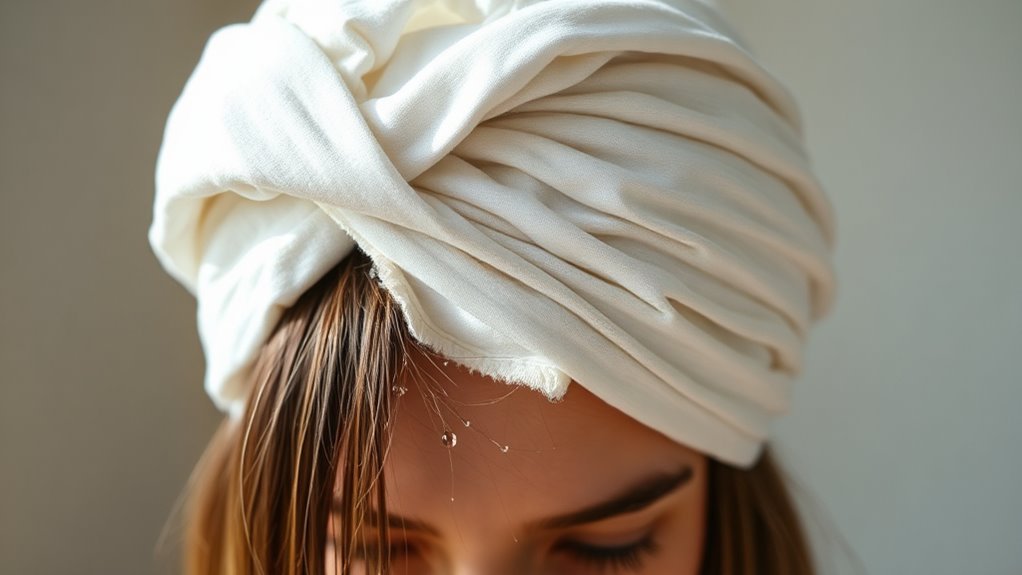
You can speed up drying by plopping your hair, which helps remove excess water without roughing up your strands.
To plop correctly, wrap your damp hair in a soft cotton T-shirt or microfiber towel and secure it on top of your head.
This method not only cuts drying time but also reduces frizz and protects your hair’s natural texture.
Benefits of Hair Plopping
Plopping hair helps you remove excess water quickly without causing frizz or damage. By gently wrapping your hair in a soft cloth or t-shirt, you reduce the need for vigorous towel drying, which can roughen the hair cuticle and lead to breakage. This method preserves your natural curl pattern and keeps your strands smooth. Plopping also speeds up drying time by absorbing moisture efficiently while minimizing friction. You’ll find your hair feels lighter and less weighed down compared to traditional drying methods. Plus, plopping is a low-effort, hands-free technique that lets you go about your routine while your hair dries. Overall, it’s a gentle, effective way to manage damp hair, promoting healthier, shinier locks without the heat of a dryer.
How To Plop Correctly
Mastering the technique of plopping correctly can dramatically speed up drying while protecting your hair’s natural texture. Start by washing and conditioning your hair as usual. Next, lay a clean, soft cotton T-shirt or microfiber towel flat on a surface. Flip your wet hair forward and gently lower it onto the center of the fabric, letting your curls or waves coil naturally. Then, gather the edges of the cloth around your head and twist them to secure the hair in place. Finally, tie or tuck the ends at the nape of your neck. Leave your hair plopped for 15 to 30 minutes to absorb excess water without causing frizz or damage. This method helps you skip the heat while drying efficiently.
Apply Lightweight Leave-In Products to Speed Drying
Apply lightweight leave-in products immediately after washing to help your hair dry faster without heat. These products wick moisture away while preventing frizz and adding shine. Choose formulas labeled “lightweight” or “fast-drying” so they don’t weigh your hair down or leave it sticky. Apply a small amount evenly through your damp strands, focusing on mid-lengths and ends where moisture lingers. Avoid the roots to keep your hair from looking greasy. Ingredients like aloe vera, glycerin, or silk proteins boost moisture absorption and speed evaporation. Using these products not only speeds drying but also protects your hair from damage and keeps it soft. Incorporate a leave-in treatment into your routine, and you’ll notice your hair drying naturally in less time—no heat needed.
Comb Hair Gently to Separate Strands and Air Dry Faster
Gently comb your hair right after applying leave-in products to help separate the strands and speed up air drying. Using a wide-tooth comb, start from the ends and work your way up to avoid breakage. This separation allows more air to circulate between strands, reducing drying time. Avoid rough combing, which can cause frizz and damage.
Here’s a simple guide to combing your hair gently:
| Step | Action |
|---|---|
| 1. Choose comb | Use a wide-tooth comb |
| 2. Start combing | Begin at hair ends |
| 3. Work upward | Gradually move toward roots |
| 4. Separate | make certain strands aren’t clumped |
Following these steps helps your hair dry faster and stay smooth without heat.
Create Airflow to Dry Hair Faster Near a Fan or Window
Place yourself near a fan or open window to let the breeze speed up drying.
You can boost airflow by gently moving your hair or using a small handheld fan.
Positioning yourself correctly makes a big difference in how quickly your hair dries.
Positioning for Optimal Airflow
By positioning yourself near a fan or an open window, you can speed up the drying process by maximizing airflow around your hair. To make the most of this, follow these simple steps:
- Face the airflow: Turn your head so your hair is directly exposed to the breeze, allowing air to reach all layers evenly.
- Tilt your head: Lean your head forward or to the side to expose the roots and underside of your hair, where moisture tends to linger.
- Avoid blocking airflow: Keep your hair loose and avoid covering it with towels or hats, which can trap moisture and slow drying.
These positioning tactics help air circulate better, drying your hair faster without heat or damage.
Enhancing Air Circulation Techniques
Maximizing airflow around your hair is only the first step; you can also boost circulation with a few simple techniques to speed up drying near a fan or window. Try gently flipping your hair from side to side or lifting sections to expose more strands to the moving air. This increases the surface area that air touches, helping moisture evaporate faster. If you’re near a window, open it to create a cross breeze, which enhances airflow compared to a single direction. Position yourself so the wind hits your hair directly. Avoid sitting still; small movements while seated can break up stagnant air pockets around your hair. These simple adjustments work together, turning passive drying into an active process that cuts down drying time without heat.
Finish Drying Naturally With Sunlight or Warm Towels
After towel-drying your hair, let sunlight gently finish the drying process by allowing its warmth to evaporate any remaining moisture. Sunlight not only speeds up drying but also leaves your hair feeling fresh and naturally vibrant. Alternatively, warm towels can provide a cozy method to absorb moisture without harsh heat.
Here’s how to finish drying effectively:
- Step outside or sit near a sunny window to let natural light work on your damp hair.
- Wrap your hair gently with a warm, dry towel for a few minutes, pressing to soak up excess water.
- Repeat towel pressing or sunlight exposure as needed until your hair feels dry to the touch.
This combo helps you avoid heat damage while drying hair efficiently and comfortably.
Frequently Asked Questions
Can Drying Hair Fast Prevent Frizz?
Yes, drying your hair fast can help prevent frizz because it reduces the time hair stays wet and vulnerable to humidity.
Just don’t rub harshly—pat gently and use microfiber towels to keep frizz at bay effectively.
This way, you can maintain smoother strands and a sleeker look!
Is Towel-Drying Harmful to Hair Health?
You might think towel-drying harms your hair, but if you’re gentle, it won’t.
Just avoid rough rubbing—pat or squeeze instead to prevent breakage and frizz.
Treat your strands carefully, and your hair stays healthy.
How Often Should I Wash My Hair for Quick Drying?
You should wash your hair every 2-3 days to avoid excess moisture buildup, which slows drying.
Overwashing can strip oils, making hair frizzy and harder to dry quickly.
Do Hair Types Affect Drying Time Without a Dryer?
Think of your hair like a sponge—curly hair holds more water, so it takes longer to dry than straight hair.
You’ll notice your drying time varies a lot depending on your hair’s texture and thickness.
Curly hair tends to be thicker and more porous, which means it retains moisture longer.
On the other hand, straight hair often dries faster because it doesn’t trap as much water.
Can Diet Impact How Quickly Hair Dries?
Yes, your diet can impact how quickly your hair dries.
When you eat nutrient-rich foods, your hair stays healthier and retains less moisture.
This helps it dry faster naturally without relying on external tools.
Conclusion
By following these steps, you’ll have your hair dry in no time—like, faster than you can binge-watch your favorite show!
Imagine stepping out with hair so dry and light, it feels like it’s been kissed by a gentle breeze on a sunny day.
No more soggy strands weighing you down or awkward waiting games.
You’ll breeze through your routine, looking fresh and fabulous without ever needing a hairdryer again!
In conclusion, drying your hair quickly without a hair dryer is totally achievable.
With just a few simple techniques, you can enjoy that light, airy feeling in your hair.
Say goodbye to the sogginess and hello to a routine that’s efficient and effective.
Embrace these methods and step out with confidence, knowing you can achieve fabulous results without the heat!