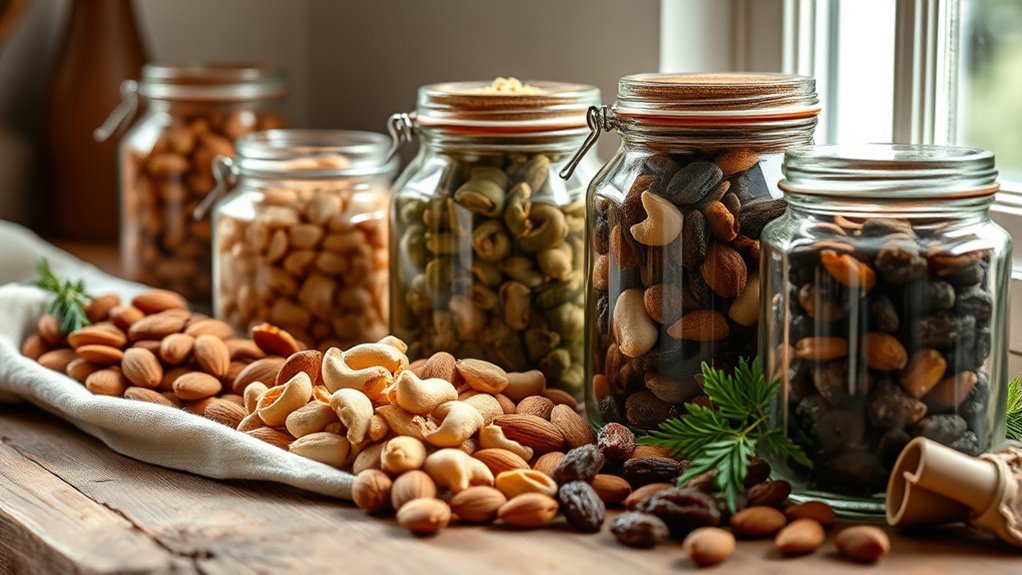
How to Store Dry Fruits for Maximum Freshness
To store dry fruits for maximum freshness, it’s important to take a few key steps. Using airtight glass containers is a great way to block out moisture and air, which are the main culprits in spoiling your tasty treats.
Make sure to keep these containers in a cool, dark spot away from sunlight and heat. Exposure to these elements can really diminish both the taste and nutrients of your dry fruits.
If you have high-oil nuts, consider refrigerating or freezing them in small vacuum-sealed portions. This can really help prolong their shelf life, allowing you to enjoy them for longer.
Also, don’t forget to use moisture absorbers and regularly rotate your stock. This practice can prevent mold and spoilage, ensuring that your dry fruits stay fresh and delicious for as long as possible.
Discover more tips to keep your dry fruits fresh and tasty longer!
Key Takeaways
- Store dry fruits in airtight glass containers to minimize moisture and oxygen exposure.
- Keep containers in a cool, dark place away from direct sunlight and heat.
- Refrigerate high-oil nuts like walnuts in airtight containers to prevent rancidity.
- Use moisture-absorbing packets or dry bread inside containers to control humidity.
- Rotate stock using the FIFO method and regularly inspect for off smells or mold.
Why Proper Storage Matters for Dry Fruits
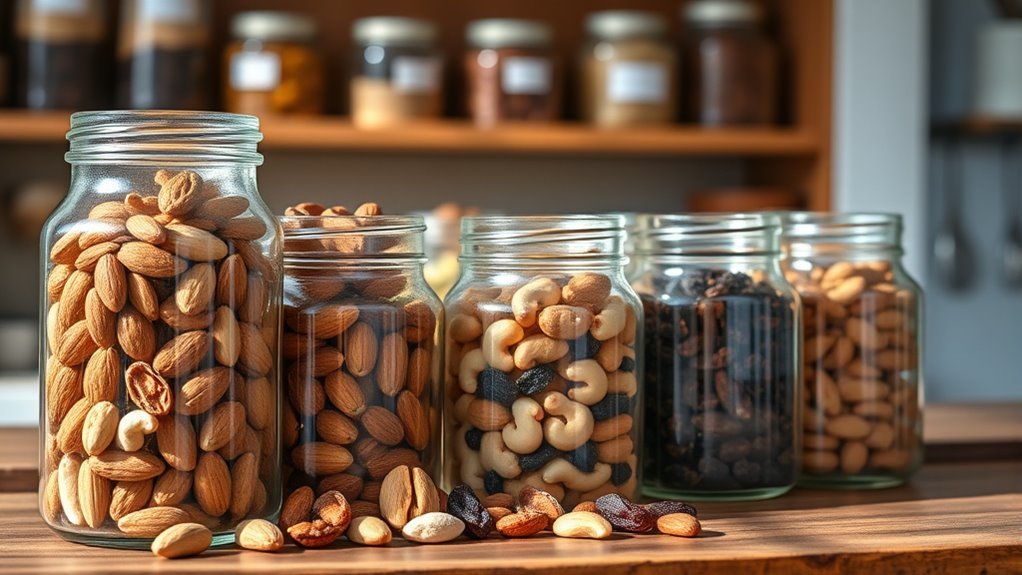
When you store dry fruits properly, you prevent moisture from causing spoilage and mold growth. Proper storage is essential because dried fruits have varying moisture content that can affect their freshness. If you mix high-moisture fruits with low-moisture nuts, moisture migration can lead to texture changes and spoilage. To extend their shelf life, keep your dry fruits stored in cool, dark places using airtight containers. This helps protect them from exposure to heat, light, and oxygen, which cause rancidity and nutrient loss. Make it a habit to conduct regular inspections for any off smells or visible mold, so you can catch spoilage early. By managing moisture and storage conditions carefully, you guarantee your dry fruits stay fresh and nutritious longer.
Ideal Storage Conditions for Dry Fruits
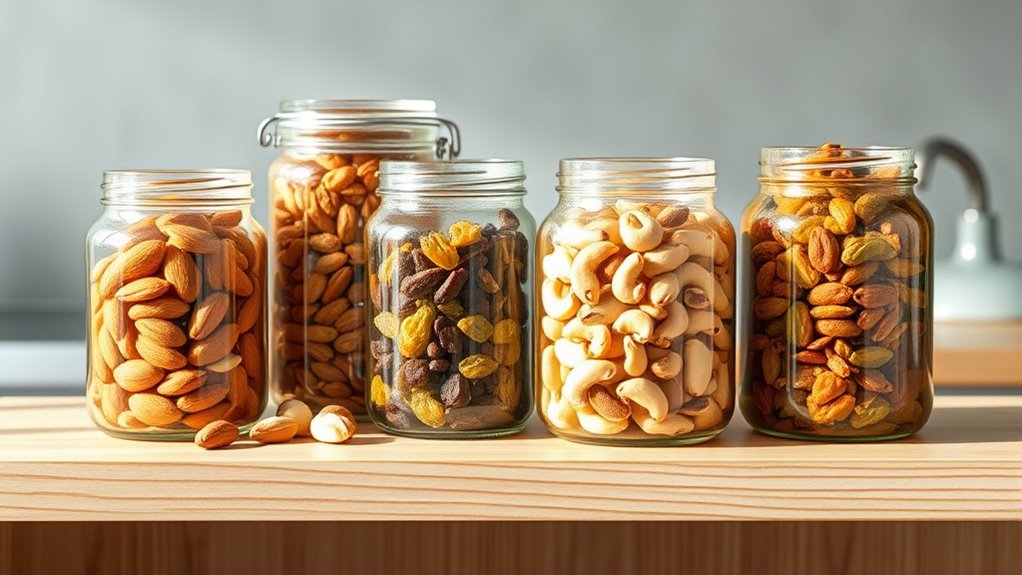
Although dry fruits are naturally preserved, you should still store them in a cool, dark place to maintain their vitamins and flavor. Keep your dry fruits away from direct sunlight and heat, as these can degrade both taste and nutrients. To keep them fresh, use airtight containers—glass ones work best—to minimize exposure to moisture and oxygen, which cause spoilage. If you’re dealing with nuts high in oil, like walnuts or cashews, refrigerate them to extend their shelf life, especially in warm or humid environments. For longer storage, freezing dry fruits can keep them fresh for up to 12 months. Always check your stored dry fruits regularly for any signs of moisture or off odors and discard anything that shows spoilage to guarantee your stash stays safe and tasty.
Best Containers for Preserving Freshness
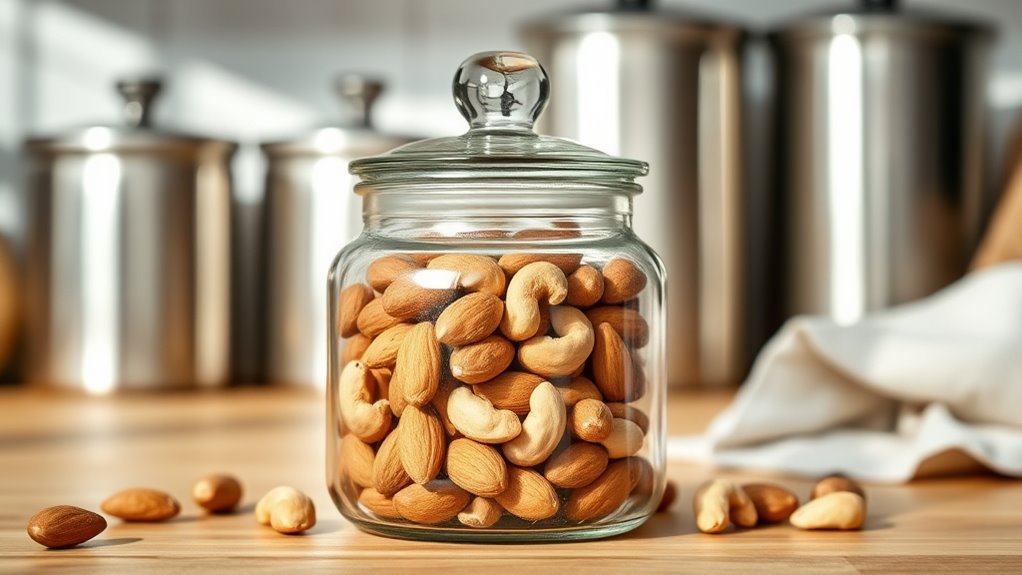
Storing dry fruits properly means choosing the right containers to keep them fresh and flavorful. Opt for airtight glass containers like borosilicate jars, which effectively block air and prevent moisture from spoiling your dry fruits. Wide-mouth jars are ideal because they make it easy to access your snacks while minimizing exposure to air each time you open them. To further preserve freshness, consider vacuum sealing small portions, reducing oxygen that causes rancidity. Avoid plastic bags as they often trap excess humidity, harming texture and taste. Adding moisture-absorbing packets or even dry bread inside your containers helps combat excess humidity and prevents mold growth. Using these storage methods guarantees your dry fruits stay fresh longer, maintaining their taste and quality.
Tips for Refrigerating and Freezing Dry Fruits
To keep your dry fruits fresh for up to a year, refrigerate them in airtight containers once they’ve fully cooled to prevent moisture buildup. When refrigerating dried fruits, add moisture-absorbing packets to control humidity levels and maintain maximum freshness. For freezing dried fruits, vacuum sealing small portions minimizes air exposure, preserving flavor and texture longer. Always label containers with dates when refrigerating or freezing dried fruits so you can track their freshness and use them within recommended times. Proper use of airtight containers and controlling humidity levels are key to extending shelf life. Following these tips helps you enjoy your dry fruits at their best, whether chilled or frozen, without compromising taste or quality.
Managing Moisture and Preventing Spoilage
When you manage moisture carefully, you can prevent spoilage and keep your dried fruits tasting fresh longer. Dried fruits tend to absorb moisture easily, which leads to mold and texture changes. Always store them in airtight containers to limit moisture absorption. Adding silica gel packets or dry bread inside these containers helps keep humidity low. Even if dried fruits are stored in the fridge, airtight packaging remains vital. Keep your containers in a cool, dark place away from heat and sunlight to maintain maximum freshness. Regularly check sealed jars for condensation; if you spot any, return the fruit to the dehydrator before resealing. These steps guarantee your dried fruits stay dry, flavorful, and free from spoilage, so you can enjoy them longer with minimal waste.
Handling and Rotating Your Dry Fruit Stock
To keep your dry fruits fresh, use the first-in, first-out method by consuming older stock before newer purchases.
Regularly check your containers for signs of spoilage and rotate partially used dry fruits into smaller, airtight containers.
Label each batch with dates to help you manage your stock efficiently.
And don’t forget to adjust storage based on your local climate!
Stock Rotation Techniques
Three simple steps can help you handle and rotate your dry fruit stock effectively. To store dry fruits properly, you’ll want to implement reliable stock rotation techniques that keep your dried goods fresh and minimize waste. Start by using the FIFO system—always consume older stock before newer purchases. Next, label your containers with purchase or expiration dates, and separate your dry fruits into smaller containers to promote quicker use of older supplies. Finally, regularly inspect stored dry fruits every three months to monitor for spoilage or moisture. To summarize:
- Use the FIFO system and check expiration dates frequently
- Label and separate containers for easy identification and use
- Inspect stored dry fruits to monitor for spoilage and maintain freshness
Following these steps helps you keep your dried fruits fresh and ready to enjoy.
Proper Handling Practices
Maintaining the quality of your dry fruit stock goes beyond rotation techniques; proper handling plays a key role in preserving freshness and preventing spoilage. Always handle dry fruits with clean and completely dry hands or utensils to avoid introducing moisture or contaminants. Store them in airtight containers like glass jars to limit air exposure, which dry fruits contain that causes oxidation. Label each jar with purchase or expiration dates and place them on a cool, dry shelf. Following storage tips such as regularly inspecting for moisture, odor changes, or pests guarantees fruits fresh longer. Employ best practices by rotating stock using the FIFO method, consuming older items first. These steps help you maintain a clean, organized, and fresh dry fruit stock, maximizing shelf life and quality.
Frequently Asked Questions
How to Keep Dry Fruits Fresh for a Long Time?
You should store dry fruits in airtight glass containers.
Keep them cool and dark.
Refrigerate high-moisture types to maintain their freshness.
Use moisture absorbers to prevent spoilage.
And don’t forget to regularly check for spoilage to extend their shelf life effectively!
Is It Better to Store Nuts in Glass or Plastic?
You should store nuts in glass containers because they’re airtight, non-porous, and resist temperature changes.
Glass keeps nuts fresher longer by preventing moisture and odors.
Unlike plastic, which can trap moisture and cause spoilage.
Which Dried Fruit Has the Longest Shelf Life?
When it comes to shelf life, dates take the cake—they can last up to 2 years if you store them right.
Keep them cool and dry, and you’ll have a sweet treasure that won’t spoil quickly.
Why Do Fruits Not Get Spoiled if Preserved After Drying Well?
Fruits don’t spoil after drying well because you remove moisture, stopping mold and bacteria growth.
Without water, enzymes can’t cause damage.
Conclusion
Properly storing your dry fruits can extend their freshness by up to 12 months, saving you money and reducing waste.
By keeping them in airtight containers and controlling moisture, you’ll preserve their flavor and nutrients.
If needed, refrigerating or freezing can also help maintain their quality.
Remember to rotate your stock regularly to enjoy the best quality.
With these simple steps, you’ll always have delicious, fresh dry fruits ready for snacking or cooking.
In conclusion, take the time to store your dry fruits the right way.
Using airtight containers and managing moisture will ensure they stay fresh and flavorful.
Make it a habit to check and rotate your stock.
These practices will not only save you money but also elevate your snacks and meals with nutrient-rich dry fruits!