Do Alloy Necklaces Rust
Alloy necklaces usually don’t rust because they typically don’t contain iron, the metal that rusts.
However, they can still tarnish or corrode, especially if they have copper or nickel and you expose them to moisture, sweat, or chemicals.
You can keep them looking great by storing them in dry places and cleaning them regularly.
If you want to learn how to protect your jewelry more effectively and extend its shine, there’s more helpful info ahead.
Key Takeaways
- Alloy necklaces usually do not rust because they lack iron, which is essential for rust formation.
- They can tarnish or corrode due to exposure to moisture, sweat, and chemicals instead of forming rust.
- High copper content alloys may develop a green patina, not rust, as a form of surface corrosion.
- Proper storage in dry, airtight containers and regular cleaning prevent corrosion and maintain necklace appearance.
- Removing necklaces before swimming or exercising reduces moisture exposure, minimizing the risk of tarnish or corrosion.
What Are Alloy Necklaces Made Of
Although alloy necklaces come in various types, they all share a common trait: they’re made by blending different metals like copper, zinc, nickel, and sometimes silver or gold to boost strength and durability. When you choose alloy necklaces, you’ll often find sterling silver, which combines 92.5% silver with copper to add resilience. Brass, an alloy of copper and zinc, is popular in fashion accessories due to its affordability and ability to form intricate designs. Stainless steel necklaces contain chromium, which helps resist corrosion, making them ideal for daily wear. Zinc alloys, mixing zinc with aluminum or copper, are lightweight and versatile, perfect for trendy jewelry. Understanding these metals helps you appreciate how alloy necklaces balance beauty and durability while managing corrosion risks.
How Rust Forms on Alloy Jewelry
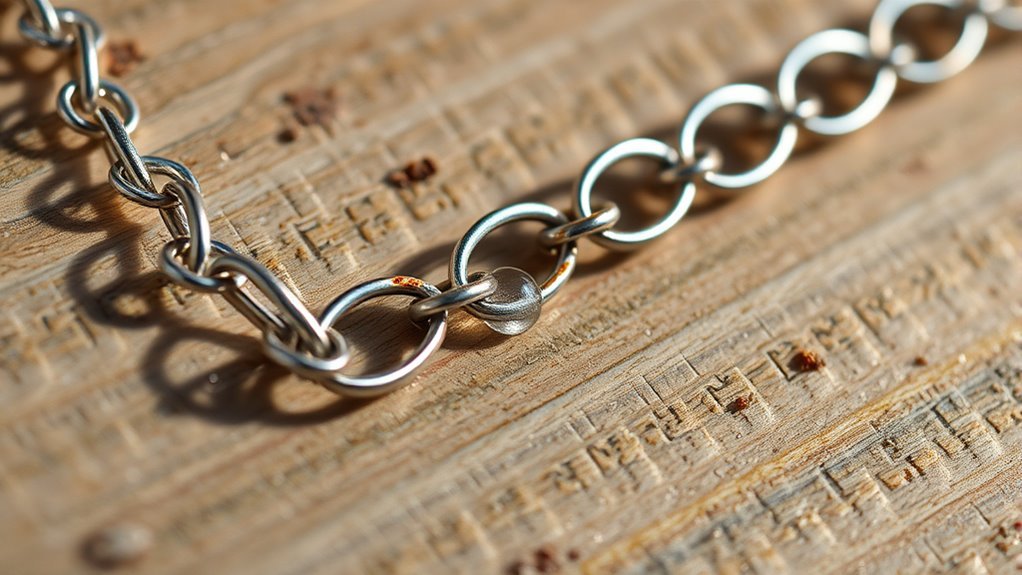
When you wear alloy jewelry, moisture and oxygen can trigger a chemical reaction called oxidation, especially if the alloy contains iron. This reaction leads to rust, a form of corrosion that damages the metal beneath the surface, unlike the more superficial tarnishing process. High levels of copper in the alloy cause a green patina rather than rust, but corrosion still occurs. Humidity and exposure to the environment speed up this damaging effect, especially if the protective layer on your jewelry is compromised.
| Factor | Effect |
|---|---|
| Moisture | Initiates oxidation |
| Oxygen | Reacts with iron to form rust |
| High copper | Causes green patina |
| Humidity | Accelerates corrosion |
| Protective layer | Slows moisture exposure |
Factors That Increase Rusting Risk
The risk of rusting on your alloy necklace rises with several key factors. Moisture and humidity play major roles in accelerating the rusting process by promoting oxidation in alloy jewelry, especially those containing iron. When your necklace comes into contact with skin oils, sweat, or cosmetic chemicals, corrosion can increase, making rust more likely. Poor storage habits, like keeping your necklace in damp places or exposing it to water, trap moisture against the metal and worsen rust formation. To reduce rusting risk, focus on regular cleaning and proper storage. Using airtight containers helps keep moisture and humidity away, preserving your necklace’s condition. Taking these precautions can considerably slow corrosion and keep your alloy jewelry looking great longer.
Differences Between Tarnish and Rust
You’ll notice tarnish and rust form through different chemical reactions and show up on different metals.
Tarnish usually appears as a dull layer on metals like silver.
On the other hand, rust only affects iron and its alloys, causing flaky, reddish damage.
Understanding these visual and physical signs helps you tell if your alloy necklace is tarnishing or rusting.
Chemical Process Differences
Although both tarnish and rust result from metal reacting with elements in its environment, they differ greatly in their chemical processes and effects. Tarnish is a surface corrosion caused by the oxidation of metals like silver and copper, forming metal sulfides, oxides, or carbonates. Rust, on the other hand, specifically affects iron and its alloys, producing iron oxide (Fe2O3) through a reaction with moisture and oxygen. Here’s what you should know:
- Tarnish affects alloy surfaces like stainless steel but doesn’t degrade their structure.
- Rust causes deeper corrosion, weakening iron-based metals.
- Tarnish is often reversible with simple cleaning.
- Rust demands intensive restoration, such as sanding or chemical treatments.
- Alloy necklaces without iron resist rust but may still tarnish.
Understanding these chemical processes helps you care for your metals properly.
Metal Composition Impact
Since rust only forms on iron and its alloys, understanding what metals make up your necklace helps you know whether to expect tarnish or rust. Most alloy jewelry, like those made with zinc alloy or copper, won’t rust because they lack iron. Instead, these metals undergo oxidation, leading to tarnishing rather than corrosion that damages the metal’s structure. Copper in particular can cause discoloration that looks like rust but is harmless and often reversible. Knowing the metal composition of your jewelry materials lets you identify if your piece is tarnish resistant or prone to tarnishing. With proper care, you can prevent oxidation and keep your necklace looking its best. So, focus on caring for tarnish rather than worrying about rust when it comes to alloy necklaces.
Visual and Physical Signs
When you examine an alloy necklace, the difference between tarnish and rust becomes clear through their visual and physical signs. Tarnish appears as dull discoloration caused by oxidation, especially on copper or brass alloys, while rust shows up as a reddish-brown flaky coating, signaling iron oxidation. Proper storage and regular cleaning help prevent tarnish on your alloy necklaces, but rust indicates deeper damage requiring more intensive maintenance.
- Tarnish causes green or black marks on skin
- Rust leaves reddish stains, especially with moisture
- Tarnish is usually removable with gentle cleaning
- Rust often requires replacement or heavy treatment
- Copper-based alloys tarnish but don’t rust without iron
Understanding these signs helps you care for your necklaces and extend their life.
Preventative Measures to Protect Alloy Necklaces
To keep your alloy necklaces looking their best, you should store them in cool, dry places like anti-tarnish pouches or airtight containers that limit exposure to moisture and air. Proper storage and care are key preventative measures against tarnishing and rust. Regularly clean your alloy jewelry with a soft cloth to remove oils and pollutants. Avoid harsh chemicals in cleaning products, perfumes, and lotions that damage metal. Removing necklaces before swimming or exercising reduces sweat contact. For extra jewelry protection, apply clear nail polish or lacquer to create a moisture barrier.
| Preventative Measure | Description | Benefit |
|---|---|---|
| Proper Storage | Use anti-tarnish bags/airtight containers | Limits moisture and air exposure |
| Regular Cleaning | Wipe with soft cloth | Removes oils, slows tarnishing |
| Avoid Harsh Chemicals | Keep away from perfumes, lotions | Prevents metal reaction and rust |
Caring for and Cleaning Rust-Prone Alloys
You’ll want to keep your alloy necklace dry and clean to prevent rust from forming.
Using a soft cloth regularly and storing your jewelry in airtight containers can make a big difference.
If rust does appear, gentle cleaning methods like baking soda paste or vinegar soaks can restore its shine.
Preventing Alloy Rust
Although alloy necklaces can be stylish and affordable, they require proper care to prevent rust from forming. To keep your alloy jewelry looking great, you need to minimize exposure to moisture and sweat, which accelerate rust. You should regularly clean your necklace with a soft cloth to remove oils and debris. Applying a protective coating can further shield it from oxidation. Proper jewelry storage also plays an essential role in preventing rust.
- Store alloy necklaces in a dry, cool place
- Regularly clean with a soft cloth
- Apply a protective coating like clear nail polish
- Use anti-tarnish pouches or strips in jewelry storage
- Avoid wearing necklaces during swimming or exercise to reduce exposure to sweat
Following these steps helps you prevent rust and keep your alloy jewelry shining.
Effective Cleaning Techniques
When caring for alloy necklaces, especially those prone to rust, regular and gentle cleaning is key to maintaining their shine and preventing damage. Use a soft cloth to wipe away moisture and dirt that cause rust formation and tarnishing. Avoid harsh chemicals, as they can accelerate rusting. For stubborn spots, try a gentle mixture of baking soda and water to scrub without harming the metal. After cleaning, verify your necklace dries completely before storing. While storage details will be covered later, keeping them in anti-tarnish pouches or airtight containers reduces exposure to humidity and moisture. These cleaning techniques help you preserve the look and longevity of your alloy necklaces, preventing rust and keeping them looking their best.
Protective Storage Tips
Keeping your alloy necklaces clean is just one part of preventing rust and damage. How you store alloy necklaces plays a vital role in protecting them from moisture and air, which cause rust damage. To care for your alloy jewelry effectively, follow these protective storage tips:
- Store alloy necklaces in airtight containers or anti-tarnish pouches to limit exposure to moisture and air.
- Avoid damp places like bathrooms, where excess humidity promotes rust.
- Use silica gel packets in storage to absorb excess humidity.
- Clean your alloy jewelry regularly with a soft cloth to remove oils and dirt.
- Apply a light protective coating, such as clear nail polish, to create a moisture barrier.
Frequently Asked Questions
How Long Does Alloy Jewelry Last?
Alloy jewelry can last from a few months to several years, depending on its quality and care.
You’ll get better durability with stainless steel or high-quality alloys.
Especially if you avoid moisture and clean them regularly.
What Kind of Necklaces Don’t Rust?
You’ll find that over 90% of stainless steel necklaces don’t rust because chromium protects them.
Plus, titanium, platinum, and 24K gold necklaces won’t rust either, keeping their shine no matter how often you wear them.
Is Alloy a Good Material for Necklaces?
Alloy is a good material for necklaces because it’s durable and affordable.
You’ll enjoy its strength for everyday wear.
But make sure to avoid moisture and chemicals to keep it looking great and prevent tarnishing.
Is It Safe to Wear Alloy Jewelry?
Yes, you can wear alloy jewelry safely, but be cautious if you have sensitive skin.
Avoid moisture and harsh chemicals.
Clean regularly, and remove jewelry during sweating to prevent irritation, discoloration, and tarnishing.
Conclusion
Think of your alloy necklace like a tiny ship sailing through a sea of moisture.
Without proper care, rust can slowly anchor itself on board. While alloys don’t rust as easily as pure iron, exposure to sweat, water, and air can still cause corrosion over time.
By treating your necklace like a treasure and keeping it dry and clean, you’ll guarantee it shines bright.
Avoid the slow “rusty shipwreck” that dulls its beauty.
In conclusion, while alloy necklaces are more resistant to rust, they are not completely immune. Regular maintenance, like drying off after wearing and storing it properly, can help prevent corrosion.
By giving your necklace the attention it deserves, you ensure it remains a stunning accessory, free from rust and ready to shine every day.