How Many Watts Are in a Hair Dryer?
A hair dryer’s wattage usually ranges from 800 to over 2200 watts, depending on the type and purpose.
Higher wattage means more heat and stronger airflow, which dries your hair faster, especially if it’s thick or curly.
On the flip side, lower watt models are gentler and great for fine hair or travel.
Choosing the right wattage is key to protecting your hair while also controlling energy use.
With so many options out there, keep exploring to find the perfect balance between power, efficiency, and safety for your hair.
The right hair dryer can make a world of difference in your daily routine!
Key Takeaways
- Hair dryers typically range from 800 to over 2200 watts depending on type and usage.
- Standard home dryers usually operate between 1000 and 1875 watts.
- Travel hair dryers commonly have wattage between 800 and 1200 watts.
- Professional or salon-grade dryers often exceed 1800 watts for powerful performance.
- Higher wattage means stronger airflow and faster drying but higher energy use.
What Does Wattage Mean for How Your Hair Dryer Works?
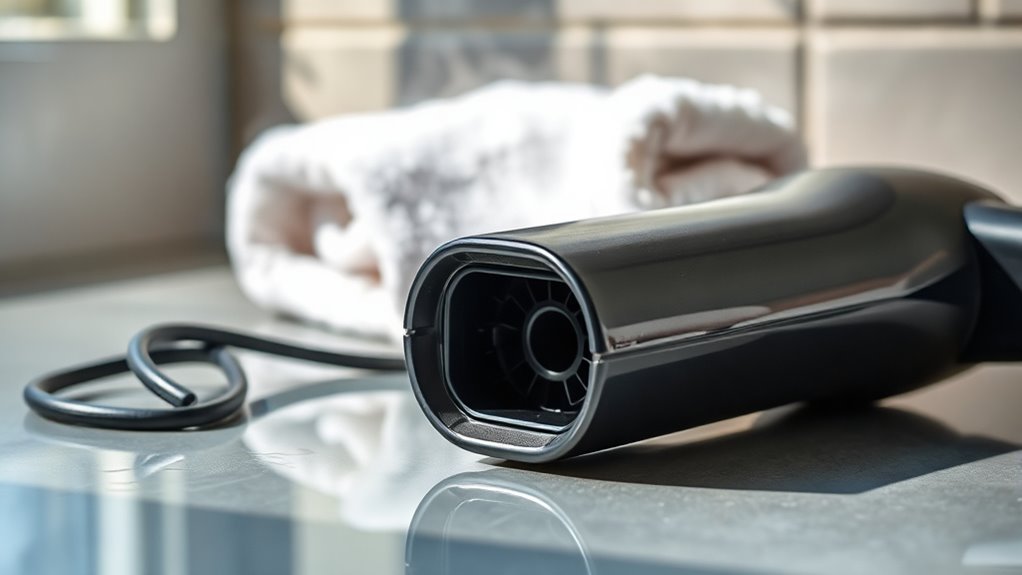
Understanding wattage can help you choose the right hair dryer for your needs. Wattage measures how much electrical power your hair dryer uses when running. The higher the wattage, the more energy it consumes, and typically, the hotter and faster it can dry your hair. When you pick a dryer with the right wattage, you control how efficiently and quickly it heats up and blows air. Keep in mind, though, wattage isn’t the only factor affecting performance; design and technology matter too. But in general, a higher wattage means stronger airflow and heat output, which shortens drying time. So, by knowing what wattage means, you can avoid buying a dryer that’s too weak or unnecessarily powerful for your hair type and styling habits.
Typical Wattage Ranges for Different Hair Dryers

Now that you know how wattage affects your hair dryer’s performance, it helps to see what typical wattage ranges look like across different types of dryers. Most standard hair dryers fall between 1000 to 1875 watts, offering a balance between power and energy use. Travel hair dryers usually range from 800 to 1200 watts, making them compact and convenient but slightly less powerful. Professional or salon-grade dryers often exceed 1800 watts, designed for durability and consistent performance. If you want a lightweight option for quick styling, lower-watt models might suit you. However, if you need a heavy-duty dryer for thick or long hair, higher wattage is common. Understanding these ranges can guide you to a dryer that fits your daily needs perfectly.
How Hair Dryer Wattage Affects Drying Time and Heat
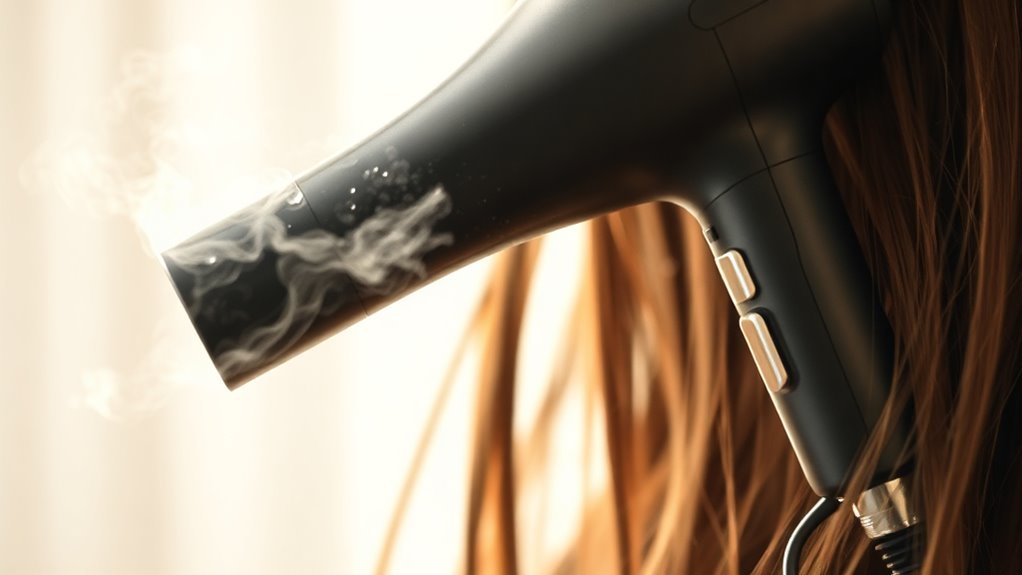
You’ll notice that higher wattage hair dryers usually dry your hair faster by producing more heat and airflow.
This means you can save time while achieving the style you want.
Understanding how wattage affects heat levels and efficiency helps you pick the right dryer for your needs.
Wattage Impact On Drying
Choosing a hair dryer with the right wattage can markedly cut down your drying time and control the heat level. Higher wattage means the dryer generates more power, which increases airflow and temperature, letting you dry your hair faster. If you’re in a rush, a 1800 to 2000-watt dryer will help you finish quickly without repeatedly passing over your hair. On the flip side, lower wattage models take longer, which might be frustrating if you have thick or long hair. However, they often use less electricity and produce less heat, reducing the risk of damage. Ultimately, picking the right wattage depends on how quickly you want to dry your hair and your hair type. Don’t overlook wattage—it directly impacts how efficient your drying routine will be.
Heat Levels And Efficiency
Understanding how wattage influences heat levels and efficiency can transform your drying experience. Higher wattage means your hair dryer produces more heat and airflow, cutting down drying time markedly. That’s great when you’re in a rush, but it also means your device uses more electricity. On the other hand, lower wattage models generate less heat and work slower, which can be gentler on your hair. If you want to balance efficiency and hair health, consider a hair dryer with adjustable heat settings. This way, you can choose a high wattage for quick drying or lower settings to minimize heat damage. Ultimately, knowing how wattage affects heat and efficiency helps you pick the right dryer for your needs and keeps your hair looking its best.
Right Wattage for Different Hair Types
Although wattage alone doesn’t determine the quality of a hair dryer, selecting the right wattage for your hair type can improve drying efficiency and minimize damage. If you have fine or thin hair, a lower wattage dryer around 1000-1400 watts works best, giving you gentle heat to prevent breakage. For medium or normal hair, aim for a mid-range wattage between 1400-1800 watts. This range balances drying speed and heat control. If your hair is thick, coarse, or curly, you’ll benefit from a higher wattage dryer, typically 1800-2200 watts or more, which delivers powerful airflow and heat for faster drying. Matching your hair type with the appropriate wattage helps maintain your hair’s health while achieving the style you want efficiently.
Energy Efficiency: How Hair Dryer Wattage Impacts Power Use
You’ll notice that higher-wattage hair dryers use more electricity, which can increase your energy bills.
Choosing an efficient model helps you save power without sacrificing drying time.
Let’s explore how wattage affects energy consumption and what to look for in an efficient hair dryer.
Wattage and Energy Consumption
When you choose a hair dryer, its wattage directly affects how much electricity it consumes during use. Higher wattage means more power, which leads to faster drying but also higher energy consumption. If you use a 1800-watt dryer for 15 minutes, you’ll use more electricity than a 1200-watt model for the same time. Understanding this helps you manage your energy bills better. Here’s a quick comparison of wattage, usage time, and energy consumed:
| Wattage (W) | Usage Time (minutes) | Energy Consumed (kWh) |
|---|---|---|
| 1200 | 15 | 0.30 |
| 1500 | 15 | 0.38 |
| 1800 | 15 | 0.45 |
Choosing Efficient Hair Dryers
Understanding how wattage affects energy consumption sets the stage for choosing a hair dryer that balances power and efficiency. When picking a hair dryer, look beyond just high wattage. While more watts mean faster drying, they also use more electricity. You want a model that dries your hair well without wasting energy. Modern hair dryers often feature adjustable heat settings and energy-saving modes—use these to reduce power use. Consider dryers with ceramic or tourmaline technology, which improve heat distribution and cut drying time. Also, check for Energy Star ratings or similar certifications to guarantee efficiency. By selecting a hair dryer with the right wattage and smart features, you save on your electric bill and still get quick, effective drying every time.
How to Balance Hair Dryer Wattage, Power, and Safety
Although higher wattage hair dryers often promise faster drying times, balancing power with safety is essential to prevent damage to your hair and avoid electrical hazards. You should look for a dryer that offers adjustable heat and speed settings, so you can tailor the power to your hair type and drying needs. Using maximum wattage constantly can overheat your hair and increase fire risks. Also, check for safety features like automatic shut-off and thermal protection to avoid electrical faults. Make sure your outlet and wiring support the dryer’s wattage to prevent overloads. By choosing a hair dryer with a balanced wattage and built-in safety measures, you’ll protect both your hair and home while enjoying efficient drying.
Frequently Asked Questions
Can Wattage Affect the Lifespan of a Hair Dryer?
Yes, wattage can affect your hair dryer’s lifespan.
Higher wattage means more power, which can cause more wear and tear if used frequently.
Using it properly helps you avoid overheating and extends its durability.
Are Higher Wattage Hair Dryers Noisier?
Higher wattage hair dryers can sound like a roaring engine, but they’re not always noisier.
You’ll notice more noise if the motor’s powerful and the fan spins faster.
But design plays a big role in sound levels too.
Do Hair Dryer Wattages Vary by Brand or Model?
Yes, hair dryer wattages vary by brand and model.
You’ll find some designed for quick drying with higher watts, while others focus on gentle heat with lower watts.
Can a Hair Dryer Damage Hair if Wattage Is Too High?
You might think higher wattage means better drying, but it can actually damage your hair by overheating it.
To protect your strands, use moderate heat settings.
Also, avoid holding the dryer too close for too long.
How Does Wattage Relate to Hair Dryer Weight and Portability?
Higher wattage usually means a heavier hair dryer because of bigger motors and components.
You’ll find lower-watt models are lighter and more portable.
This makes them perfect if you travel or want something easy to handle daily.
Conclusion
You might think more watts always mean better hair drying, but that’s not the whole story.
Sure, higher wattage speeds up drying, but it can also fry your strands if you’re not careful.
So, while you’re hunting for that power-packed hair dryer, remember: sometimes less wattage means more hair happiness.
Balancing power, efficiency, and safety is the real secret—because your hair deserves more than just a wattage war.
When choosing a hair dryer, consider your hair type and drying needs.
A lower wattage might work wonders for fine hair, while thicker locks could benefit from higher wattage.
Ultimately, the right hair dryer combines power with care, ensuring your hair stays healthy and vibrant.
So, as you shop, keep in mind that it’s not just about the watts; it’s about finding the best fit for your hair.