How Many Amps Does a Hair Dryer Use?
You’ll typically use between 6 and 15 amps with a hair dryer, depending on its wattage and settings.
High-powered dryers draw around 12–15 amps, drying hair faster but using more electricity.
Low-powered ones pull 6–8 amps, which are ideal for fine hair or travel.
To find your dryer’s amps, just divide its wattage by your outlet’s voltage (like 120V in the U.S.).
Understanding this helps you avoid overloading circuits and manage energy use smartly.
So, whether you’re rushing to get ready or taking your time, knowing how many amps your hair dryer uses can make a difference.
Learn more about how power and settings affect your dryer’s performance!
Key Takeaways
- Hair dryers typically use between 6 to 15 amps depending on power and settings.
- High-powered dryers draw about 12–15 amps for faster drying and stronger airflow.
- Low-powered dryers use around 6–8 amps, suitable for fine hair and energy efficiency.
- Amps = Watts ÷ Volts; for example, a 1800W dryer on 120V draws 15 amps.
- Knowing amps helps avoid circuit overloads and ensures safe electrical use.
Understanding Hair Dryer Wattage and Amps
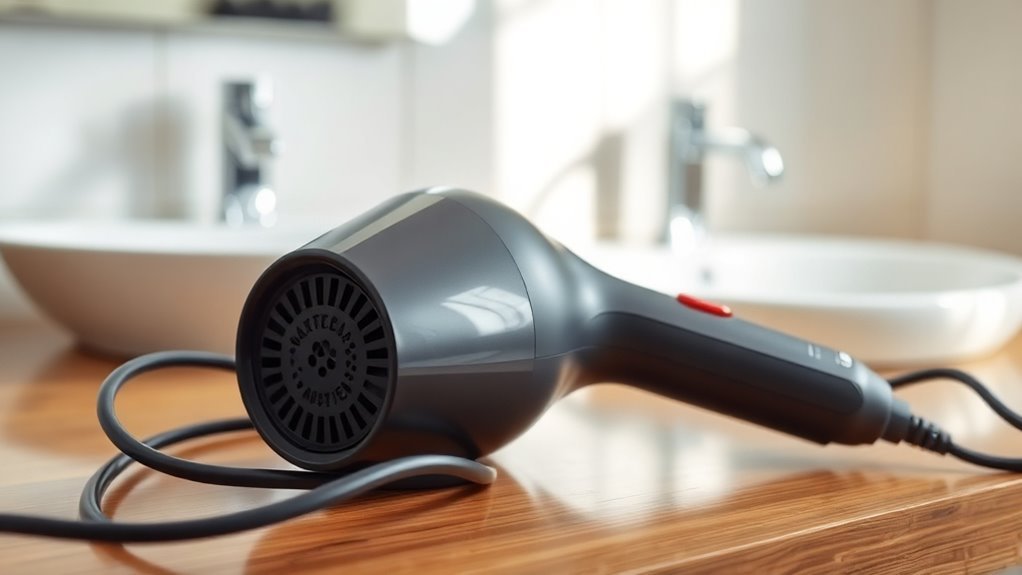
Although it might seem complicated at first, understanding hair dryer wattage and amps is straightforward once you know the basics. Wattage measures how much power your hair dryer uses, while amps indicate the electrical current it draws. You’ll find the wattage listed on the dryer’s label or in the manual, usually between 800 and 1875 watts. A higher wattage means the dryer uses more power and typically dries hair faster. Amps, on the other hand, tell you how much current the appliance pulls from your electrical circuit. Knowing these two helps you avoid overloading your outlets and guarantees safe use. Keep in mind, wattage and amps work together to describe your hair dryer’s electrical needs without needing to plunge into complex formulas.
How to Calculate Hair Dryer Amps
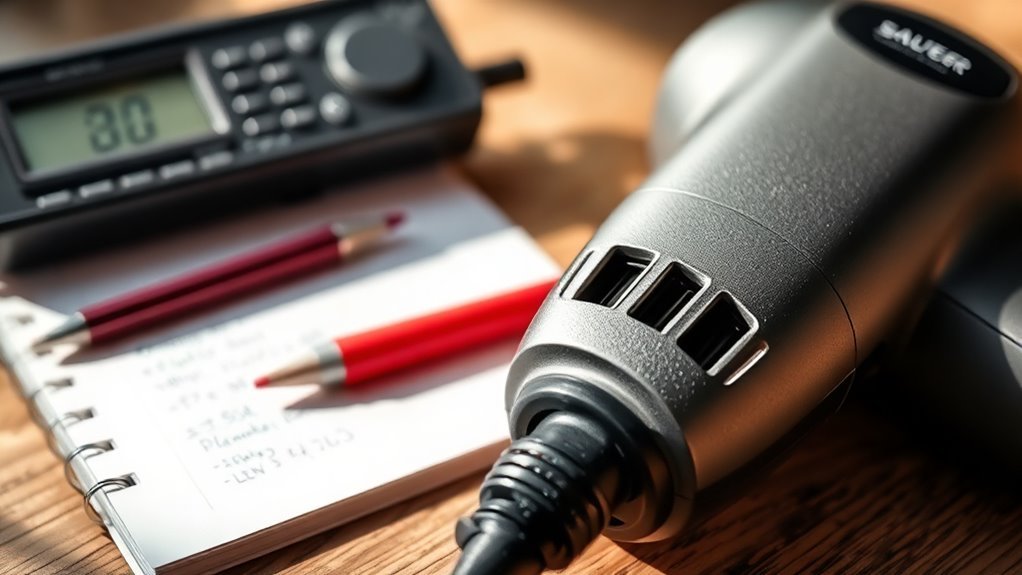
To calculate the amps your hair dryer uses, you first need to know its power rating in watts.
Then, you can use a simple formula that divides the wattage by the voltage of your power source.
This straightforward method helps you understand exactly how much current your device draws.
Understanding Power Ratings
Power ratings tell you how much electricity a hair dryer uses, and understanding them helps you calculate the amps it draws. You’ll usually find the power rating listed in watts (W) on the dryer’s label or manual. This number indicates the amount of electrical power the device consumes during operation. Higher wattage means more power and, typically, higher heat and airflow.
Knowing the power rating is essential because amps measure current flow, which depends on power and voltage. Since your home’s voltage is generally fixed (like 120V in the U.S.), the wattage directly influences how many amps the hair dryer pulls. By understanding this rating, you get a clear sense of the electrical demand your hair dryer places on your circuit.
Using Formula To Calculate
When you want to figure out how many amps your hair dryer uses, you can rely on a simple formula that connects watts and voltage. The formula is:
Amps (A) = Watts (W) ÷ Volts (V)
Here’s how to use it effectively:
- Find the wattage rating on your hair dryer label.
- Check your electrical outlet voltage (usually 120V in the U.S., 230V in Europe).
- Divide the wattage by the voltage.
- The result is the current in amps your hair dryer draws.
- Use this info to make sure your circuit can handle the load safely.
Comparing High- and Low-Powered Hair Dryers
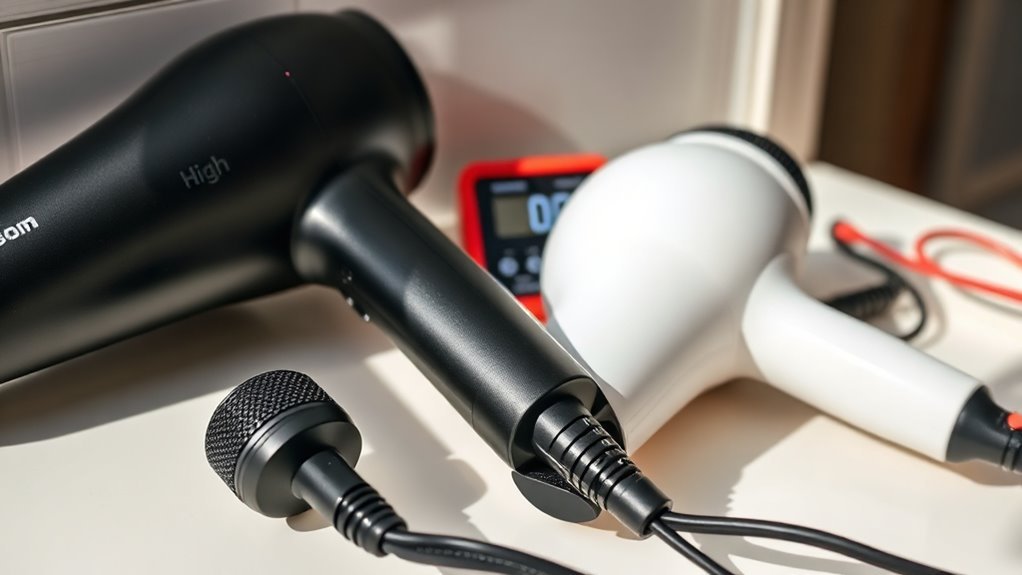
Understanding the difference between high- and low-powered hair dryers can help you choose the right tool for your hair type and styling needs. High-powered hair dryers typically use more amps—often around 12 to 15 amps—delivering stronger airflow and faster drying times. These are ideal if you have thick or long hair and want to reduce your styling time. On the other hand, low-powered dryers usually draw fewer amps, around 6 to 8, making them gentler and more energy-efficient. They suit fine or thin hair and travelers who need lightweight devices. When selecting, consider both your hair’s needs and your electrical setup to avoid overloading circuits while ensuring effective drying performance.
How Your Hair Dryer’s Settings Change Power Use
You’ll notice that your hair dryer’s heat and speed settings directly affect how many amps it draws.
Higher heat and faster speeds use more power, while lower settings reduce consumption.
Understanding these variations helps you manage energy use effectively.
Heat Settings And Amps
Although hair dryers typically list a single amperage rating, the actual power they draw varies with the heat setting you choose. Higher heat settings demand more current, increasing amps and energy use, while lower settings reduce power consumption.
Here’s how heat settings affect amps:
- Low heat uses less power, drawing fewer amps
- Medium heat increases current moderately
- High heat maximizes power and amps drawn
- Some dryers have a cool setting, using minimal amps
- Variable heat controls allow you to balance power and efficiency
Speed Settings Impact
Since speed settings control the airflow in your hair dryer, they directly affect how much power the device uses. When you choose a higher speed, the motor works harder to push more air, increasing the current draw. On lower speeds, the motor slows down, reducing the amps your dryer pulls from the outlet. This means using a high-speed setting generally consumes more electricity than a low-speed one. However, the difference isn’t as dramatic as with heat settings because the motor’s power variation is more limited. Still, if you want to save energy or reduce electrical load, opting for a lower speed when possible can help. Keep in mind, the impact varies by model, so your hair dryer’s manual might provide specific amp ratings for each speed.
Power Consumption Variations
When you adjust your hair dryer’s settings, you directly influence its power consumption. Different combinations of heat and speed settings change how much electricity your dryer uses, which impacts the amps drawn from your outlet. Here’s how your choices affect power use:
- Higher heat settings increase wattage, drawing more amps.
- Faster speeds make the motor work harder, using more current.
- Lower heat with low speed reduces power and amps.
- Cool shot buttons temporarily use less power by cutting heat.
- Ionic or ceramic technologies may slightly alter energy efficiency.
Why Knowing Your Hair Dryer’s Amps Prevents Overloads
Understanding how many amps your hair dryer uses helps you avoid overloading your electrical circuits. When you know the amp rating, you can make certain your hair dryer won’t draw more current than your outlet or circuit can handle. Overloads happen when devices collectively pull more amps than the circuit’s capacity, causing breakers to trip or fuses to blow. This not only interrupts your routine but can also pose fire hazards. By checking your hair dryer’s amps, you can balance its use with other appliances on the same circuit, preventing excessive strain. Being aware of your dryer’s electrical demand empowers you to use it safely, protect your home’s wiring, and maintain consistent power without unexpected outages or damage.
Tips to Cut Electricity Use When Using Your Hair Dryer
You can often reduce your hair dryer’s electricity use by adjusting how and when you use it. Small changes to your routine make a big difference in energy consumption without sacrificing convenience or results. Here are some practical tips to help you cut electricity use:
- Use the hair dryer on a lower heat or speed setting whenever possible.
- Allow your hair to air dry partially before turning on the dryer.
- Limit drying time by sectioning hair and focusing on the roots first.
- Choose a hair dryer with energy-efficient technology or an automatic shutoff feature.
- Avoid using the hair dryer during peak electricity hours to save on energy costs.
These simple habits help you save power and extend your hair dryer’s lifespan.
Frequently Asked Questions
Can I Use a Hair Dryer With a Solar Power System?
Yes, you can use a hair dryer with a solar power system,
but make sure your system’s capacity and battery can handle its high wattage.
Otherwise, it might drain your power quickly or overload the system.
Are Cordless Hair Dryers Less Powerful Than Corded Ones?
Yes, cordless hair dryers are usually less powerful than corded ones because they rely on battery capacity.
You’ll notice shorter run times and lower heat settings.
But they offer great convenience for travel and quick touch-ups.
How Does Voltage Affect My Hair Dryer’s Performance?
Voltage affects your hair dryer’s heat and speed.
Higher voltage usually means it runs hotter and faster.
If the voltage’s too low, your dryer won’t perform well.
It might even overwork or get damaged.
Is It Safe to Use a Hair Dryer in a Bathroom?
Using a hair dryer in a bathroom is like juggling lightning—risky if you’re not careful.
You should avoid water contact and use GFCI outlets.
And remember, never handle the dryer with wet hands to keep yourself safe.
Can Hair Dryers Cause Electrical Fires?
Yes, hair dryers can cause electrical fires if they overheat, have damaged cords, or are used near water.
You should always unplug them after use.
Avoid using faulty devices and keep them dry to stay safe.
Conclusion
Now that you know how to calculate your hair dryer’s amps and understand the difference between high- and low-powered models, you can make smarter choices.
Don’t you want to avoid tripping breakers or wasting electricity?
By adjusting your settings and using energy-saving tips, you’ll protect your home’s electrical system and save on your energy bill.
Next time you dry your hair, you’ll do it more efficiently and confidently!
In conclusion, understanding your hair dryer’s amp usage allows you to choose wisely between models.
This knowledge helps you prevent electrical mishaps and save money on energy costs.
So, when you style your hair, remember to be mindful of your dryer’s power usage—efficiency is key!