7 Steps to Dry Your Hair Without a Blow Dryer
7 Steps to Dry Your Hair Without a Blow Dryer
Drying your hair without a blow dryer can be a game changer for maintaining healthy locks. This method not only helps prevent damage but also reduces frizz, giving you smoother results. Plus, it’s eco-friendly!
Start by choosing a microfiber or soft cotton towel to gently absorb moisture without causing frizz.
Squeeze out excess water carefully, avoiding rough wringing, to speed up drying.
Finger-detangle your hair in sections to prevent breakage.
Apply a lightweight leave-in conditioner focused on mid-lengths and ends.
Let your hair air dry in sections and boost airflow with a fan or open window.
Keep your hands off to preserve shine and reduce frizz.
Follow these steps, and you’ll discover how to enhance your drying routine even more!
Key Takeaways
- Gently squeeze and blot hair with a microfiber towel or soft cotton T-shirt to remove excess water without causing friction or frizz.
- Divide hair into sections and finger detangle starting from ends to roots to prevent breakage and promote even drying.
- Apply a lightweight leave-in conditioner focused on mid-lengths and ends to retain moisture and speed drying without buildup.
- Boost airflow by using a fan or standing near an open window, avoiding heat for natural evaporation and reduced drying time.
- Allow hair to air dry undisturbed, keeping hands off to prevent cuticle damage, frizz, and maintain natural shine and texture.
Choose the Right Towel to Absorb Moisture Quickly
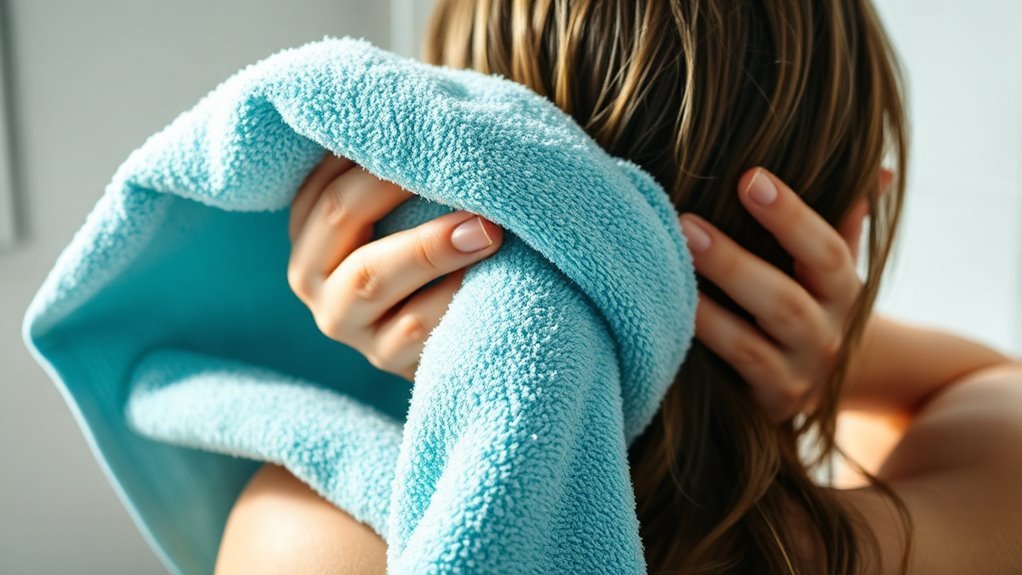
Pick a towel designed to soak up moisture fast, like microfiber or a high-quality cotton one. These towels are specially made to absorb water efficiently, cutting down your drying time. When you wrap your hair in one, you’ll notice it pulls moisture away without roughening your strands. Avoid regular bath towels—they can be too coarse and cause frizz or breakage. Instead, opt for something soft and gentle that won’t disturb your hair’s natural texture. Using the right towel also helps prevent excess friction, which means less damage overall. Keep your towel clean and fresh to maintain its absorbency. By choosing the right towel, you set the foundation for healthier, quicker drying without the heat damage from a blow dryer.
Gently Squeeze Excess Water for Faster Drying

After towel drying, gently squeeze your hair to remove extra water and speed up drying time.
Use careful, light pressure to avoid tugging or causing breakage.
This simple step helps protect your hair while cutting down on dampness.
Benefits of Squeezing Water
Gently squeezing excess water from your hair speeds up drying by removing moisture that would otherwise take longer to evaporate. When you take this simple step, you reduce the overall drying time, making your hair less prone to damage from prolonged dampness. It also helps your hair absorb fewer harmful elements like pollution or dust while wet. Plus, squeezing water out carefully minimizes friction, which can cause breakage and frizz.
Here’s why you should squeeze water from your hair:
- Speeds up natural drying time
- Reduces heat and friction damage risk
- Helps maintain hair’s natural shine and texture
- Prevents scalp irritation caused by prolonged dampness
This small habit makes a big difference in healthy, faster-drying hair.
Proper Technique For Squeezing
Start by cupping sections of your hair in your hands and pressing firmly to remove excess water without tugging or twisting. This gentle squeeze helps speed drying while protecting your strands. Work through your hair in small sections for consistent results.
Use this technique regularly to avoid dripping and reduce drying time. Avoid rough wringing, which can cause tangles.
| Step | Action | Tip |
|---|---|---|
| 1 | Cup hair in palms | Target small sections |
| 2 | Press firmly, don’t twist | Apply even pressure |
| 3 | Repeat throughout hair | Work from roots to ends |
Following these steps makes certain you remove water efficiently and prepare your hair for air drying.
Avoiding Hair Damage
You should always squeeze excess water from your hair carefully to prevent damage and speed up drying time. Roughly wringing or twisting can cause breakage and split ends. Instead, use gentle pressure to absorb moisture while maintaining your hair’s natural strength. Here’s how to protect your hair while squeezing excess water:
- Use a soft microfiber towel or an old cotton T-shirt to gently press and squeeze water out.
- Avoid vigorous rubbing, which can create friction and lead to frizz.
- Work in sections, starting from the roots and moving to the tips for even drying.
- Keep your hands relaxed to prevent pulling or tugging on strands.
Detangle Hair Using Your Fingers to Speed Drying

To speed up drying, start by gently detangling your hair with your fingers.
This method reduces breakage and helps water evaporate more evenly.
Use slow, careful movements to separate knots without causing damage.
Taking your time here really pays off!
Your hair will thank you for it.
Benefits of Finger Detangling
Finger detangling offers a gentle way to separate knots while speeding up the drying process. When you use your fingers instead of a comb or brush, you reduce breakage and minimize hair damage. This method also helps you feel and address tangles more precisely, preventing unnecessary pulling. Plus, finger detangling encourages natural hair oils to distribute evenly, enhancing shine and moisture retention. Here are some benefits you’ll notice:
- Less hair breakage and split ends
- Improved scalp stimulation and circulation
- Enhanced control over knot removal
- Promotes natural oil distribution for healthier hair
Techniques for Gentle Detangling
Gentle detangling techniques build on the benefits of finger detangling by helping you work through knots without causing damage or discomfort. Start by dividing your hair into manageable sections, which makes it easier to focus on smaller tangles. Use your fingers to slowly and carefully separate strands, beginning at the ends and gradually moving up toward the roots. Avoid pulling or yanking, as this can break your hair. If you encounter stubborn knots, apply a small amount of leave-in conditioner or detangling spray to soften them before continuing. Taking your time with this process not only speeds up drying by preventing clumps but also promotes healthier hair. With gentle detangling, you’ll reduce breakage and maintain your hair’s natural texture while drying without heat.
Use Lightweight Leave-In to Help Hair Dry Faster
Although air drying can take time, using a lightweight leave-in conditioner can speed up the process by helping your hair retain moisture without weighing it down. Applying the right product guarantees your strands stay hydrated and reduces frizz, making your hair dry more evenly and quickly. When choosing a leave-in conditioner, focus on formulas designed for quick absorption and minimal residue.
Consider these tips to maximize effectiveness:
- Apply evenly to damp hair, focusing on mid-lengths and ends.
- Avoid heavy creams or oils that slow drying.
- Look for products with heat-protective or moisture-locking ingredients.
- Use just enough product to coat without saturating your hair.
This approach enhances your hair’s natural drying process, leaving it soft and manageable without the need for heat styling.
Air Dry Your Hair in Sections for Better Results
When you divide your hair into sections before air drying, you speed up the process and guarantee more even drying. Start by parting your hair into manageable segments—usually four to six works well, depending on your hair’s thickness. Working with smaller sections makes sure each part dries thoroughly without leaving damp spots that can cause frizz or odor. After applying your leave-in product, gently comb through each section to detangle and spread the product evenly. Then, let each section dry naturally, avoiding touching or manipulating your hair too much. This method also helps you better monitor how fast your hair dries and lets you adjust your routine if needed. Air drying in sections is a simple trick that saves time and improves your hair’s overall look.
Boost Airflow With a Fan or Cool Breeze
Sectioning your hair for air drying helps speed up the process, but you can boost drying even more by increasing airflow around your hair. Using a fan or positioning yourself where a cool breeze flows helps evaporate moisture faster without heat damage. Here’s how you can maximize airflow:
- Place a fan at a low or medium setting to gently circulate air around your hair.
- Stand near an open window or door to catch a natural breeze.
- Use a handheld fan for targeted airflow on damp sections.
- Combine air circulation with light towel blotting to reduce excess water.
Keep Your Hands Off Hair to Reduce Frizz
Frequently touching your hair while it dries can cause friction that leads to frizz and disrupts your natural texture. When you run your fingers through damp strands, you disturb the cuticle layer, making hair more prone to puffiness and flyaways. To keep your hair smooth, resist the urge to constantly touch or play with it during the drying process. Instead, let your hair air dry undisturbed or gently pat it with a microfiber towel to absorb excess moisture. If you need to style, wait until your hair is nearly dry to minimize frizz. By keeping your hands off, you preserve your hair’s natural shine and definition, resulting in a sleeker, healthier look without the need for heat styling tools.
Frequently Asked Questions
Can Drying Hair Without Heat Prevent Damage Long-Term?
Yes, drying your hair without heat can prevent long-term damage by reducing moisture loss and breakage.
You’ll keep your strands healthier, shinier, and stronger since you’re avoiding the harsh effects of high temperatures.
How Often Should I Wash My Hair When Air Drying?
Your scalp’s natural rhythm guides you, so washing your hair two to three times a week usually works best.
This balance keeps your hair fresh without stripping essential oils.
Letting your locks shine and breathe comfortably is key!
Is Air Drying Suitable for All Hair Types?
Air drying suits most hair types, but you’ll need to adjust your routine.
Curly hair may benefit from scrunching.
On the other hand, fine hair might end up looking flat.
You can experiment to find what works best for you!
Can Air Drying Cause Scalp Issues Like Dandruff?
In the age of rotary phones, yes, air drying can cause scalp issues like dandruff if your scalp stays too damp.
You’ll want to keep your scalp dry to prevent itchiness and flaking.
How Long Does Air Drying Typically Take Compared to Blow Drying?
Air drying usually takes much longer than blow drying—often one to two hours or more, depending on hair thickness and length.
Blow drying can dry your hair in just 10 to 20 minutes, saving you time.
Conclusion
By following these seven steps, you can easily dry your hair without relying on a blow dryer.
This not only saves time but also reduces heat damage.
Did you know that 70% of people who air dry their hair report less frizz and healthier strands?
Choosing the right towel, gently squeezing out water, and boosting airflow can make a big difference.
So, try these tips and enjoy smoother, shinier hair without the hassle of heat styling.
Incorporating these methods into your routine can lead to fabulous results.
Say goodbye to frizz and hello to healthier hair while saving time and protecting your locks.
With a few simple adjustments, you’ll love the way your hair looks and feels.
So, embrace air drying and enjoy the benefits of radiant, well-nourished strands!