10 Best Wet Foods for Cats With Constipation
You can help your constipated cat by choosing wet foods that are rich in moisture. This boosts hydration and helps soften stools, making it easier for your furry friend to go.
Look for options that include gentle fiber sources like pumpkin or sweet potato.
Plus, probiotics can support digestion and promote gut health.
Grain-free formulas with real meat often suit sensitive cats better and help reduce inflammation.
The good news is that both affordable and premium brands provide these benefits, making it easier to find the right fit for your cat’s needs.
Keep going to discover our top picks and learn how to switch foods smoothly for your kitty’s comfort.
Key Takeaways
- Wet foods with high moisture content soften stool and improve hydration, reducing constipation and supporting kidney and urinary tract health.
- Look for grain-free wet foods with real meat and fiber sources like pumpkin or sweet potato to promote gentle, regular bowel movements.
- Probiotics and prebiotics in wet food enhance gut flora balance, aiding digestion and improving stool consistency for constipated cats.
- Affordable options like Friskies and Fancy Feast provide moisture and fiber, while premium brands offer specialized formulas with optimal fiber blends.
- Transition new wet foods gradually over 7–10 days, mixing with current food to prevent digestive upset and monitor tolerance.
Benefits Of Wet Food For Relieving Cat Constipation
While you might not realize it, switching your cat to wet food can markedly ease their constipation. Wet food contains considerably more moisture than dry kibble, which helps keep your cat hydrated and softens their stool, making bowel movements smoother. When your cat eats wet food, they naturally consume more water, which supports healthy digestion and prevents the hard, dry stools that cause discomfort. Plus, the softer texture of wet food is easier on your cat’s digestive system, reducing strain during elimination. You’ll also find that wet food often contains higher protein levels and fewer carbohydrates, which better align with your cat’s natural diet, promoting overall gut health. By making this change, you can help your cat feel more comfortable and reduce constipation episodes efficiently.
Key Ingredients For Constipation-Friendly Wet Food
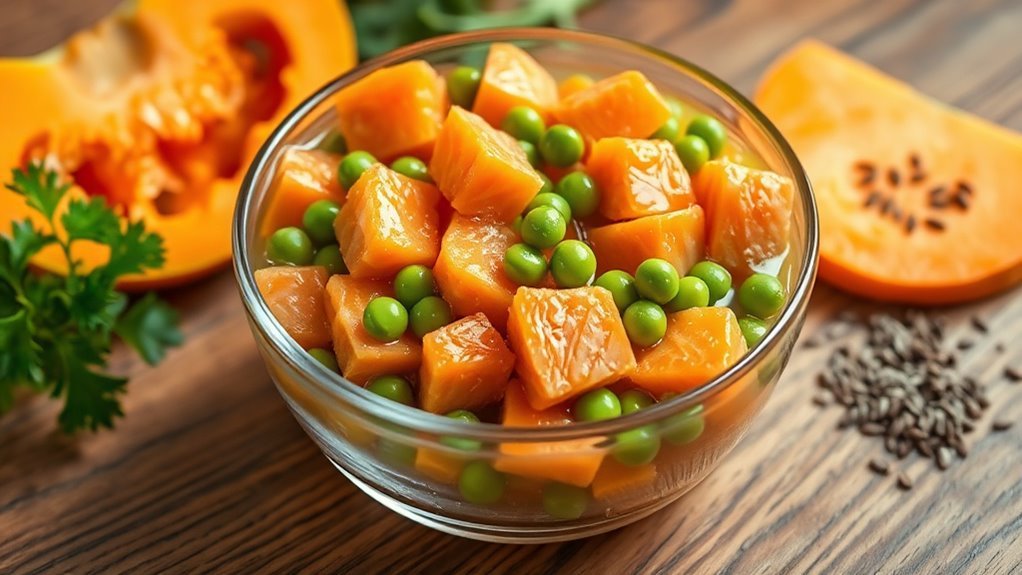
When choosing wet food for your constipated cat, focus on options with high fiber content to support digestion.
You’ll also want foods that boost hydration, as water helps soften stool.
Plus, look for natural laxative ingredients that gently encourage regular bowel movements.
High Fiber Content
Many wet cat foods include high fiber content to help ease constipation by promoting healthy digestion and regular bowel movements. When you choose a wet food rich in fiber, you support your cat’s digestive system by adding bulk to the stool. This bulk encourages smoother passage through the intestines, reducing discomfort and straining. Look for ingredients like pumpkin, beet pulp, or psyllium husk, which are excellent natural fiber sources. You don’t want a formula that’s too low in fiber, as it won’t effectively address constipation. However, balance is key—too much fiber can cause other digestive issues. By selecting wet foods with the right fiber content, you’re giving your cat a better chance at regular, comfortable elimination without upsetting their stomach.
Hydration Benefits
Cats often benefit greatly from wet foods because they provide essential hydration that dry foods lack. When your cat stays well-hydrated, their digestive system works more efficiently, softening stool and making it easier to pass. Dehydration can worsen constipation, so choosing wet food with high moisture content directly supports regular bowel movements. You’ll notice that wet foods with at least 75% water help keep your cat’s colon hydrated, preventing hard, dry stools. Plus, increased hydration can promote overall kidney and urinary tract health, which benefits cats prone to constipation. By feeding your cat wet food rich in moisture, you’re helping maintain digestive balance and reducing the discomfort associated with constipation. Always pair hydration with other dietary factors for the best results.
Natural Laxative Ingredients
Often, wet foods designed to ease constipation include natural laxative ingredients that gently stimulate your cat’s digestive system. Ingredients like pumpkin and psyllium husk are common because they provide soluble fiber, which helps soften stools and promote regular bowel movements. You’ll also find beet pulp, which acts as a prebiotic, encouraging healthy gut bacteria that support digestion. Additionally, aloe vera and slippery elm are sometimes added for their soothing, mild laxative effects. These natural components work together to improve stool consistency without harsh chemicals. When choosing a wet food, look for these key ingredients on the label to help your cat relieve constipation naturally. Including them in your cat’s diet can make a big difference in their comfort and digestive health.
High-Moisture Wet Foods For Constipated Cats
You’ll want to choose wet foods with high moisture content to help keep your cat hydrated and support healthy digestion.
Look for ingredients like pumpkin, fiber-rich vegetables, and broth to ease constipation.
These elements work together to promote regular bowel movements and comfort.
Hydration Benefits For Digestion
Frequently, increasing your cat’s water intake plays a critical role in easing constipation. Wet foods with high moisture content naturally boost hydration, softening stool and supporting smooth digestion. When your cat gets more fluids from their diet, it helps prevent dehydration—a common cause of slow bowel movements.
Here’s how hydration impacts digestion:
| Benefit | Effect on Digestion | Why It Matters |
|---|---|---|
| Softens stool | Easier to pass | Reduces straining |
| Stimulates gut | Enhances motility | Speeds up bowel transit |
| Prevents dehydration | Maintains electrolyte balance | Supports muscle function |
Top Ingredients To Look For
When selecting wet foods for a constipated cat, focus on ingredients that naturally promote hydration and digestive health. Look for high water content to keep your cat well-hydrated, which softens stool and eases bowel movements. Ingredients like pumpkin and sweet potato provide valuable fiber that supports healthy digestion and regulates bowel function. Probiotics and prebiotics are also beneficial as they encourage a balanced gut microbiome, improving nutrient absorption and stool consistency. Avoid fillers like excessive grains or artificial additives that can irritate your cat’s digestive system. Omega-3 fatty acids from fish oils can reduce inflammation and promote gut health. By choosing wet foods rich in these key ingredients, you’ll help your constipated cat find relief and maintain regular, comfortable digestion.
Fiber-Rich Wet Foods To Support Digestion
Incorporating fiber-rich wet foods into your cat’s diet can markedly improve digestion and ease constipation. Fiber adds bulk to stool, making it easier to pass and promoting healthy bowel movements. Look for wet foods containing ingredients like pumpkin, sweet potato, or beet pulp, which are natural fiber sources. These components help regulate your cat’s digestive system without causing discomfort. When choosing fiber-rich options, make certain they balance fiber with moisture to keep your cat hydrated, which also supports digestion. Introducing these foods gradually lets your cat adjust without upsetting their stomach. By selecting the right fiber-rich wet foods, you actively support your cat’s digestive health and help prevent future constipation episodes, making mealtimes both nutritious and comfortable for your furry friend.
Wet Foods With Probiotics To Keep Your Cat’s Tummy Happy
Probiotics often play a crucial role in maintaining your cat’s digestive balance and preventing constipation. These beneficial bacteria support a healthy gut by promoting better digestion and improving stool consistency. When you choose wet foods with added probiotics, you help restore your cat’s natural gut flora, which can be disrupted by stress, illness, or diet changes. Look for products containing strains like Lactobacillus or Bifidobacterium, known to aid digestion. Feeding your cat probiotic-enriched wet food regularly can reduce constipation episodes and enhance nutrient absorption. Always introduce new foods gradually to avoid upsetting your cat’s stomach. By incorporating probiotic wet foods into their diet, you’re actively supporting their digestive health, making their tummy happier and their bathroom visits smoother.
Grain-Free Wet Food Options For Sensitive Cats
If your cat has a sensitive stomach, grain-free wet foods can help reduce irritation and support digestion.
You’ll want to look for key ingredients like real meat and easily digestible vegetables.
Let’s explore some of the top grain-free brands that can keep your cat comfortable and regular.
Benefits of Grain-Free
Though cats can tolerate grains to some extent, choosing grain-free wet food often reduces the risk of digestive upset, especially for sensitive cats. When you opt for grain-free options, you’re providing a diet closer to their natural carnivorous needs, which can ease constipation. You’ll likely notice your cat feels more comfortable and experiences fewer digestive issues. Plus, grain-free foods can help:
- Minimize allergic reactions and food sensitivities
- Improve nutrient absorption and hydration
- Reduce inflammation in the gut
- Support overall digestive health and regularity
Key Ingredients to Look
When choosing grain-free wet food for your sensitive cat, focus on ingredients that naturally support digestion and hydration. Look for high-quality protein sources like real chicken, turkey, or fish, which are easier to digest and less likely to cause irritation. Ingredients such as pumpkin or sweet potato provide gentle fiber to help regulate bowel movements without upsetting sensitive stomachs. Moisture-rich components like broth or added water boost hydration, essential for easing constipation. Avoid fillers, artificial additives, and grains that can aggravate sensitivities. Additionally, probiotics or prebiotics can promote a healthy gut flora, improving digestion. By selecting wet foods with these key ingredients, you’ll better support your cat’s digestive health and comfort while managing constipation effectively.
Top Grain-Free Brands
Selecting the right brand can make a significant difference in managing your cat’s constipation with grain-free wet food. These formulas often avoid common allergens and fillers that might upset your cat’s digestive system, making them ideal if your feline is sensitive. When choosing, look for brands that focus on high-quality protein and fiber sources to support healthy digestion.
Here are some top grain-free brands to contemplate:
- Natural Balance L.I.D. Limited Ingredient Diets – Simple recipes with easily digestible proteins.
- Wellness CORE Grain-Free – High protein and added fiber for digestive health.
- Blue Buffalo Wilderness – Grain-free with wholesome ingredients and probiotics.
- Tiki Cat Puka Puka Luau – Rich in moisture and real meat, great for hydration and digestion.
These options help keep your cat comfortable and regular.
Affordable Wet Foods For Constipated Cats
Many pet owners want to find affordable wet foods that help relieve their cat’s constipation without breaking the bank. You don’t have to spend a fortune to get quality options that support your cat’s digestion and hydration. Here are some budget-friendly wet foods that offer good moisture content and fiber to ease constipation.
| Brand | Key Benefit |
|---|---|
| Friskies | High moisture, widely available |
| 9Lives | Affordable, gentle on digestion |
| Fancy Feast Classic | Good fiber, palatable flavors |
Choosing one of these can keep your cat comfortable and healthy without stretching your budget. Just remember to check the ingredient list for fiber and avoid fillers that might worsen constipation.
Premium Natural Ingredient Wet Foods For Constipation Relief
Premium natural ingredient wet foods often provide superior relief for cats dealing with constipation by combining high-quality proteins with fiber-rich, easily digestible components. When you choose these foods, you’re giving your cat a blend that supports digestion and promotes regularity without fillers or artificial additives. Look for options featuring ingredients like pumpkin, sweet potato, or chicory root, which naturally support gut health.
Premium natural wet foods combine high-quality proteins and fiber-rich ingredients to support your cat’s digestion and regularity.
Consider these premium choices:
- Grain-free recipes with added fiber sources
- Wet foods made from real meat and natural fibers
- Formulas with probiotics to boost digestive balance
- Products free from artificial colors, preservatives, and fillers
Vet-Recommended Special Diet Wet Foods For Constipation
While natural ingredients can aid digestion, vet-recommended special diet wet foods offer targeted solutions designed specifically to relieve your cat’s constipation. These diets are formulated with precise fiber blends, prebiotics, and optimal moisture levels to promote healthy bowel movements. When you choose a vet-formulated wet food, you’re guaranteeing your cat receives balanced nutrition tailored to their digestive needs. Many of these products also contain easily digestible proteins and limited ingredients to minimize gastrointestinal irritation. Your veterinarian can guide you to the best option based on your cat’s health history and severity of constipation. Using these specialized diets can often prevent chronic issues and improve your cat’s comfort. Always consult your vet before switching to a special diet to make certain it fits your cat’s unique health requirements.
Transitioning Your Cat To New Wet Food Safely
Choosing the right vet-recommended wet food is only part of the solution; introducing it to your cat carefully guarantees they adjust comfortably. Abrupt changes can upset their digestive system, worsening constipation. To switch smoothly:
- Mix a small amount of the new food with their current wet food.
- Gradually increase the new food portion over 7–10 days.
- Watch for any signs of digestive distress like vomiting or diarrhea.
- Keep fresh water available to help ease digestion and prevent constipation.
Patience is key. If your cat resists the new food or shows digestive issues, slow down the switch or consult your vet. This careful approach helps your cat enjoy their new diet while supporting digestive health.
Frequently Asked Questions
Can Wet Food Alone Cure Chronic Constipation in Cats?
No, wet food alone won’t cure chronic constipation in cats.
You’ll need to combine it with vet-recommended treatments, hydration, and sometimes medication.
Always consult your vet to create a proper plan tailored to your cat’s needs.
How Often Should I Feed Wet Food to a Constipated Cat?
Like watering a thirsty plant, you should feed your constipated cat wet food at least twice daily.
This helps keep them hydrated and eases digestion.
But always check with your vet for the best routine.
Are There Any Wet Foods to Avoid for Cats With Constipation?
You should avoid wet foods high in fillers, low moisture, or artificial additives, as they may worsen constipation.
Steer clear of grain-heavy formulas and those with limited fiber to keep your cat’s digestion smooth and healthy.
It’s important to ensure your cat gets the right nutrients without any unnecessary ingredients that could cause issues.
Always check the labels and choose options that are beneficial for their health!
Can Wet Food Cause Diarrhea if Given Too Frequently?
About 30% of cats can develop diarrhea from too much wet food.
Yes, feeding it too often can upset your cat’s digestive system.
You should balance wet food with other diets to avoid this issue.
Should I Combine Wet Food With Medication for Constipation?
Yes, you should combine wet food with medication if your vet recommends it.
Wet food adds moisture, helping ease constipation.
But remember, medication treats the underlying issue.
Always follow your vet’s advice for the best results.
Conclusion
Just like a well-tuned orchestra brings harmony, the right wet food can restore balance to your cat’s digestion.
By choosing options rich in moisture, fiber, and probiotics, you’re giving your furry friend the support they need to say goodbye to constipation.
Remember, shifting gently guarantees a smooth change.
With these top picks, you’re not just feeding your cat—you’re nurturing their comfort and health.
Turning mealtime into a moment of relief and joy can make a big difference.
In conclusion, selecting the best wet foods for cats with constipation is essential for their well-being.
These foods not only provide hydration but also promote digestive health through fiber and probiotics.
Making thoughtful choices will help your cat feel better, ensuring they enjoy a happier, more comfortable life.
So, let’s get started on this journey to healthier digestion!