What Does a Professional Shoe Fitter Do?
A professional shoe fitter plays a crucial role in ensuring your footwear is perfectly aligned with your unique foot shape and movement.
This tailored approach helps prevent pain and significantly boosts comfort.
They start by measuring your foot’s length and width, checking toe alignment, and observing your gait.
With this information, they’re able to recommend the best fit for your needs.
Next, they select shoes that offer proper support, flexible soles, and breathable materials—each tailored to your specific activities.
Additionally, they keep an eye on any changes in your feet over time or address specific conditions that might arise.
Discover how their expertise can enhance your foot health and comfort, making every step you take feel just right!
Key Takeaways
- Measures foot length, width, and shape to ensure accurate shoe sizing and fit.
- Assesses foot function, gait, and biomechanics to recommend suitable shoe types.
- Uses palpation to check toe joint positioning and identify potential discomfort or pressure points.
- Selects shoes with proper structure, support, and materials tailored to foot needs and activities.
- Provides personalized advice to accommodate foot changes and specific conditions like plantar fasciitis.
Importance of Proper Shoe Fitting
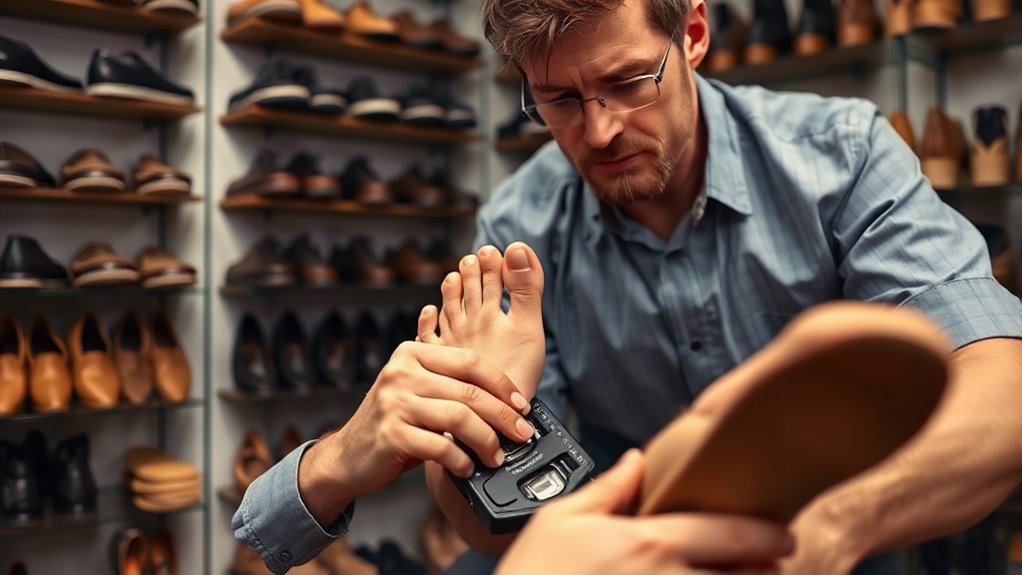
Because ill-fitting shoes can cause foot injuries and affect your posture and gait, proper shoe fitting is crucial. When you choose shoes that offer the right fit, you prevent pain and discomfort not only in your feet but throughout your body. Your feet can change size over time due to age, weight, or activity, so regularly measuring them guarantees you get the best fit. Properly fitting shoes should match both the length and width of your feet, leaving about a thumb’s width of space between your longest toe and the shoe’s front. Investing in shoes that offer this precise fit reduces the risk of foot-related issues and promotes long-term comfort and foot health, keeping you active and pain-free.
Key Techniques Used by Professional Shoe Fitters
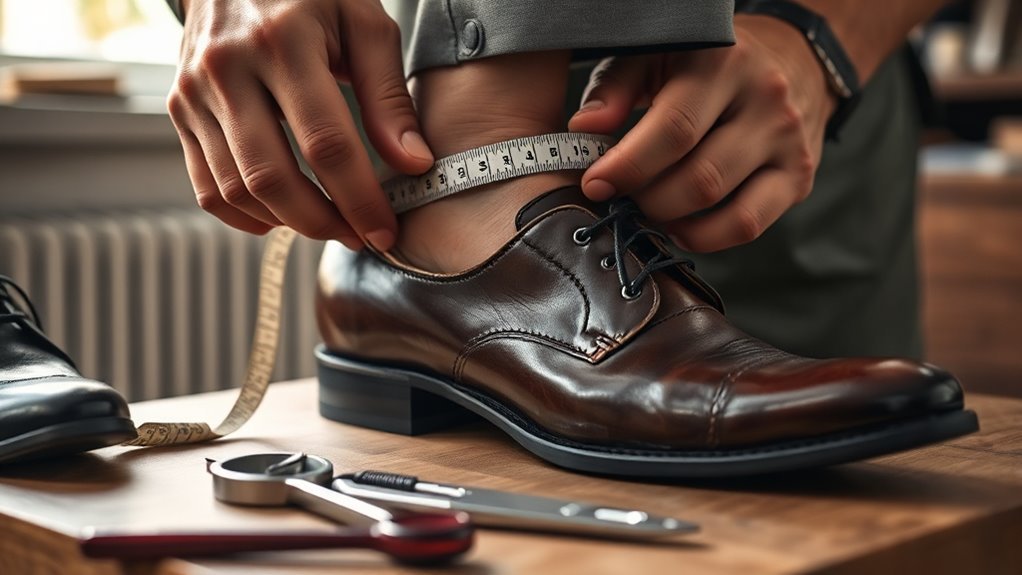
Proper shoe fitting goes beyond simply measuring your foot length and width. A professional shoe fitter uses palpation to check toe joint positioning and identify discomfort, ensuring the shoe is best suited for your foot’s unique shape. They observe your gait and foot mechanics to see how you move, matching shoes to your activity and lifestyle needs. By understanding various shoe brands and materials, they select options that optimize comfort and performance. You’ll benefit from their expertise in spotting misalignments or pressure points that could cause issues later. Ultimately, the fitter combines these techniques to recommend the shoe is best for your foot structure, function, and health—helping you avoid discomfort and injury while enhancing your daily comfort and activity efficiency.
Assessing Foot Dimensions and Function
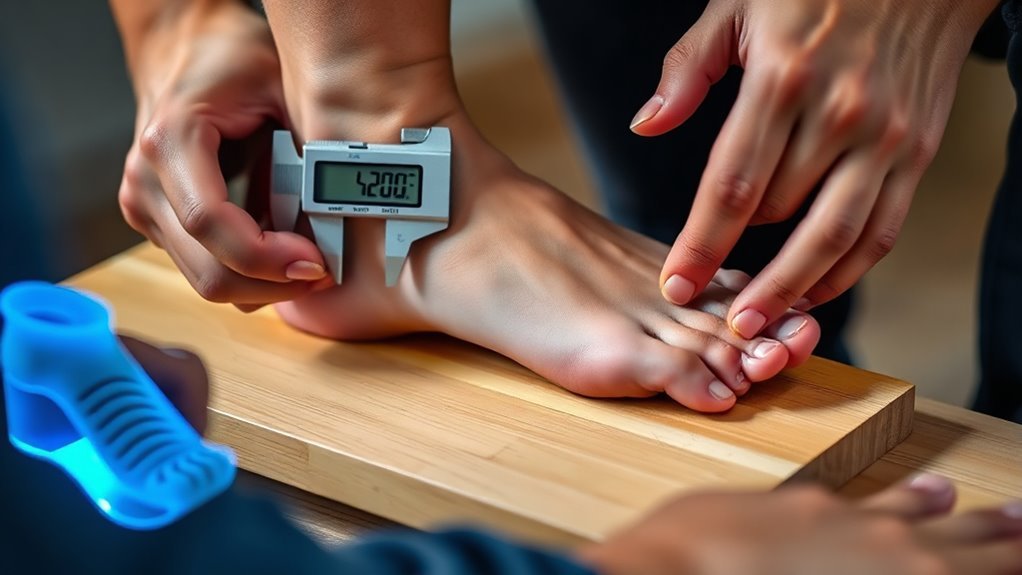
Anyone seeking the perfect shoe fit must have their foot dimensions and function carefully assessed. A professional shoe fitter measures both the length and width of your feet, noting any asymmetry between left and right. They observe how you move and walk, identifying your foot’s function to match shoes with your activity needs. Using palpation, they check toe joint positions and detect issues that could affect comfort. Factors like arch height and any foot pathology also guide their recommendations. This thorough assessment guarantees the shoes you choose not only fit accurately but also provide proper support, helping prevent injuries and discomfort during daily wear or sports. By understanding your unique foot structure and movement, a fitter finds the best shoes tailored just for you.
Selecting the Right Shoe Structure and Materials
When selecting shoes, you want to confirm their structure supports your foot’s natural movement. A professional shoe fitter checks that the shoe bends at the toes but stays firm in the middle and heel, providing proper support as you move. They also focus on materials, advising you to choose breathable fabrics that prevent moisture buildup, reducing the risk of discomfort and fungal infections. Proper arch support is another key factor they evaluate to enhance comfort and minimize fatigue during your activities. Finally, a professional shoe fitter encourages you to test shoes on various surfaces to confirm they match your specific activity needs, optimizing performance and lowering the chance of injury. Trust their expertise to find the right structure and materials for your feet.
Addressing Foot Changes and Specific Conditions
Your feet change over time, so you need to adjust your shoe choices accordingly.
A professional shoe fitter helps you manage these changes and any specific foot conditions you might have.
This guarantees your shoes support your foot health and keep you comfortable.
Foot Shape Evolution
Although feet may seem unchanging, they actually evolve in shape and size over time due to factors like aging, weight changes, and lifestyle habits. This means you need regular shoe measurements to guarantee proper fit. As you age, the fat padding under your feet thins, causing a flatter foot shape that may require shoes with better arch support. If you have conditions like plantar fasciitis or bunions, finding shoes that relieve pressure and offer support becomes even more essential. A professional shoe fitter can assess these changes, giving you customized advice to match your unique foot shape. If you notice discomfort or pain, it’s a sign your shoe fit might be off, so consulting a fitter promptly can help avoid further issues.
Managing Foot Health
Foot health demands careful attention as your feet change shape and face specific challenges over time. A professional shoe fitter understands that factors like aging, weight changes, and activity levels affect your feet’s size and shape. They regularly measure your feet to guarantee your pair of shoes fits perfectly. If you have conditions like plantar fasciitis or bunions, they’ll recommend shoes that provide the right support and cushioning to ease discomfort. By evaluating your unique foot characteristics, they help prevent aggravating existing issues. Through personalized consultations, they tailor shoe choices to your lifestyle and activities, improving comfort and reducing injury risk. Trusting a professional fitter means your pair of shoes supports your foot health as it evolves.
Benefits of Expert Shoe Fitting Services
When you rely on expert shoe fitting services, you gain access to specialized knowledge that tailors footwear precisely to your unique needs. Professionals provide enough insight into your foot type, gait, and movement patterns to recommend shoes that optimize comfort and reduce injury risks. They also help you navigate sizing differences across brands and make personalized adjustments for the perfect fit. This expertise improves your foot health and performance, preventing common issues like blisters and tendonitis.
| Benefit | Description | Impact on You |
|---|---|---|
| Accurate Measurement | Feet size & shape assessed | Shoes fit perfectly |
| Gait Analysis | Walking/running style evaluated | Enhanced comfort & performance |
| Brand Expertise | Knowledge of sizing variations | Avoid sizing mistakes |
| Personalized Adjustments | Custom fit tweaks | Reduced injury risk |
| Foot Health Improvement | Prevents common foot ailments | Long-term comfort and wellness |
Frequently Asked Questions
What Can a Cobbler Do to Shoes?
A cobbler can repair your shoes by fixing soles, heels, and stitching tears.
They’ll customize fit, add supports, and restore appearance with cleaning or dyeing.
Plus, they can protect your shoes with waterproofing to keep them comfortable and durable.
What Is a Shoe Fitter Called?
You call a shoe fitter a professional shoe fitting specialist or footwear technician.
They help you find the perfect shoe by measuring your feet, analyzing your gait,
and recommending footwear that suits your unique foot shape and needs.
What Are Training Shoes Designed For?
Training shoes are designed to support your multi-directional workouts by providing stability, firmer cushioning, and a flat sole.
They help you maintain balance, control, and comfort during strength training, aerobics, and cross-training activities.
How to Become a Certified Diabetic Shoe Fitter?
You become a certified diabetic shoe fitter by completing specialized training and passing an exam.
Often, having a healthcare background can be beneficial in this process.
You’ll gain hands-on experience fitting diabetic footwear.
It’s also important to maintain your certification through ongoing education.
Conclusion
When it comes to finding the perfect pair, a professional shoe fitter is worth their weight in gold.
They’ll measure your feet with precision, consider your unique needs, and guide you to shoes that fit like a glove.
With their expertise, you’ll avoid common pitfalls and walk away comfortable and confident.
So, don’t just settle for any shoes—let a pro help you put your best foot forward every step of the way.
In conclusion, investing in a professional shoe fitter can transform your shoe shopping experience.
Not only will you find shoes that fit well, but you’ll also enjoy lasting comfort and support.
Take the time to visit a fitting expert and discover how the right shoes can boost your confidence and enhance your overall well-being.
Don’t overlook the importance of a proper fit; it’s the key to walking comfortably and stylishly!